
 EN
EN  DE
DE  RU
RU  PT
PT  JA
JA  ES
ES  IT
IT warehouse guard rails-Hsafety
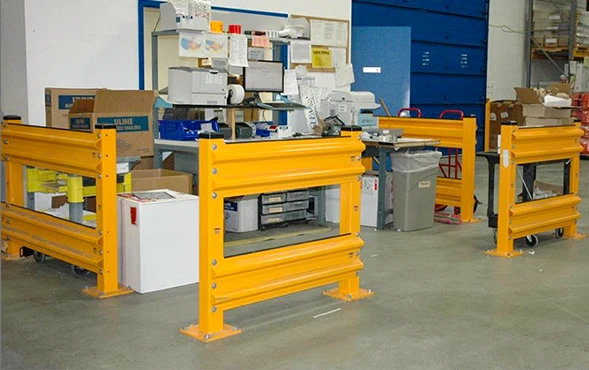
In scenarios where forklifts operate in areas where high-value equipment, critical infrastructure, or personnel are present, deploying warehouse guard rails is a necessary measure to achieve mandatory physical isolation and ensure the safety of core assets and personnel, thereby preventing major production safety accidents or significant property damage caused by accidental collisions.


Characteristics and advantages of Industrial Guard Rails
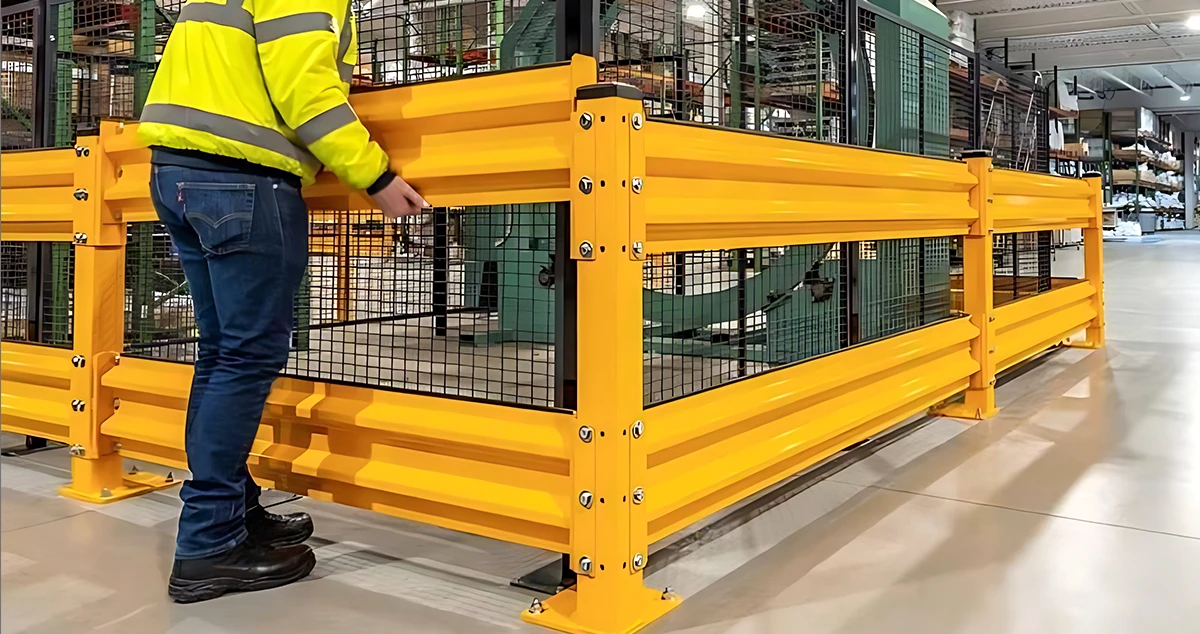
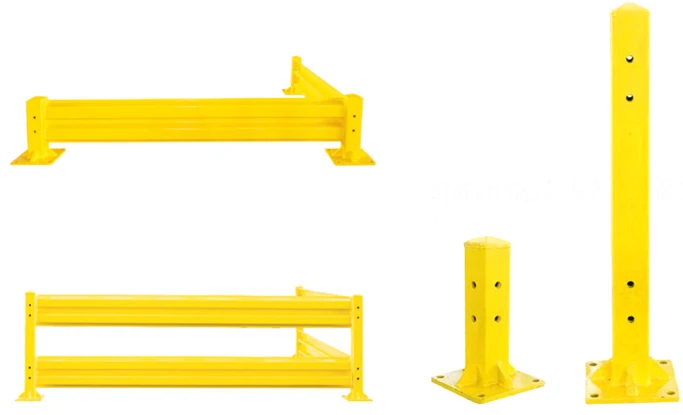
- The main body is made of corrugated plates to enhance structural strength, ensuring the structure remains sturdy and resistant to damage during collisions.
- The modular design allows for easy and quick disassembly, offering high flexibility.
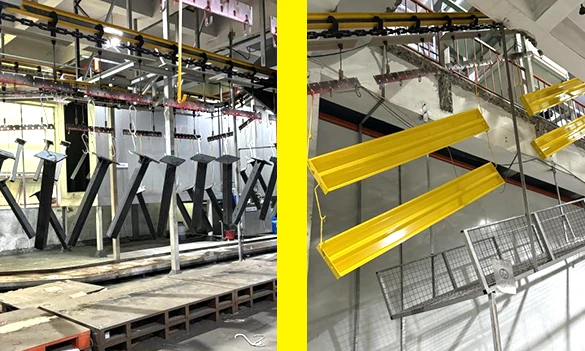
- The yellow powder coating can be enhanced with reflective strips to provide warning visibility in low-light conditions.


2: What is the actual impact resistance capability of Industrial Guard Rails? Can they withstand forklift collisions?
Yes, their design standards are specifically engineered to withstand impacts from common vehicles within industrial facilities. The specific protection ratings vary by model:
2-Rib: Can withstand impacts from vehicles weighing up to 10,000 pounds (approximately 4.5 tons) traveling at 4 miles per hour (approximately 6.5 kilometers per hour).
3-Rib: Offers higher protection, capable of withstanding impacts from vehicles weighing up to 12,000 pounds traveling at 4 miles per hour. This model is typically used to protect high-value equipment or critical areas with frequent personnel operations.
3: How to choose single/double rail, and double wave/triple wave warehouse guard rail models?
The selection criteria primarily depend on the importance level of the assets you need to protect and the potential impact risks.
Single Rail vs. Double Rail: The main difference lies in the protective height. Double-rail guardrails provide two layers of protection, effectively blocking impacts at different heights (such as forklift tines and vehicle bodies).
2-Rib vs. 3-Rib: The primary difference lies in strength. The more ribs per guardrail panel, the greater the structural strength and energy absorption capacity. For high-risk areas such as electrical cabinets and precision equipment that must absolutely not be impacted, the 3-Rib model is recommended to achieve a higher safety factor.
4: Is the installation process for warehouse guardrails complicated? What are the requirements for the installation surface?
The installation process is very straightforward and simple.
Column fixation: The column base is securely anchored to the concrete floor using four expansion bolts.
Panel connection: The guardrail panels are connected to the pre-drilled threaded holes on the posts using bolts and other fasteners.
The entire process can be completed using basic tools such as an electric drill (for drilling holes in the ground) and a ratchet wrench.
5: What should I do if the area I need to protect occasionally requires vehicles or large equipment to enter or exit?
You can opt for a lift-out rail installation structure. This structure uses a pre-fixed mounting bracket on the column to support the guardrail panels. When an open passage is needed, the entire panel can be quickly lifted and removed without tools, while providing the same reliable protection under normal conditions. This offers great flexibility for area use, balancing safety and convenience.
6: Are the posts compatible across different models of warehouse guard rails?
Yes, the posts are designed with a standardized, universal design. Each post features three pre-drilled mounting holes, enabling compatibility with both 2-Rib and 3-Rib systems. This design offers excellent flexibility, allowing you to configure the system according to the risk level of different areas.
7: Can warehouse guard rails be customized to meet specific warehouse requirements?
Yes, warehouse guard rails can be customized to meet your space and safety requirements. Whether you need specific heights, lengths, or configurations, they can be tailored to the unique needs of your warehouse or facility.

