EN
EN  DE
DE  RU
RU  PT
PT  JA
JA  ES
ES  IT
IT 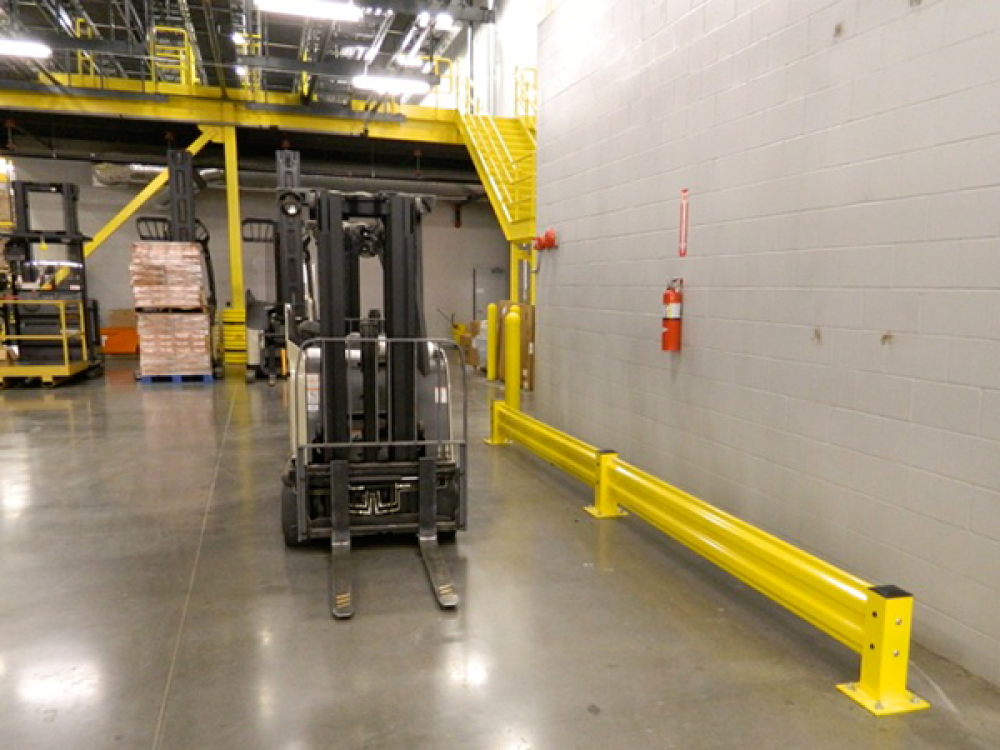
Once you’ve made the crucial decision to invest in an engineered safety barrier system, a new set of questions emerges. Staring at product specifications, you might see options like “single rail,” “double rail,” “2-rib,” or “3-rib.” It can feel overwhelming.
The temptation is often twofold: either choose the cheapest option to save on budget or specify the heaviest-duty option everywhere “just to be safe.”
Neither approach is ideal. The first can leave you critically under-protected where it matters most, while the second can lead to significant and unnecessary capital expenditure. The professional approach is not about choosing the strongest or the cheapest; it’s about precisely matching the level of protection to the level of risk in a specific location.
This is not a matter of guesswork. It’s a simple, logical process of risk assessment. Let’s walk through it together.
Principle 1: Matching the Height of the Threat (Single Rail vs. Double Rail)
The first question to ask is: What am I trying to stop, and at what height is the impact most likely to occur?
Single Rail Guardrail: A single-rail system is an excellent choice for clearly delineating walkways from work areas where the primary threat is from lower-profile vehicles like handcarts, pallet jacks, or automated mobile robots (AMRs). It provides a clear, robust physical boundary that prevents accidental intrusion. However, it offers limited protection against the higher-impact points of a standard forklift, such as the forks themselves or the vehicle’s chassis.
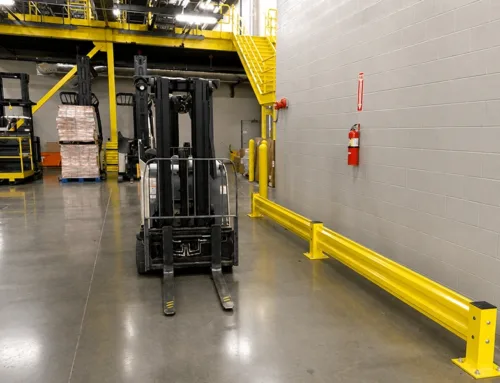
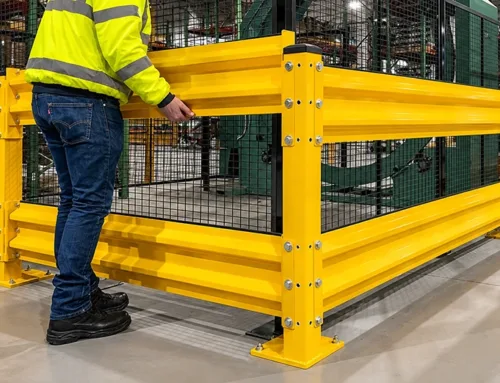
Double Rail Guardrail: A double-rail system is the standard for any area with active forklift traffic. Why? Because it accounts for the complex geometry of a forklift. The lower rail is positioned to stop the forks and the base of the vehicle, while the upper rail is positioned to engage with the main chassis and mast. This two-point engagement is critical for safely absorbing and distributing the force of an impact from a multi-ton vehicle. For virtually any application involving forklift interaction, a double-rail system should be your default starting point.
Principle 2: Matching the Consequence of Failure (2-Rib vs. 3-Rib)
Once you’ve determined you need a double-rail system, the next question is: If this barrier were to fail, how catastrophic would the outcome be? This will help you decide on the structural strength of the rail itself.
The “ribs” refer to the number of horizontal W-beam corrugations in each individual rail panel. More ribs mean greater structural integrity and a higher capacity for energy absorption.
2-Rib Guardrail (Standard Heavy-Duty): This is the workhorse of industrial protection. A double-rail system using 2-rib panels is engineered to withstand a significant impact, such as a 10,000-pound ($4,500 kg) forklift moving at 4 mph (6.5 km/h). This level of protection is perfectly suited for a wide range of applications:
- Protecting the ends of pallet racking aisles.
- Shielding building support columns and concrete walls.
- Separating machinery and equipment from general traffic lanes.
- Defining long stretches of pedestrian walkways.
3-Rib Guardrail (Premium heavy duty guardrail): This option offers a measurable step up in protection, capable of stopping a 12,000-pound vehicle at 4 mph. While it may seem like a small difference, that extra 20% of impact resistance is critical in certain areas. You should specify a 3-rib system in any location where a barrier failure is simply not an option. Think of it as your “zero-fail” solution for:
- Mission-Critical Infrastructure: Protecting main electrical switchgear, fire pump systems, or central server racks where an outage would be catastrophic.
- High-Consequence Chemical or Gas Lines: Shielding any pipelines or valve systems where a rupture could cause a hazardous material release.
- In-Plant Offices or Manned Workstations: Any area where employees are working in close proximity to heavy traffic, providing the absolute highest level of protection for your people.
A System, Not Just a Product
The power of a well-designed heavy duty guardrail system lies in its modularity. Because the support posts are universal and can accept either 2-rib or 3-rib panels, you are empowered to design a cost-effective and precise safety solution.
You can deploy the standard 2-rib system for 90% of your facility, then strategically upgrade to the 3-rib system at a few, well-defined critical points. This data-driven approach ensures you are not wasting budget on over-protection while guaranteeing that your most vital assets and people have the premium level of security they require.
Choosing the right guardrail is not about buying a product; it’s about implementing a professional risk-mitigation strategy. By thinking in terms of threat height and consequence of failure, you can build a system that is both safer and more financially intelligent.