EN
EN  DE
DE  RU
RU  PT
PT  JA
JA  ES
ES  IT
IT 
On the surface, a modular fencing system can appear deceptively simple: steel posts, mesh panels, and a handful of fasteners. It’s an elegant solution, but this simplicity is not born from a lack of complexity. Instead, it’s the result of deliberate, thoughtful engineering. Every component, material, and finish is chosen to solve specific, real-world challenges of industrial environments.
For the engineers, facility managers, and technical professionals who look past the surface, this article is a deep dive into the technical substance of a modern modular safety fence industrial system like MEfence. We will explore the “why” behind the design—the material science and engineering choices that create a system that is simultaneously robust, flexible, and remarkably efficient to install.
1. The Foundation: The Strategic Choice of Q235 Carbon Steel
The entire system begins with its primary material: Q235 Carbon Steel. This isn’t a random choice; it’s a strategic one based on achieving an optimal balance of three key properties:
- Strength: Q235 steel provides the necessary tensile strength and rigidity to serve as a secure physical barrier in its intended, non-high-impact applications. It effectively delineates spaces and discourages unauthorized access.
- Manufacturability: It is an excellent material for welding, which is essential for creating the strong, consistent grid of the mesh panels during the factory production process.
- Ductility: This is the most critical property for the end-user. Q235 is not brittle. It possesses enough ductility to be workable, which is the secret behind the system’s core feature: on-site modification. This property allows the panels to be cut with standard tools without fracturing or compromising the integrity of the surrounding wires, enabling the unparalleled on-site adaptability that defines the system.
2. The Core Component: The Frameless Mesh Panel
The mesh panel is the heart of the system, and its design is a case study in structural efficiency.
- Wire Diameter and Grid: Users can typically choose between wire diameters, such as 3.0mm or 4.0mm, and mesh grid sizes like 20x100mm or 50x50mm. This allows for customization based on need: a 3.0mm wire with a 50x50mm grid might be perfect for simple visual delineation with good airflow, while a 4.0mm wire with a tight 20x100mm grid offers increased rigidity and makes it more difficult to pass objects through the barrier.
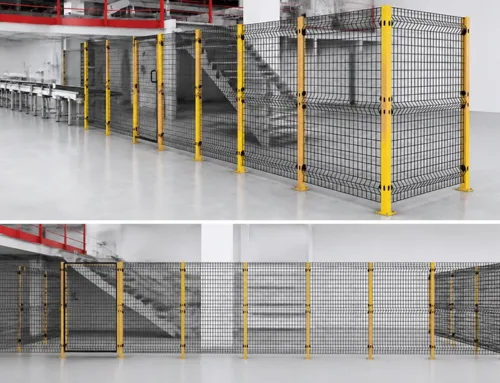
- The “V” Bends: A key feature visible on the panels are the horizontal, V-shaped bends. These are not merely aesthetic. From an engineering perspective, these bends act as structural stiffening ribs. They dramatically increase the panel’s rigidity across its width, preventing it from flexing or vibrating. It is this integrated stiffening that allows the panel to be strong and stable without the need for a heavy, cumbersome, and inflexible perimeter frame.
3. The Backbone: The Post and Its Protective Finish
The posts provide the structural support and are engineered for stability and longevity.
- Post Dimensions: Available in standard sizes like 40x60mm and 60x60mm, the posts offer a solid backbone for the system. The square and rectangular profiles provide flat, stable surfaces ideal for making clean, secure connections at 90-degree angles.
- Surface Treatment – Powder Coating: The entire system is protected by a powder-coated finish. This is a critical quality feature. Unlike simple paint, powder coating is applied electrostatically as a dry powder and then cured under heat. This process fuses the coating to the metal, creating a thick, hard, and uniform finish that is far more resistant to chipping, scratching, chemical exposure, and corrosion.
- Standard Ground Clearance: The system is designed with a standard 140mm clearance from the ground. This is a practical design choice for industrial environments, allowing for easy floor cleaning beneath the fence line and preventing the accumulation of dust and debris.
4. The Linchpin: The Ingenuity of the Fastening System
The most underappreciated component is often the smallest: the fastening system. This is the linchpin that enables the system’s rapid, non-destructive modularity. It typically consists of two key parts:
- The Plastic Fasteners: These specially designed clips are the interface between the post and the panel. Using a high-density, engineering-grade plastic is a deliberate choice. It prevents the noise and vibration that can occur with metal-on-metal contact. Crucially, it also protects the powder coating on the post and panel during installation, preventing scratches that could later become points of corrosion.
- The Through-Bolt Mechanism: The fasteners are secured by a simple through-bolt that passes through the entire assembly. This design creates a powerful and reliable clamping force, ensuring a tight and secure connection. Its simplicity is its strength: it requires only a single, basic tool for both assembly and disassembly, making the system truly modular and reusable.
Intelligent Design for Real-World Application
Every element of a modern modular fencing system is a solution to a problem. The choice of steel balances strength with workability. The bends in the mesh create strength without a frame. The powder coating ensures longevity. And the simple fastening clip is the key that unlocks rapid, flexible, and reusable installation. This technical substance is what elevates a collection of steel parts into a sophisticated safety fence industrial system designed to solve the real-world challenges of the modern industrial environment.