EN
EN  DE
DE  RU
RU  PT
PT  JA
JA  ES
ES  IT
IT 
 |
In the reality of automotive manufacturing, the factory floor rarely matches the CAD drawing perfectly. A structural column might be off by a few inches, or a cable tray might block a planned fence line. For system integrators deploying custom machinery, these surprises usually mean costly delays while waiting for custom-fabricated parts. Discover how a highly adaptable industrial safety fencing system can absorb these site variances, ensuring your turnkey solutions are handed over on time, every time. |
Stop Letting Rigid Perimeters Bottleneck Your Assembly Systems
When you are orchestrating a high-speed automated production line, the physical layout is dictated by the process flow, not the fence. Standard “off-the-shelf” guarding often forces engineers to compromise their optimal machine layout just to fit standard panel sizes. This is a backward approach. Your industrial safety fencing should accommodate the machinery, wrapping around complex robotics integration cells and tight corners without requiring weeks of custom fabrication work.
The key lies in a system that moves away from fixed-bracket designs. By utilizing adjustable fixing rings and a range of panel widths (from 200mm to 1500mm), installation teams can handle non-standard angles—like the 45-degree turns required in complex machining centers—directly on site. This “field-adaptable” capability allows you to navigate around unexpected facility obstructions, such as building columns or material handling areas, ensuring that the safety perimeter maintains the required ISO safety distances without halting the installation progress.

Innovative folding door systems maximize access in tight automotive assembly spaces.
Reclaiming Floor Space in High-Density Robot Work Cells
Space is one of the most expensive commodities in any automotive industry facility. As production lines become more condensed to increase throughput, the footprint of the safety system comes under scrutiny. Traditional swing doors on a machine guarding fence can eat up valuable aisle space or interfere with warehouse AGV paths, creating logistical bottlenecks.
Advanced industrial safety fencing systems solve this through specialized access solutions like folding doors (Folding Doors) or trackless sliding doors. Unlike standard swing gates, a folding door system collapses neatly, providing a wide opening for maintenance access or forklift entry without swinging out into the traffic lane. For a system integrator, this offers a massive value add: you can design tighter, more efficient cell layouts. This allows your clients to fit more manufacturing capability into the same square footage, optimizing their return on plant assets while maintaining full compliance with safety standards.
Durability That Matches Your High-Performance Machinery
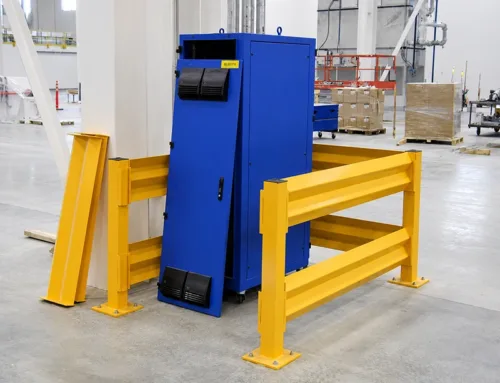
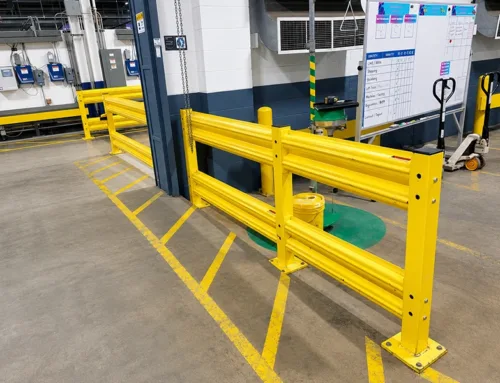
A safety fence in a heavy industrial environment is not just a visual barrier; it’s a physical shield. In areas with high forklift traffic or heavy CNC machinery, a flimsy fence is a liability. Utilizing panels constructed from Q235 carbon steel with a full frame (20x30mm) ensures that the perimeter can withstand accidental impacts that would crumble lighter, wire-only fences.
This structural integrity is crucial for the long-term satisfaction of your client. A damaged fence often triggers a safety stop, halting production. By installing a system with high impact resistance and superior powder coating (tested for corrosion resistance), you are effectively “future-proofing” the facility. It reduces the maintenance burden on the end-user and protects the reputation of your installed system long after the handover is complete.
Frequently Asked Questions
1. Can the fencing system handle non-90-degree corners in our layout?
Yes. Unlike rigid systems that only allow straight lines or right angles, our adjustable connection system allows for flexible installation angles. This is particularly useful for creating polygonal cells around robots or following specific floor contours.
2. What solutions do you have for areas with very limited opening space?
We offer “Folding Door” systems specifically for this scenario. They provide a large clear opening width (up to 4800mm for double doors) but require minimal depth to open, making them perfect for narrow aisles or crowded assembly zones.
3. How do we anchor the system to ensure stability?
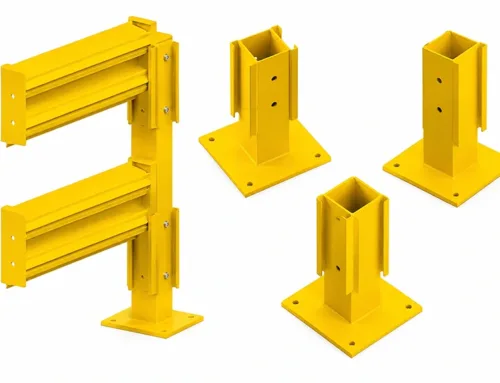
The posts are anchored using heavy-duty M10 x 70mm expansion bolts through a reinforced steel base plate. This ensures the fence remains rigid and stable even if subjected to vibration or minor impacts from daily operations.
4. Is the paint finish durable enough for an automotive welding environment?
Yes. We use a high-quality powder coating process that adheres to GB/T9286-1998 standards. It offers excellent resistance to scratches, corrosion, and the harsh conditions typically found in welding or machining environments.
5. Can we retrofit this fencing into an existing production line?
Absolutely. The modular design makes it ideal for retrofitting. You can install it around existing machinery without needing to move heavy equipment. Panels can be easily removed or reconfigured if the line layout changes in the future.