EN
EN  DE
DE  RU
RU  PT
PT  JA
JA  ES
ES  IT
IT 
 |
For engineering teams designing complex turnkey solutions, the safety perimeter is often an afterthought that consumes disproportionate design hours. Drafting detailed fence layouts for robotic work cells diverts valuable resources from core automation logic. Mdfence changes this dynamic by offering a modular Industrial Safety Fencing system backed by CAD-based design support. We transform your rough floor plans into precise, compliant perimeters, allowing your engineers to focus on the high-value robotics integration while ensuring the physical barrier meets rigorous ISO 14120 standards. |
Shifting from “Build to Print” to Standardized Modularity
Many manufacturers still rely on a “build to print” approach, fabricating guards from raw structural aluminum or welded steel based on project-specific drawings. This lack of standardization leads to inconsistency across global sites and complicates maintenance.
Mdfence introduces a standardized engineering matrix. Our system utilizes high-strength Q235 carbon steel with a 20x30mm framed panel architecture. Instead of reinventing the wheel for every project, you leverage a catalog of pre-verified modules. This approach ensures that whether you are deploying an automated production line in Shanghai, Munich, or Detroit, the Machine Guarding hardware remains identical. This consistency is vital for multinational clients who demand uniform safety standards and spare parts interchangeability across their facilities.
 Standardized lock options streamline maintenance and access control integration. |
Simplifying the Integration of Safety Logic
The physical fence is the skeleton; the safety logic is the nervous system. A common bottleneck in custom machinery commissioning is the mechanical integration of safety interlocks. Electrical designers often struggle to find robust mounting points for switches on generic fencing, leading to makeshift brackets that fail over time.
We bridge this gap with dedicated “Lock Carrier” technology. Our Industrial Safety Fencing posts are pre-engineered to accept mounting kits for major PLC safety devices (such as Omron, Sick, or Keyence). This ensures that the access control systems are rigidly mounted and perfectly aligned with the door actuator. By solving the mechanical interface in the factory, we eliminate the need for on-site drilling and tapping, protecting the powder coating and ensuring long-term reliability in harsh automotive welding station environments.
Enhancing 5S Standards and Visual Management
In sectors like medical device manufacturing or precision electronics, the cleanliness and visual order of the facility are paramount. Traditional fences with open base plates can become traps for debris and dirt, violating 5S protocols.
Mdfence pays attention to these operational details. Our system includes specialized post base protective covers that fully encapsulate the anchor bolts. This not only prevents dust accumulation—critical for clean assembly systems—but also protects operators from tripping hazards. The high-gloss, safety-yellow finish improves visibility, clearly delineating the material handling area from pedestrian walkways, which is a key requirement for internal safety audits.
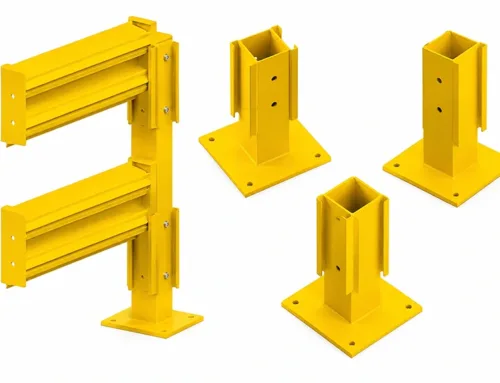
 Protective base covers enhance 5S compliance and prevent debris accumulation. |
Frequently Asked Questions (FAQ)
1. How does Mdfence support the design phase of my project?
We offer a “design for automation” service. You send us your DWG or PDF layout, and our engineers generate a complete fence configuration with a precise Bill of Materials (BOM), effectively acting as an extension of your engineering team.
2. Is the fencing system compatible with AGV and AMR logistics paths?
Yes. We offer specialized door systems, such as automated sliding doors or wide folding doors, specifically designed to allow seamless entry and exit for autonomous mobile robots (AMRs) and forklifts in automated warehouses.
3. Can the system be modified after installation?
Unlike welded structures, our modular design allows for non-destructive modifications. If your production line layout changes, you can disassemble, move, and reconfigure the panels and posts with simple tools, protecting your initial investment.
4. What safety standards does the system meet?
Our system is TUV certified and designed to comply with ISO 14120 (General requirements for guards) and ISO 13857 (Safety distances). This certification supports your CE marking process and ensures acceptance by global safety auditors.
5. How durable is the finish in an industrial environment?
We use a premium electrostatic powder coating process that passes rigorous ISO 9227 salt spray testing. This ensures the fence resists corrosion, oils, and coolants commonly found in CNC machining and metalworking environments.