EN
EN  DE
DE  RU
RU  PT
PT  JA
JA  ES
ES  IT
IT 
 |
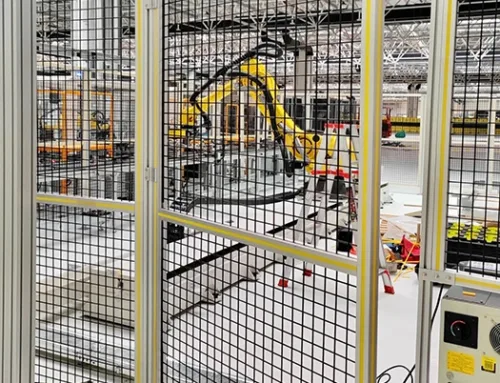
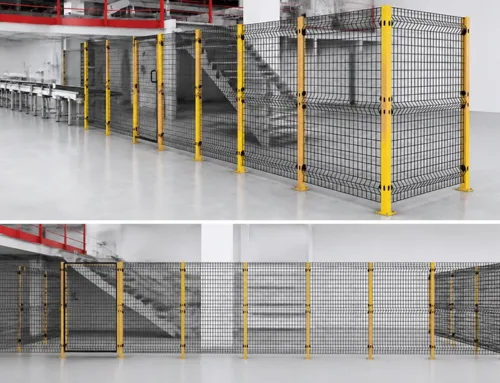
In the competitive world of system integration solutions, floor space is a premium asset. When you are designing a high-speed mechanical assembly line or retrofitting a robotics integration project into an existing facility, standard “off-the-shelf” guarding often fails to fit. Forcing a rigid perimeter around your custom machinery not only wastes valuable square footage but can also create hazardous dead zones. Mdfence provides a modular Industrial Safety Fencing system that adapts to your CAD drawings—not the other way around. From 45-degree corners to custom-height panels for heavy machinery, we ensure your safety infrastructure supports your operational flow. |
Decoding the “Build to Print” Challenge in Automotive Manufacturing
System Integrators serving the automotive industry often work under strict “Build to Print” mandates. You are tasked with fitting complex automation cells—complete with CNC machining centers and material handling paths—into irregular factory layouts. A common bottleneck occurs when the safety fencing supplier cannot accommodate specific cut-outs for conveyors or non-standard angles required to clear building columns.
Unlike rigid welded systems, our modular design allows for on-site adaptability without hot work. Whether it is a “Design for Automation” project requiring a continuous 184-foot perimeter or a compact cell for precision machining, our engineering team can translate your layout into a precise Bill of Materials (BOM), ensuring every post and panel fits the first time.
Maximizing Space in Material Handling Areas with Smart Door Solutions
Safety shouldn’t come at the cost of logistics efficiency. In busy material handling areas where AGVs and forklifts operate alongside personnel, the swing radius of a standard hinged door can be a significant obstruction.
To solve this, we offer engineered access solutions like robust sliding doors and folding door systems. These are essential for maintaining clear aisles in your automated production lines. For instance, our heavy-duty sliding doors utilize bearing rails and a reinforced “Door Frame Beam” to span wide openings (up to 4.3 meters) without sagging, ensuring smooth operation for years. This allows you to secure high-traffic zones without impeding the flow of raw materials or finished goods.

Double sliding doors maximize aisle width for AGV and forklift access in logistics zones.
The Material Advantage: Why Q235 Carbon Steel Matters
While layout flexibility is crucial, the primary function of the fence is containment. In high-energy environments featuring industrial robots (such as KUKA or ABB units), the barrier must withstand significant impact forces.
We manufacture our posts and framed panels using high-grade Q235 Carbon Steel. This material offers the optimal balance of ductility and strength, allowing the structure to absorb kinetic energy through plastic deformation rather than brittle failure. With a wall thickness of up to 2.0mm and TUV-certified impact resistance, Mdfence provides a reliable shield for your ancillary equipment and personnel, mitigating liability risks associated with equipment malfunction.
Frequently Asked Questions
1. Can you customize the fence height for heavy industrial machinery?
Yes. While standard heights are 1200mm and 2000mm, we frequently fabricate custom posts up to 2440mm (8 feet) for clients needing containment for large robotic arms or heavy stamping presses, ensuring full compliance with ISO 13857 reach-over distances.
2. How does your system handle complex factory layouts with non-90-degree corners?
Our installation system utilizes adjustable fixing rings that allow panels to be angled flexibly relative to the posts. This makes it easy to follow the unique contours of your facility or dodge obstructions like building columns without custom fabrication.
3. Are your sliding doors suitable for high-cycle automated logistics routes?
Absolutely. Our sliding doors are engineered with heavy-duty bearing rails and overhead structural beams to maintain alignment. They are designed for high-frequency use and can be fitted with automated drives for seamless integration with AGV control systems.
4. What surface treatment is used to protect the fencing in harsh manufacturing environments?
All components undergo a rigorous electrostatic powder coating process that complies with GB/T9286-1998 standards. This finish passes ISO9227 salt spray testing, providing durable corrosion protection against humidity and industrial fluids found in CNC and welding workshops.
5. Do you provide design support for System Integrators?
Yes. We act as an engineering partner. You can send us your CAD layouts (DWG/DXF), and our team will generate a detailed fencing layout and Bill of Materials (BOM) that optimizes safety coverage and minimizes waste, saving your engineering team valuable time.