EN
EN  DE
DE  RU
RU  PT
PT  JA
JA  ES
ES  IT
IT 

|
As a System Integrator, you know the bottleneck isn’t always the robot logic—it’s the physical integration. Integrating safety perimeters with complex automation lines often leads to unforeseen delays during the “last mile” of commissioning. Discover how engineering-grade safety barriers can streamline your electrical integration, ensure global compliance, and protect your project timeline. |
The Hidden Cost of the “Last Mile” in Automation Commissioning
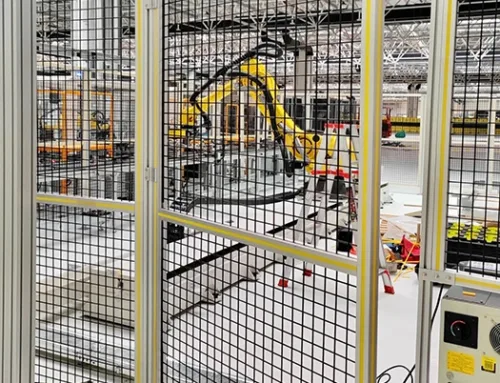
If you manage projects for automotive assembly lines or automated warehousing, you are familiar with the “commissioning crunch.” The PLC logic is sound, the robots are calibrated, but the safety sign-off is stalling the handover. Why? Often, it comes down to the physical interface between the machine guarding and the control system.
Many integrators treat Industrial Safety Fencing as a commodity—mere steel to be bolted down last. This oversight creates a specific pain point: Electrical Integration Latency. Standard fencing often requires your highly paid electrical engineers to become mechanics on-site—drilling holes into steel posts to fit safety switches, fabricating makeshift brackets for interlocks, and dealing with misalignment issues that trigger false E-stops.
This doesn’t just look unprofessional; it introduces metal shavings into clean environments and compromises the anti-corrosion coating of the fence. Real value comes from a perimeter system designed with the control logic in mind, not just the physical footprint.
Transforming Barriers into Intelligent Safety Nodes
The modern manufacturing floor requires more than a cage; it requires an integrated safety ecosystem. A robust fencing solution should act as a verified “carrier” for your safety logic. This is where the difference between generic mesh and an engineered system becomes clear.
Consider the installation of safety interlocks (like Omron or Pizzato switches). An optimized system provides pre-engineered Lock Carrier Kits. These are not generic plates, but precision-designed mounts that ensure the actuator key aligns perfectly with the switch body every time the door closes.

Seamless integration of electronic safety interlocks prevents false alarms and reduces on-site wiring time.
By using a system that accepts these components natively, you eliminate the “drift” caused by vibration or door sagging. For the end-user, this means higher Overall Equipment Effectiveness (OEE) because the machine doesn’t stop due to a misaligned sensor. For you, the integrator, it means a “Plug-and-Play” handover with zero on-site fabrication.
Engineered Rigidity: Protecting High-Value Assets
In high-energy environments like robot welding cells or heavy material handling zones, the fence is the only thing standing between a robotic arm’s payload and the facility floor. A breach here isn’t just a safety violation; it’s a catastrophic liability event.
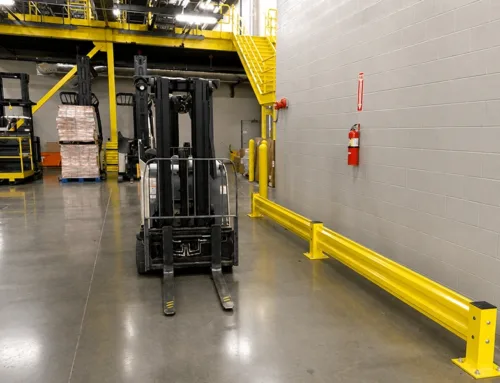
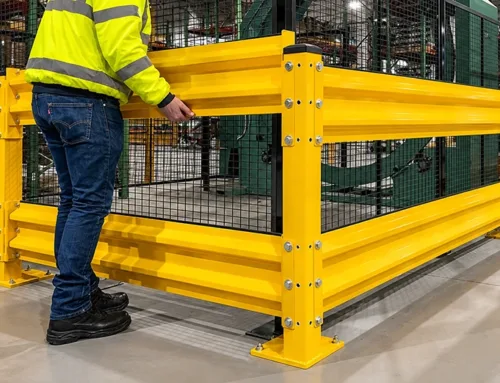
The structural integrity of the barrier must match the kinetic energy of the potential hazard. Utilizing a system built on Q235 Carbon Steel with substantial wall thickness (such as 2.0mm standard posts) provides the necessary impact resistance to contain projectiles or absorb accidental forklift impacts without catastrophic failure.
Furthermore, the manufacturing method matters. Look for framed mesh panels where the wire is fully welded to a rigid tubular frame (flat welding technique), rather than frameless bent wire. Framed panels disperse impact energy through the structure to the anchors, whereas frameless panels simply deform and fail. This rigidity also enables the installation of heavy sliding doors or cantilevered cable trays directly onto the fence line without compromising stability.
Modularity: The Insurance Against Layout Changes
In the design phase of a new production line, the CAD layout is perfect. In the real world, a structural column is six inches off, or a cable trench forces a perimeter adjustment. Rigid, welded-in-place fencing turns these minor adjustments into major change orders.
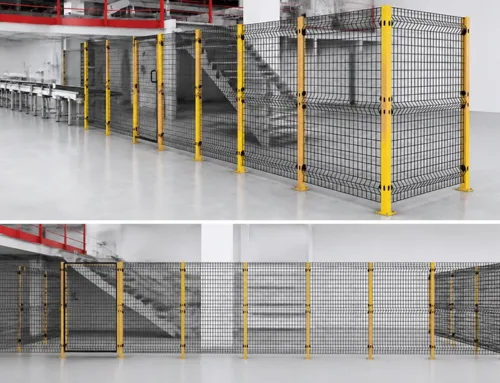
A truly modular Industrial Safety Fencing system functions like an industrial erector set. It allows for on-site adaptability—adjusting a post location or swapping a hinged door for a sliding door without scrapping materials.

Modular sliding door systems allow for flexible access solutions even in space-constrained layouts.
This flexibility extends to the panels themselves. Whether you need full visibility for inspection (wire mesh), protection from welding flash (solid steel), or fluid containment (polycarbonate), the ability to swap panel types on the same post architecture allows you to tailor the protection to the specific hazard of each cell zone (e.g., separating a laser welding bot from a palletizing bot) without sourcing from multiple vendors.
Conclusion: Elevating Safety from Commodity to Strategy
Stop viewing safety fencing as a line item for “steel tonnage” and start viewing it as part of your system’s critical path. By selecting a solution that prioritizes electrical integration, impact resilience, and modular adaptability, you protect your margins from the hidden costs of installation and liability. Deliver a cell that is not just enclosed, but truly integrated.
Frequently Asked Questions
1. How does the fencing system accommodate different brands of safety interlocks?
Our system utilizes specialized “lock carrier” kits designed to interface with major global brands like Omron, Pizzato, and others. These carriers mount directly to the door and post, providing a pre-drilled, aligned surface for the switch and actuator, eliminating the need for custom fabrication.
2. Can the system withstand impact from a forklift or robotic arm?
Yes. The system is engineered using high-strength Q235 carbon steel with 60x60mm posts and fully framed panels. It has undergone rigorous TUV impact testing to ensure it meets ISO 14120 standards for containment, effectively absorbing energy to protect personnel and machinery.
3. What happens if the facility layout changes after installation?
The system is 100% modular and uses a bolt-together design (no welding required). Panels and posts can be disassembled and reconfigured. Standardized widths and adjustable fixing rings allow you to modify the perimeter shape or move door locations to suit new operational workflows.
4. Do you offer solutions for welding areas where sparks are a concern?
Absolutely. While steel mesh is standard, we offer interchangeable panel options including solid steel sheet for spark containment and polycarbonate/acrylic panels for visibility combined with fluid/chip protection. These can be mixed and matched within the same fence line.
5. Is the installation process compatible with clean manufacturing environments?
Yes. Because the system is pre-finished (powder coated) and requires no on-site welding, cutting, or drilling, installation generates virtually no dust or debris. This makes it ideal for clean assembly areas in automotive, electronics, and medical device manufacturing.