EN
EN  DE
DE  RU
RU  PT
PT  JA
JA  ES
ES  IT
IT 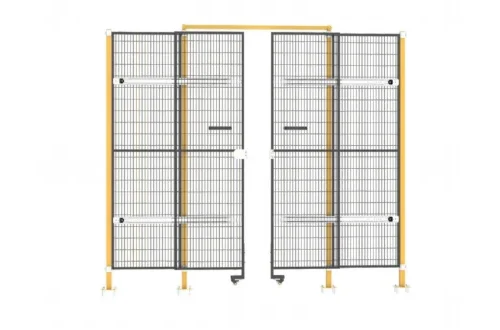

|
Your automation system is flawless. The PLC logic is perfect. But will your project timeline be jeopardized by a last-minute EHS audit failure because the safety guard was an afterthought? A misaligned interlock or a non-compliant opening can halt commissioning and delay payment. |
Beyond the Perimeter: Why Your Next Automation Project Demands an Integrated Guarding System
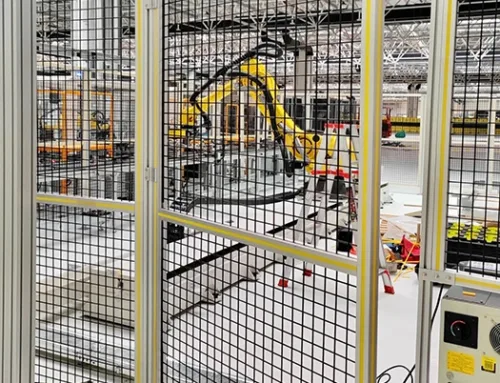
As an automation system integrator, you deliver precision. You design complex robot work cells and high-speed assembly lines where every millisecond counts. Yet, too often, the physical perimeter guarding is treated as a commodity—a simple fence. This oversight can introduce significant risk, creating on-site installation nightmares and putting the final EHS (Environment, Health, and Safety) sign-off in peril. Modern industrial perimeter guarding is not just about building a wall; it’s about specifying a critical, pre-engineered subsystem that integrates seamlessly with your automation logic.
The On-Site Nightmare: When “Standard” Fencing Derails Your Project Timeline
The final phase of a project should be about system commissioning, not crude metalworking. Relying on generic fencing or locally welded solutions often leads to predictable, and costly, on-site problems that were never in the original plan.
The Hot-Work Hang-up and the Failed Audit
The “Before” Scenario: The guarding is installed, but the client-specified Omron D4NL safety interlock doesn’t fit the pre-drilled holes on the generic door post. Your installation team is now forced to perform on-site “hot work”—drilling and tapping new holes. This requires a special permit, creates metal shavings that can contaminate sensitive equipment, and burns through the powder coating. Two weeks later, that raw steel edge is showing rust, and the end-client’s EHS manager flags it during the final walkthrough. The acceptance is delayed pending rework.

The Mdfence Logic: Our system is designed for integration. We’ve moved beyond a simple physical barrier to become a carrier for your safety logic. We provide pre-engineered Safety Interlock Carrier plates specifically designed for industry-standard switches from Omron, Pizzato, Schmersal, and others. This transforms the fence into a true plug-and-play component of your safety circuit, eliminating the need for on-site modifications and ensuring a clean, professional installation that passes the most stringent visual and functional audits.
The ISO 13857 Footprint Problem
The “Before” Scenario: To save costs, a generic fence with a large 50x50mm mesh was specified. During the risk assessment, it becomes clear that according to ISO 13857, this large opening requires the guard to be placed 850mm away from the hazard to prevent reach-through. This extra distance consumes valuable floor space, constricts forklift pathways, and may even make your entire layout unworkable in a tight facility.
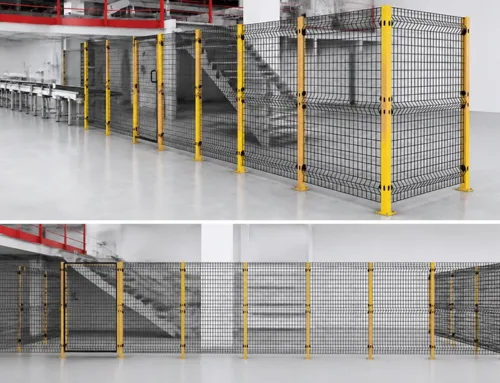
The Mdfence Logic: Our standard framed panels feature a 20x100mm “finger-safe” mesh. This design is not arbitrary; it’s engineered to meet ISO 13857 requirements at a minimal safety distance of just 120mm. For a 50-meter production line, this seemingly small detail can reclaim over 35 square meters of high-value production floor space. You can fit more automation into the same footprint, or simply provide safer, wider access aisles—a tangible benefit for your client.
From CAD Model to EHS Approval, Seamlessly
The key to a smooth integration is planning. A modern Machine Guarding Fence Panels solution should begin in the digital phase, long before any hardware arrives on site.
Design-Phase Certainty with 3D Models
Instead of relying on rough sketches, your engineering team can download our complete library of 3D CAD models. You can design the entire safety perimeter within your master assembly, checking for interference, verifying safety distances, and ensuring perfect alignment with conveyors and other equipment. This process automatically generates a precise Bill of Materials (BOM), eliminating the risk of missing a single critical component during installation.

Cold Assembly, Rapid Deployment
Mdfence systems are designed for 100% “cold assembly.” There is no welding, cutting, or grinding on site. Every component—from the Q235 carbon steel posts to the framed mesh panels—is connected with high-strength bolts and proprietary clamps. Our patented connection system is up to 40% faster to install than traditional welded or inferior modular systems. This means two technicians can assemble over 50 meters in a single day using only basic hand tools, minimizing disruption to other on-site activities and compressing your project timeline.

Case in Point: The GBM Automation Integration
For a complex, multi-station automation line, system integrator GBM Automation required a guarding solution that could accommodate numerous conveyor pass-throughs and specific Omron and Pizzato safety interlocks. By leveraging our pre-engineered system, they received a fully customized kit, complete with pre-fabricated mounting plates and ISO-compliant tunnel guards. The result: a 30% reduction in mechanical installation time and first-pass approval during the end-client’s rigorous EHS audit. This is the new standard for modern industrial perimeter guarding.
Frequently Asked Questions
| 1. Do you provide 3D CAD models for our design team to use in layout planning? |
| Yes. We provide a complete library of 3D STP files for all our components. This allows your engineers to integrate our guarding system directly into your master assembly, ensuring perfect fit and eliminating on-site surprises. |
| 2. Our client has specified Schmersal safety interlocks. Can your system accommodate them? |
| Absolutely. We offer a range of pre-engineered mounting plates, or “Safety Interlock Carriers,” that are compatible with all major safety component brands, including Schmersal, Pizzato, Omron, and Allen-Bradley. This ensures a clean, robust, and repeatable installation without any on-site drilling or welding. |
| 3. We have a conveyor line that needs to pass through the robot cell. How do you handle openings? |
| We design and supply custom Tunnel Guards. These are specifically sized openings in the mesh panels that are engineered to comply with the safety distance requirements of ISO 13857, allowing materials to pass through while preventing personnel access to the hazard zone. |
| 4. How does the system withstand impacts, for example, from a forklift or a dropped workpiece? |
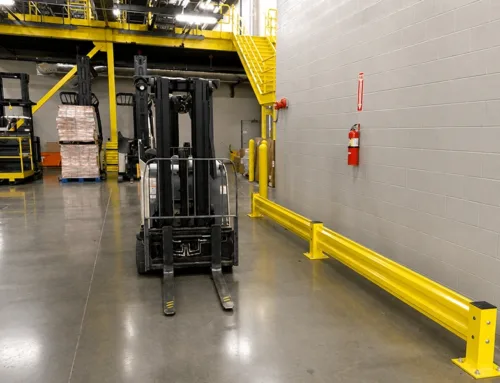
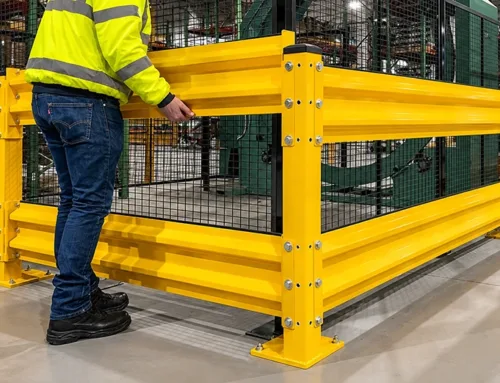
| Our standard system, built with a full Q235 steel frame around each panel, is certified to withstand an impact energy of 1600 Joules. This is equivalent to a 100 kg (220 lbs) object hitting the fence at 20 km/h (12.4 mph), providing robust protection for both your personnel and high-value automation assets. |
| 5. Our end-client’s plant layout changes every few years. Is the guarding system a sunk cost? |
| Not at all. Because our system is entirely modular and bolt-together, it can be easily disassembled, reconfigured, and re-deployed as production needs change. We calculate an asset reusability rate of over 95%, making it a long-term capital asset rather than a one-time construction expense like welded fencing. |