EN
EN  DE
DE  RU
RU  PT
PT  JA
JA  ES
ES  IT
IT Fence guarding for metal-cutting cells
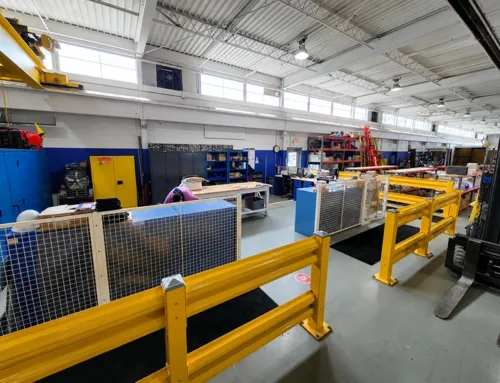
Fence guarding for plasma-cutting scrap and tighter machine-side installations
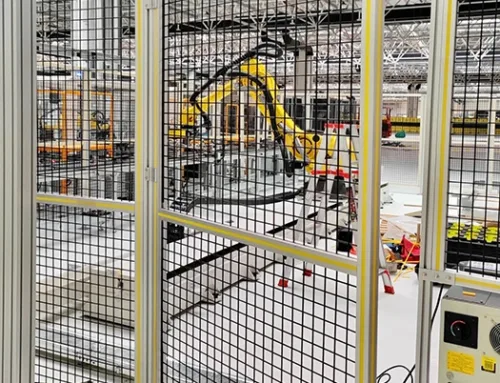
When high-speed metal chips and fly-off scrap need to be contained, Mdfence fence guarding uses a 20x100mm anti-reach mesh and a rigid 20x30mm fully welded rectangular frame to keep protection close to the machine—down to 120mm—without wasting valuable floor space.
Why plasma-cutting cells need fence guarding that can sit closer
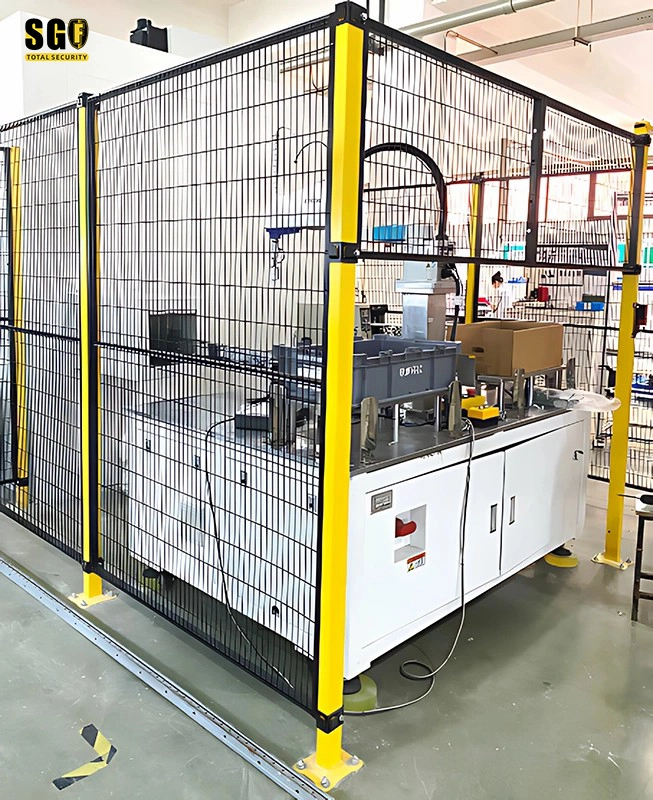
In plasma cutting and milling areas, the problem is not only impact. It is the combination of speed, direction, and clearance. Loose scrap, sharp chips, and flying fragments demand a barrier that can hold the line right next to the equipment instead of being pushed far back just to satisfy a gap rule. Traditional wide-mesh fencing often forces a larger safety setback, and that turns expensive shop floor into dead space.
| Item | What Mdfence provides |
|---|---|
| Mesh opening | 20x100mm narrow anti-reach mesh for debris containment and reduced finger access |
| Frame | 20x30mm fully welded rectangular tube frame for high bending rigidity |
| Installation clearance | Can be placed as close as 120mm from the hazardous machine zone when the layout and compliance plan allow it |
| Application focus | Plasma cutting, milling, metalworking cells, and compact industrial layouts |
What makes this fence guarding system fit the job
A narrow mesh that does more than look secure
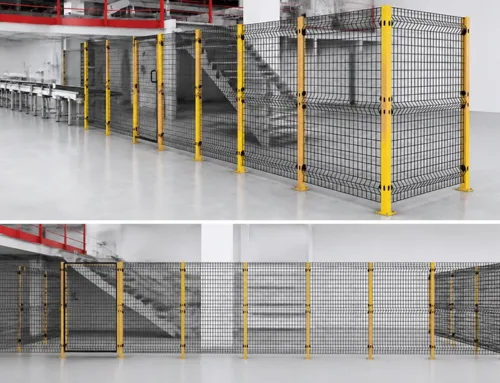
The 20x100mm mesh is the key adaptation for a metal-cutting cell. It helps stop high-speed fragments from escaping the enclosure while keeping the opening narrow enough to support reach-limiting requirements. For buyers, that means the barrier is not just a visual border; it is a working safety surface designed for real debris control in a hot, noisy, abrasive environment.
A welded frame that keeps the line straight
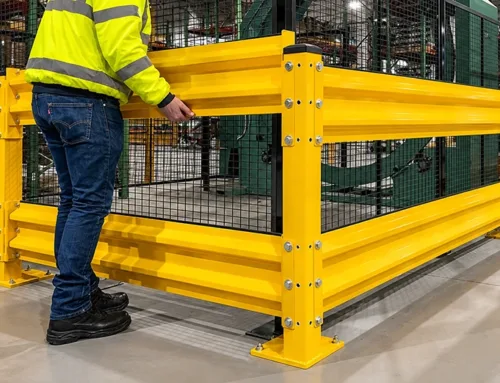
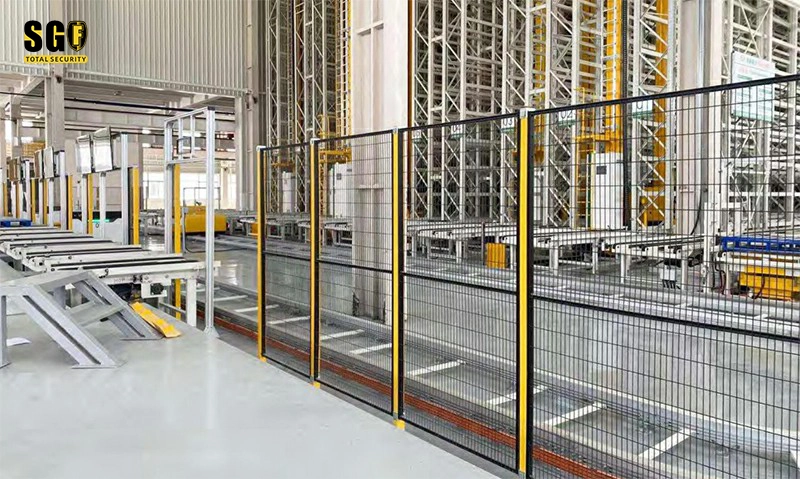
Machine-side fencing fails when the frame twists, the panel sags, or the column line drifts. Mdfence uses a 20x30mm fully welded rectangular tube border to improve bending stiffness and keep the mesh panel aligned over time. That matters in plasma cutting bays where vibration, heat, and regular maintenance traffic can punish weak structures.
Installation evidence for tighter layouts
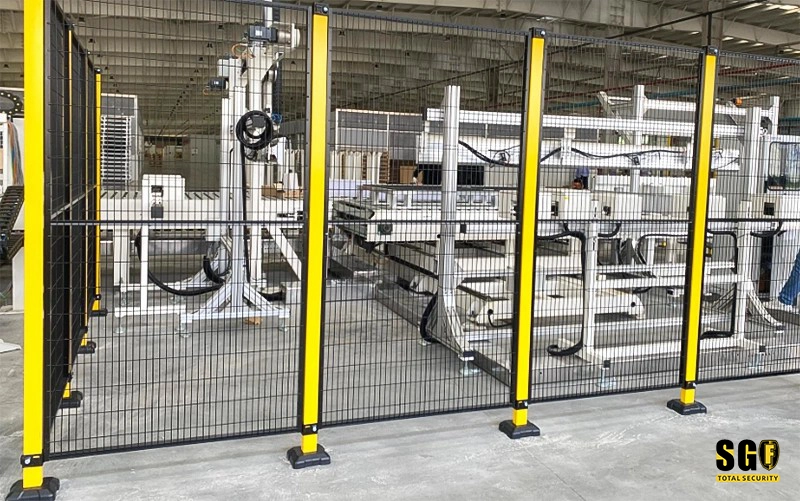
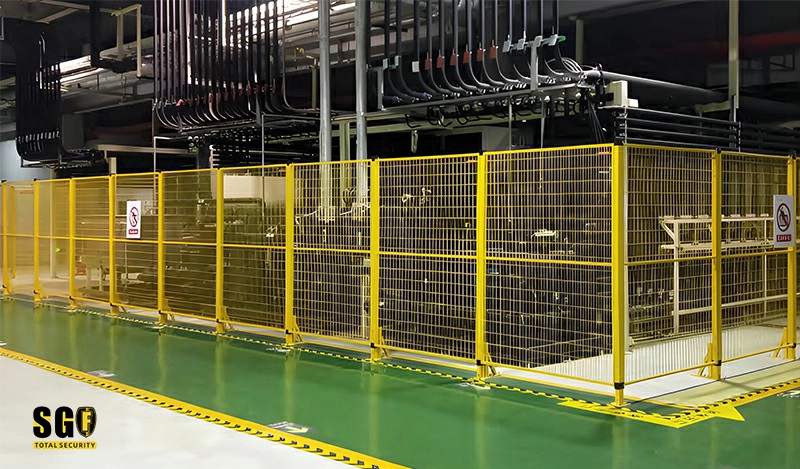
The practical advantage is the installation geometry. If a facility has to preserve aisle width, the fencing must still meet the required safety arrangement without pushing operators and forklifts into wasted circulation space. The installation diagram shows how the base plate, drilling, and expansion bolts support a compact, close-to-machine setup instead of a loose, over-setback perimeter.
Where fence guarding returns floor space
- Plasma cutting bays that throw fine metal fragments and need close-in containment
- Milling and machining cells where chip scatter and maintenance access both matter
- Compact factory lines where every extra meter of setback becomes lost revenue space
- Projects that need an industrial safety fence with a cleaner, more rigid perimeter than loose mesh systems
The result is simple: Mdfence lets the fence guarding line move inward, keeps the hazard zone enclosed, and preserves usable floor area for production, access, and material handling.
What the evidence on the page proves
The image set backs up the same conclusion from three angles: the mesh opening is narrow enough for anti-reach use, the welded frame is stiff enough to hold alignment, and the installation method supports a compact machine-side layout. That is why fence guarding with Mdfence is not a generic barrier choice. It is a space-saving engineering response to a metal-cutting safety problem.
Plan your fence guarding layout with Mdfence
If your plasma cutting or milling cell is consuming too much floor area, specify the hazard source, desired clearance, and access path. We can map the fence guarding perimeter around the machine so you keep protection tight and recover as much usable space as possible.