EN
EN  DE
DE  RU
RU  PT
PT  JA
JA  ES
ES  IT
IT Safety Fencing Machine Guarding for corrosive machining shops
Safety Fencing Machine Guarding for Corrosive Machining Shops
When a metalworking line lives in coolant mist, oil haze, and constant washdown, the fence around it has to do more than block access. Safety Fencing Machine Guarding keeps the cell protected with a 60–80 micron electrostatic powder coat, ISO 9227 salt spray resistance, and flat full-weld joints that do not leave crevices for grime or rust to start.
What changes in a high-corrosion machine shop
In precision machining and deep metal processing, the fence is constantly exposed to cutting fluid, lubricant mist, metal dust, and repeated cleaning. Cheap painted frames usually fail in the same way: the coating blisters, the tube corners rust first, and the small gaps around brackets become dirt traps. Once that happens, the line loses both appearance and durability, and the 5S standard starts slipping even before the safety function is compromised.
| Corrosive shop challenge | Why Safety Fencing Machine Guarding fits |
|---|---|
| Oil mist and coolant splash attack the frame every shift | 60–80 micron electrostatic powder coating adds a dense surface barrier for long service life. |
| Salt-like corrosion and cleaning chemicals shorten fence life | ISO 9227 salt spray testing confirms the finish is built for harsh corrosion exposure. |
| Open seams trap dirt and accelerate rust around connections | Flat full-weld contact points remove easy-to-hide crevices at the wire-to-frame interface. |
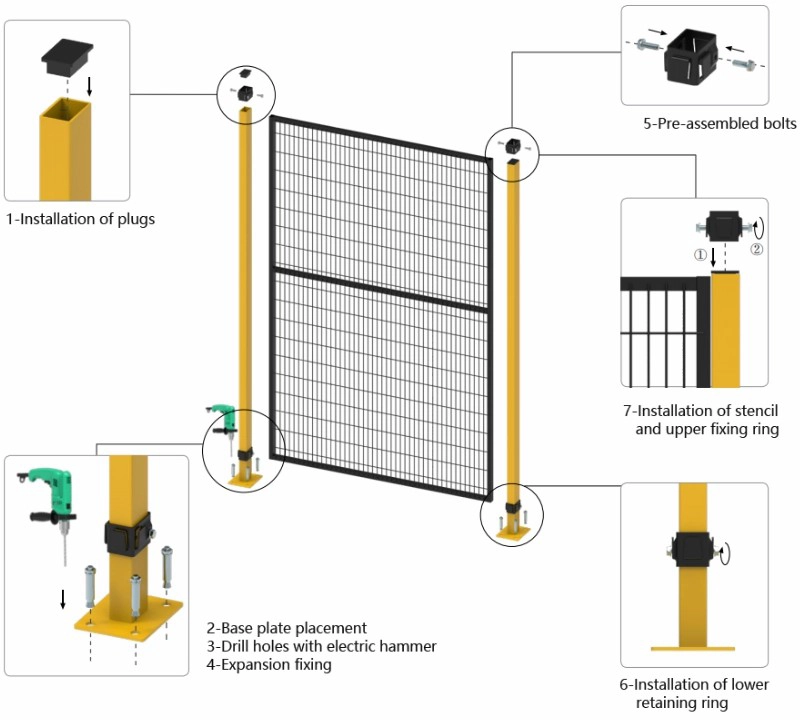
| Unstable base details and weak joints create maintenance headaches | Technical details on the proof board and installation diagram support a more controlled, repeatable build. |
Three structural reasons it lasts longer
1. Coating thickness built for real shop abuse
The surface is not treated like a decorative finish. The 60–80 micron powder layer gives the frame a thicker protective envelope than thin spray paint, so it holds up better where coolant, oil haze, and routine wipe-downs are part of daily production. That is why it is more suitable for machine guarding in corrosive processing zones than low-cost alternatives.
2. Flat full-weld joints that do not collect grime
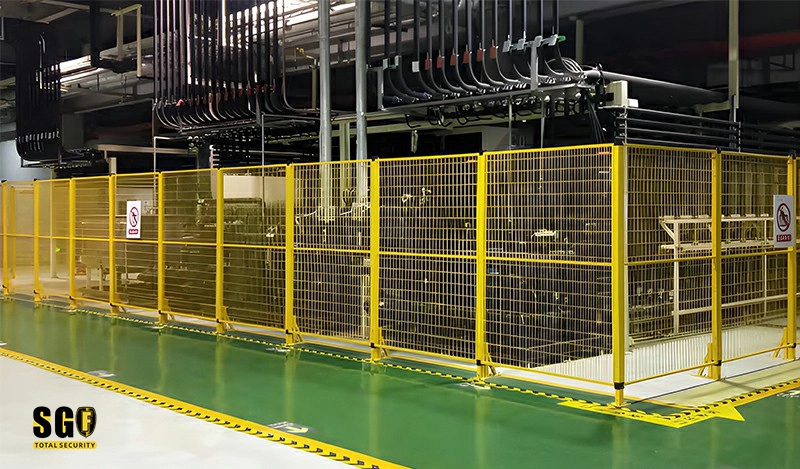
The weak point of many fences is not the mesh itself but the connection points. Safety Fencing Machine Guarding uses full-weld contact at the wire and frame interface, which means there are fewer crevices for chips, oil residue, or cleaning slurry to sit in. That cleaner geometry matters in a plant where hygiene, appearance, and corrosion resistance all affect day-to-day operations.
3. Installation details that support stable long-term use
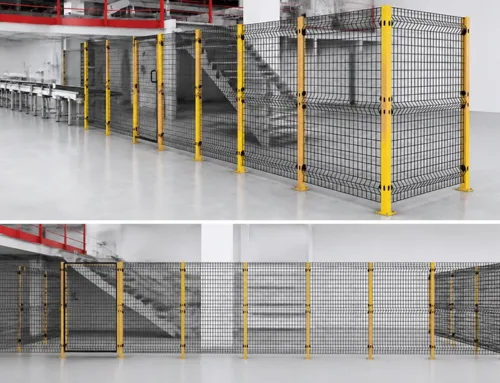
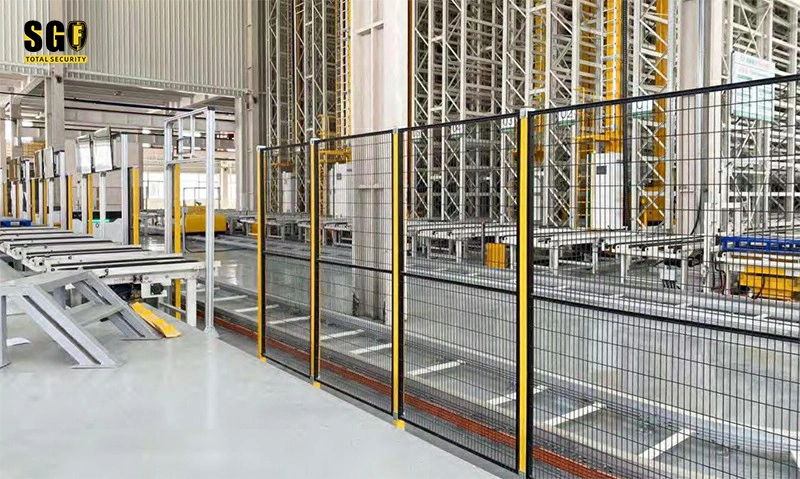
The guard system is designed as a practical industrial assembly, not a temporary barrier. The proof-board detail, post layout, and base plate installation steps show a build that can be fixed, aligned, and maintained in a repeatable way. For plants that want fewer rust repairs and less rework around the perimeter, that stability is part of the value.
Where it delivers the most value
- Deep metal processing lines with coolant mist and lubricant spray
- Machining cells that need clean perimeter separation and a better 5S image
- Plants replacing cheap painted barriers that rust too quickly
- Automation areas that need a safer, longer-lasting guarding envelope
For these environments, the decision is not just about choosing a fence. It is about choosing a guarding system that can survive the atmosphere around the machine. Safety Fencing Machine Guarding is built for that exact condition: harsh exposure, repeat cleaning, and long service life without the early rust and paint loss that undermine lower-grade products.
What the evidence shows
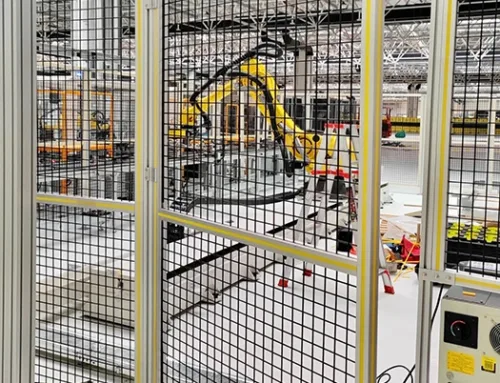
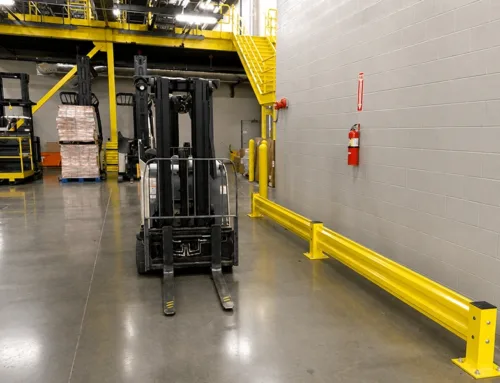
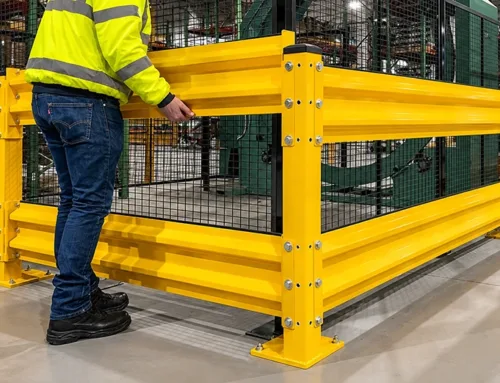
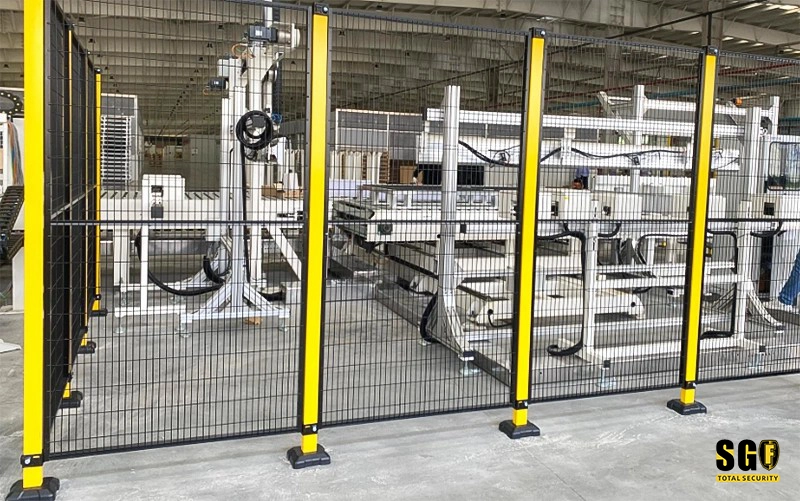
The image set supports the claim from multiple angles: the coating and weld detail prove the protective finish, the installation diagram explains how the system is fixed, the technical front view shows the post-and-clamp structure, and the wide factory shot shows how the fence behaves as a real perimeter solution in a working line. That combination is what makes the product credible in corrosive machining environments.
Build a fence that survives the environment, not just the first delivery
If your current barrier is rusting, staining, or losing finish too quickly, upgrade to a system designed for corrosive production floors. Safety Fencing Machine Guarding gives you the corrosion resistance, structural cleanliness, and long-life performance needed to keep both safety and shop appearance under control.