EN
EN  DE
DE  RU
RU  PT
PT  JA
JA  ES
ES  IT
IT AGV / AMR aisle control
Safety fencing industrial for AGV and forklift separation
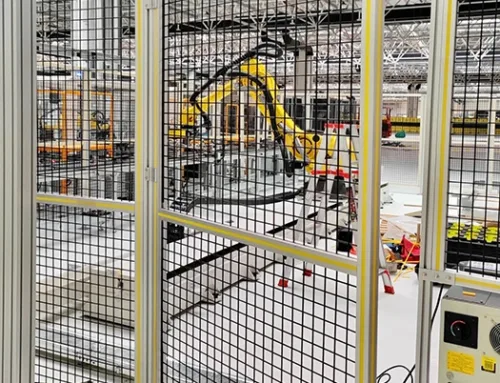
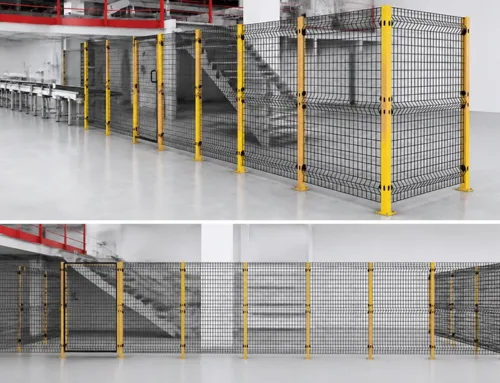
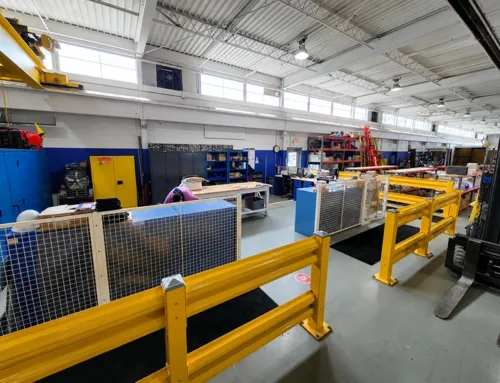
In mixed traffic warehouses, every unplanned pedestrian crossing can trigger an AGV stop, and every forklift-human conflict is a direct OSHA-level safety risk. Mefence uses physical area demarcation, high visibility yellow-black posts, and transparent wire mesh to guide people onto fixed routes without interfering with navigation.
Where the loss happens
Automation does not fail only when hardware breaks. In many warehouses, the real loss comes from ghost downtime: an AGV or AMR stops because a person cut across its route. The machine is healthy, the route is clear enough for the LiDAR to read, yet the aisle is disrupted and throughput drops instantly. On the manual side, pedestrian-vehicle separation remains one of the most enforced safety topics in the warehouse and production floor.
That is why barrier tape, painted lines, and rope barriers are not enough. They mark a boundary, but they do not control behavior. A real barrier must create an obvious route, keep people out of the travel lane, and still let supervisors see what is happening inside the zone.
Problem: frequent aisle crossings create ghost downtime and emergency stops.
Old approach: tape, paint, and ropes define space but do not force traffic discipline.
Why Mefence works: physical area demarcation plus high visibility and a transparent mesh panel.
Why Mefence fits this job
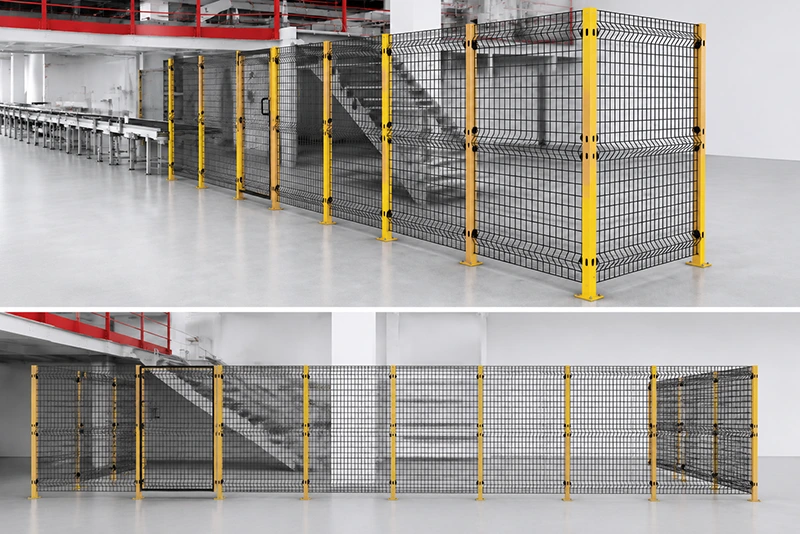
Physical demarcation: the fence divides AGV / AMR corridors from pedestrian routes so people are led to designated access points instead of crossing wherever they want.
High visibility: the yellow-black safety fence color is readable at distance, so the boundary is clear before anyone reaches the aisle.
No navigation interference: the wire mesh panel stays transparent, which supports supervisor visibility and avoids the solid-wall effect of a full partition.
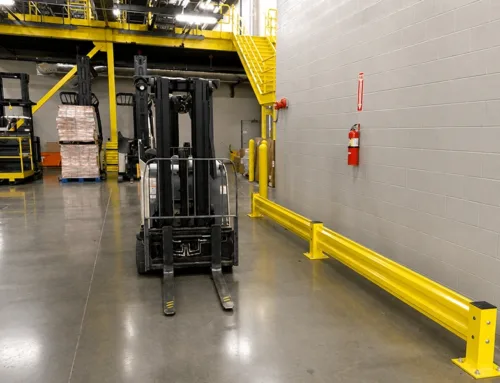
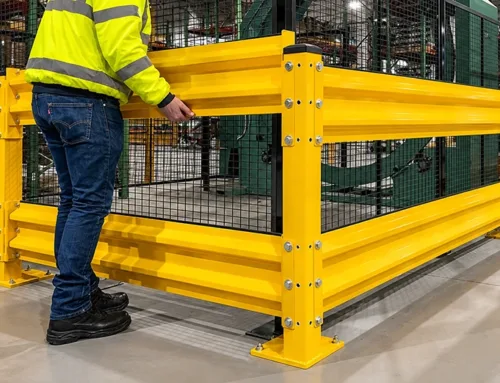
Honest boundary: Mefence is for zoning and guidance. If a project needs impact resistance against a runaway forklift or AGV, that point belongs to the Machine Fence line, not to a demarcation fence.
Structure and parameters that support the result
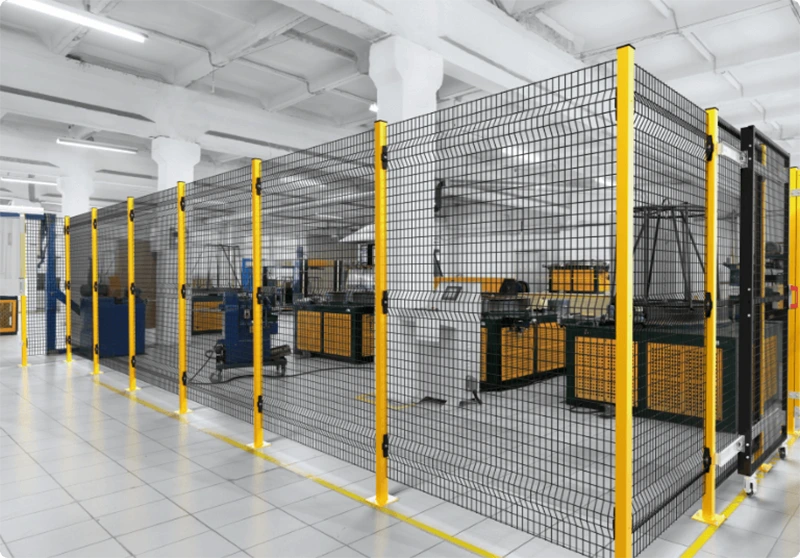
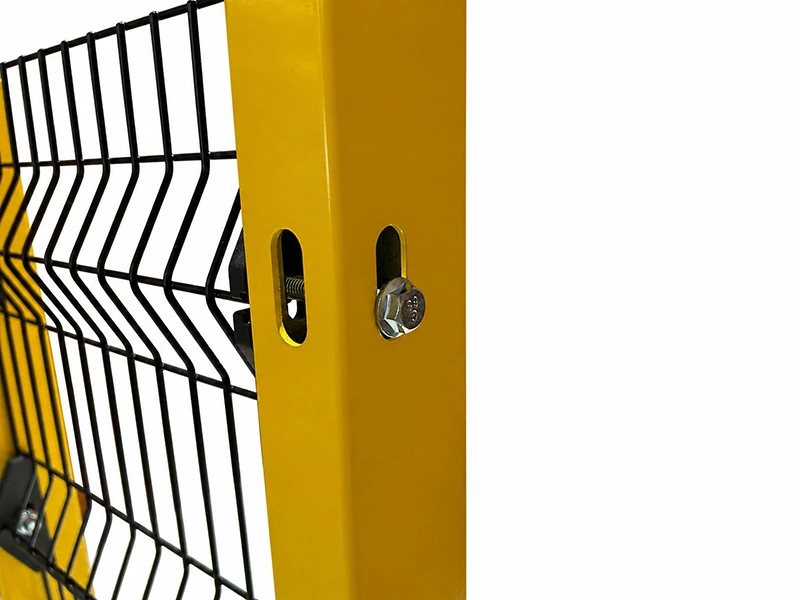
The structure matters because the warehouse does not stand still. A fixed zone today may need a new opening next month. With modular posts and mesh panels, Mefence can be installed cold work only, adjusted on site, and reconfigured when the aisle changes. That is the practical answer to short retrofit windows and rolling automation upgrades.
What changes after installation
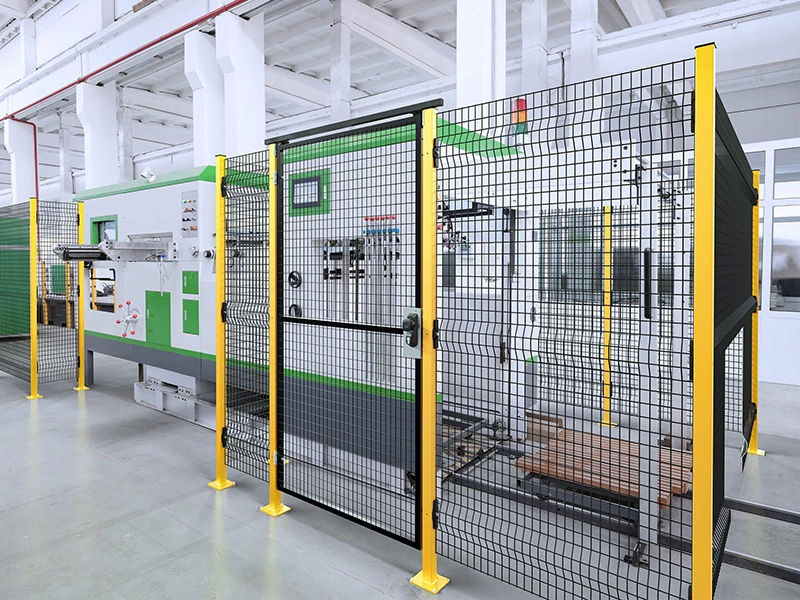
Once the line is physically separated, pedestrian movement becomes predictable. That reduces random aisle crossings, lowers the chance of AGV emergency stops, and makes forklift paths easier to manage. Because the fence is slim profile and transparent, it preserves usable floor space while keeping equipment visible for daily supervision.
In other words, the output is not just safer. It is safer in a way that protects throughput. The same fence that guides people away from the travel lane also helps avoid the production loss caused by repeated stop-start cycles.
Best fit and final selection rule
If your priority is broad pedestrian-vehicle separation, warehouse zoning, or AGV route control, choose Mefence as the large-area demarcation layer. If your priority is impact containment at a high-risk collision point, use a certified machine fence at that point and keep Mefence for the rest of the route. That split keeps the total cost rational and the function clear.