EN
EN  DE
DE  RU
RU  PT
PT  JA
JA  ES
ES  IT
IT Construction fencing for AGV / AMR lane control
Construction Fencing for AGV and AMR Lanes: Mefence Stops Ghost Downtime
If your warehouse has people crossing AGV or AMR routes, the real cost is not only risk. It is the stop-start loss that comes from every unnecessary emergency brake. Mefence uses construction fencing style physical separation to keep pedestrians out of guided lanes, make boundaries easy to see, and protect automation flow without turning the route into a solid wall.
What this construction fencing setup actually solves
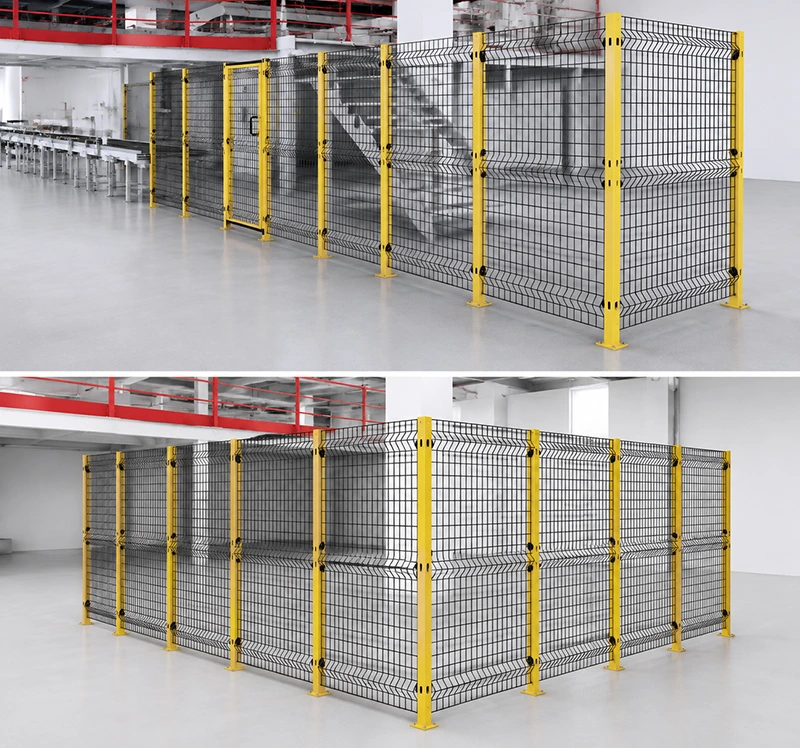
In a mixed traffic warehouse, a painted line or barrier tape does not stop a person from stepping across an AGV path. That is how ghost downtime starts: the AGV sees a person or a forklift in the route, the scanner triggers a stop, and production loses time even when nothing is physically damaged. The same layout also leaves an OSHA-sensitive human/forklift collision risk open. Mefence is built for area demarcation, pedestrian vehicle separation, forklift path barrier layout, and automated equipment guarding. It is a modular industrial safety fence, also searched as safety fence industrial, machine guarding, wire mesh machine guard, frameless safety fence, or 3D safety fence.
| Field | Recommended setup |
|---|---|
| Product family | Industrial safety fence / safety fence industrial for routing people away from AGV and AMR lanes |
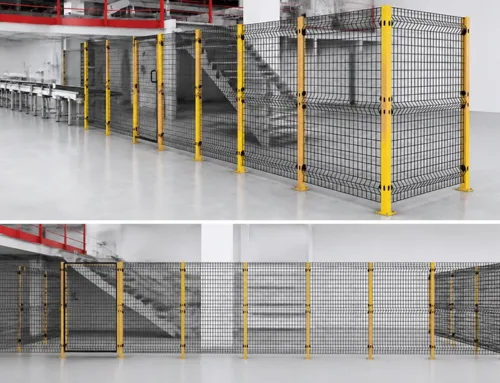
| Structure | Frameless design, 3D welded mesh, no frame border, foldable or modular panel layout |
| Typical size range | Wire diameter 3 mm or 4 mm, mesh opening 50×50 or 20×100, post 40×60 or 60×60, panel height 200-3000 mm |
| Fixing method | Plastic clip fixing, self-tapping screw, expansion bolt, base plate post |
| Main job | Area demarcation, warehouse zoning, pedestrian separation, quick install safety fence, relocatable reusable fence |
Why the structure fits automated traffic better than a solid wall
1) Physical separation, not just a visual warning
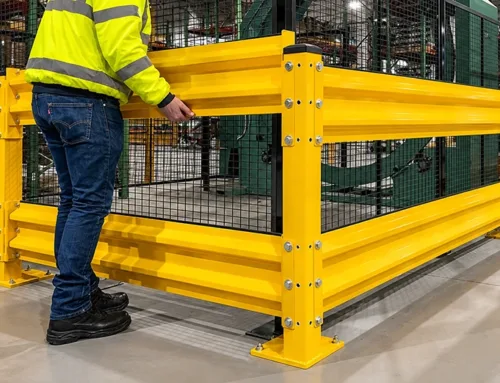
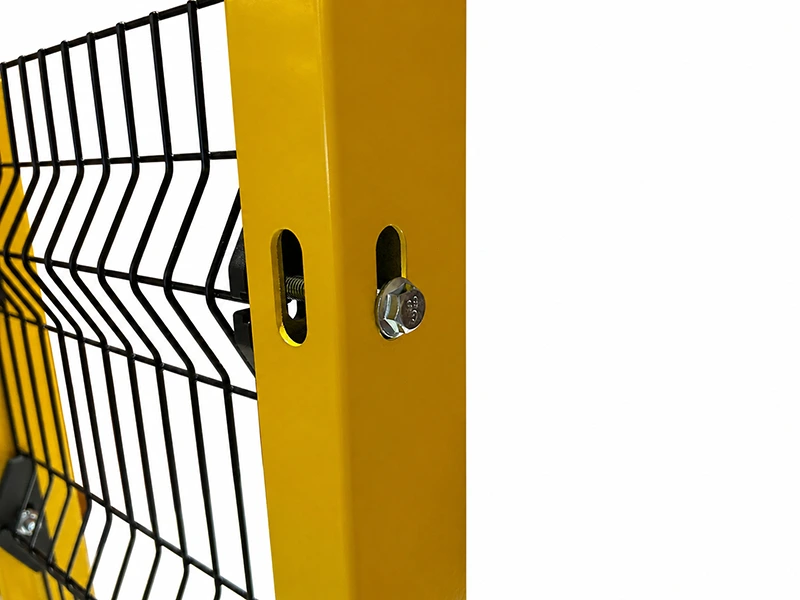
Mefence is the right choice when the old method is just paint, tape, or cones. The panel and post system gives a real boundary, so people are guided to the right passage instead of cutting across the route. The image shows the slotted hole post connection and bolt-mounted joint, which is what makes the layout rigid enough for warehouse zoning while still staying modular and reconfigurable.
2) High visibility, but still open enough for supervision
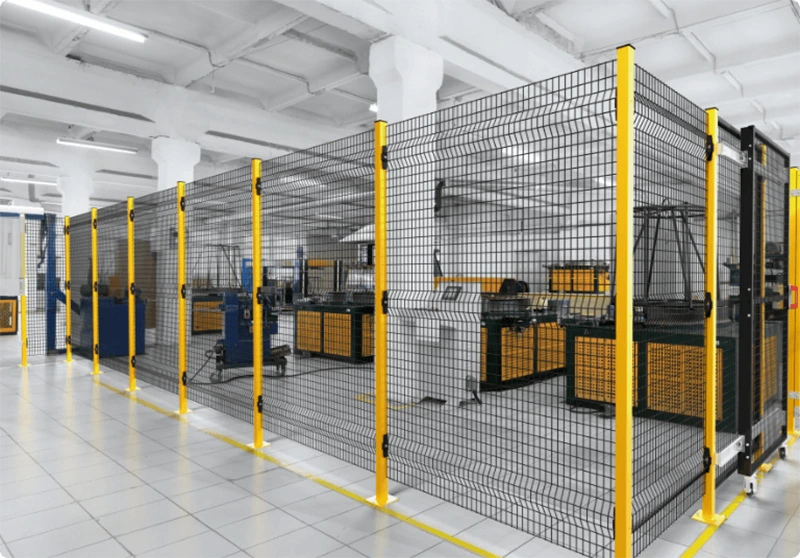
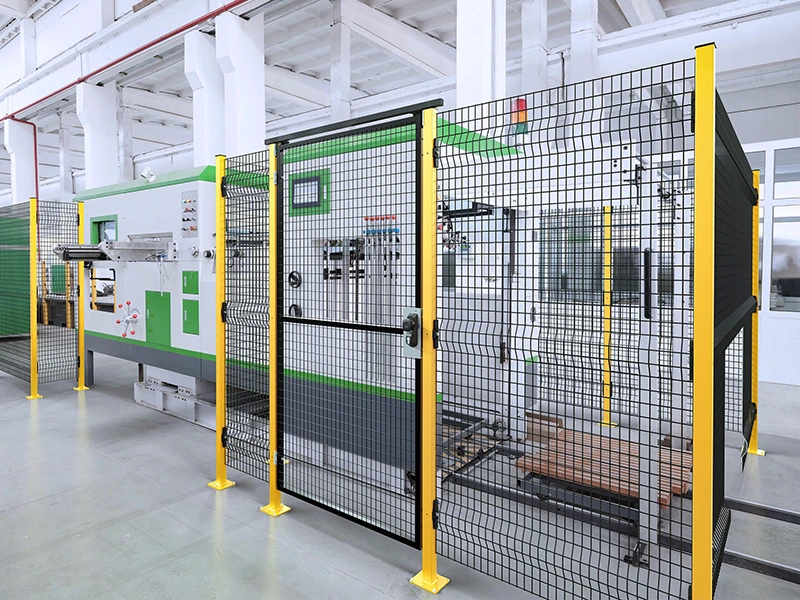
The standard yellow and black color scheme works because yellow reads as warning and black gives contrast at distance. At the same time, the welded wire mesh keeps the view open. Supervisors can see the equipment area through the fence, and the mesh profile is far less like a blind barrier than a solid wall. That matters in automation zones where operators need to monitor belts, stations, and AMR traffic without entering the lane.
3) Controlled access points, not random crossings
AGV ghost downtime usually comes from people crossing the path wherever it is convenient. The better layout is to force movement through a planned gate or passage. This is where Mefence helps most: it creates a single access point, keeps fork truck movement separate from pedestrian routes, and leaves the real high-impact protection points to our Machine Fence product line. That honest split is important. Use Mefence for large-scale lane control; use certified impact-rated guarding where collision containment is required.
Where construction fencing style lane control works best
- Warehouse zoning for AGV and AMR traffic
- Pedestrian vehicle separation in mixed traffic aisles
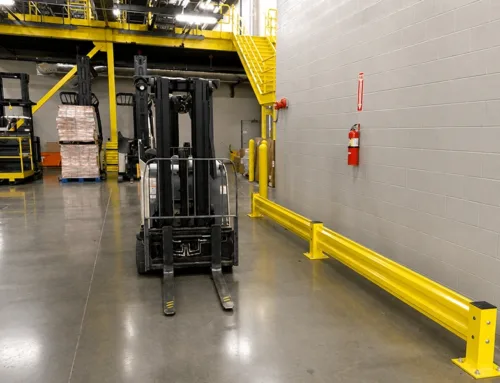
- Forklift path barrier layouts around loading and staging areas
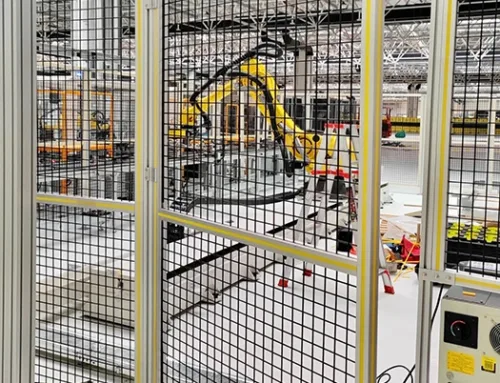
- Robotic workstation enclosure and automated equipment guarding
- Temporary construction fence style partitions during retrofit windows
Because the system is modular, it can be added in stages and moved later. That makes it a practical choice for warehouses that keep changing slotting, traffic flow planning, or machine cell layouts. In other words: a big area can be divided fast without welding, without a full rebuild, and without turning the line of sight into a blind wall.
What buyers usually ask before specifying the fence
Start with the route map, the crossing points, and the lane width. Then match panel height, mesh opening, and post size to the space. If the goal is to stop ghost downtime from random pedestrian crossings, ask for the access-point plan first and the collision-rated product only where impact containment is required. Mefence is built for area demarcation and movement control, not for absorbing a forklift hit.
Need a construction fencing layout for AGV lanes?
If you want to cut unplanned stops, keep people on the right path, and make the boundary obvious at a glance, Mefence is the industrial safety fencing system to start with.