EN
EN  DE
DE  RU
RU  PT
PT  JA
JA  ES
ES  IT
IT Industrial safety fencing for global food plants
Safety fencing industrial for global food plants: one modular standard, one install method
When corporate EHS and food-safety standards are global, but local施工 and welding quality vary by country, safety fencing industrial gives every plant the same result: repeatable area demarcation, machine guarding, and pedestrian vehicle separation without relying on local welding skill.
Why the old welded frame route breaks in multi-country food plants
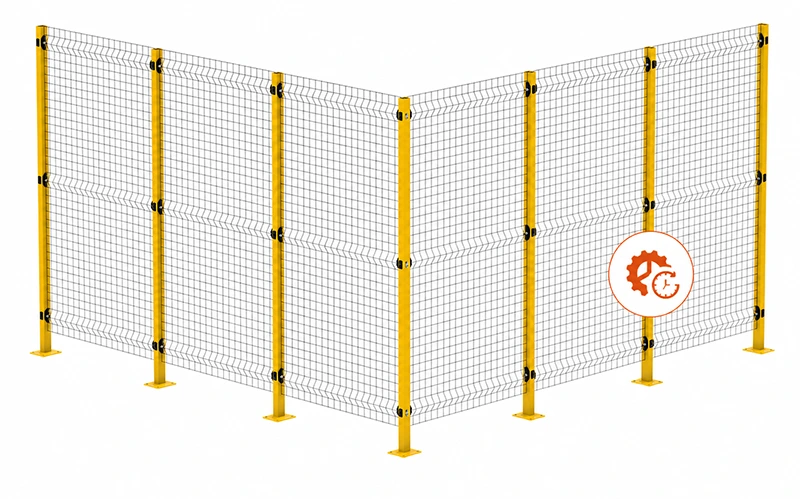
Traditional welded square tube fence builds look simple on paper, but they depend on the local welder, the local jig, and the local interpretation of the drawing. In a global roll-out, that means rework, inconsistent gaps, uneven finishing, and slow handover. Mefence replaces that variable process with a frameless safety fence system built from standardized mesh panels, posts, and clip fixing.
| Plant problem | Mefence response |
|---|---|
| Local welding quality changes from site to site | No welding required; one-person installation with clip fixing and bolt-down base plate posts |
| Group standards need to be repeated in every country | Standardized mesh panel width 200-1400mm and height 200-3000mm make the same layout easy to replicate |
| Food plants need clear EHS separation and access control | Yellow black safety fence or custom color safety fence supports hazard zone separation and controlled access |
| Maintenance teams need fast reconfiguration | Modular reconfigurable system can be relocated, reused, and adjusted without rebuilding the frame |
What the structure shows, and why it matters on site
1) Standardized structure removes welding dependency
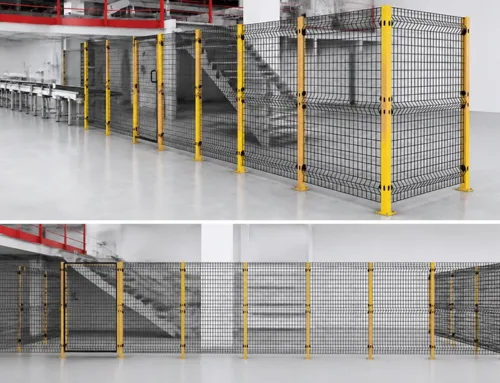
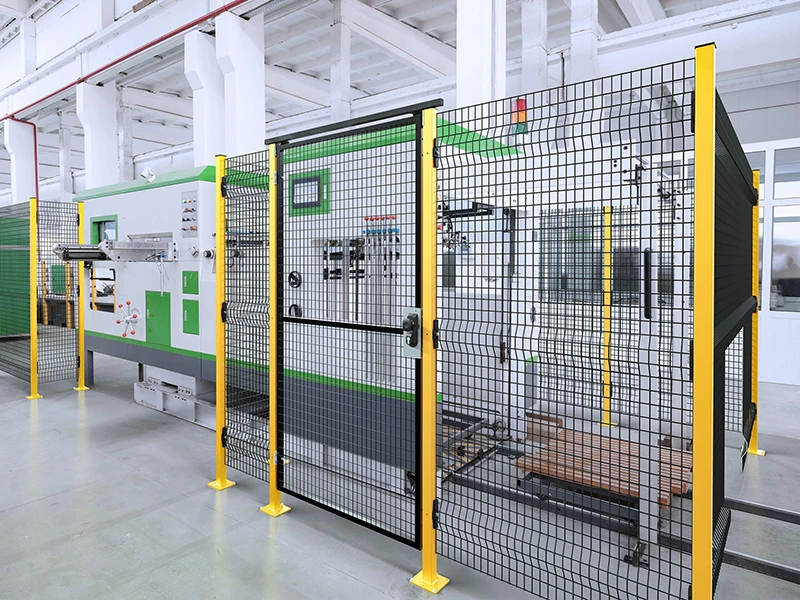
The first proof is the system itself: Q235 carbon steel posts, welded wire mesh, powder coating, and clip fixing. That combination turns the build into a repeatable assembly job instead of a welding job. For a plant maintenance team, the practical result is simple: if they can read a layout, they can complete installation alone without waiting for a local fabricator.
2) The connection details make global copying possible
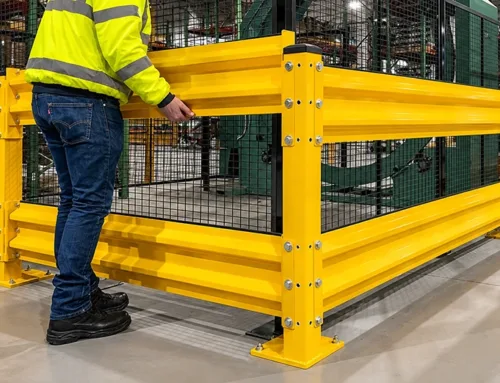
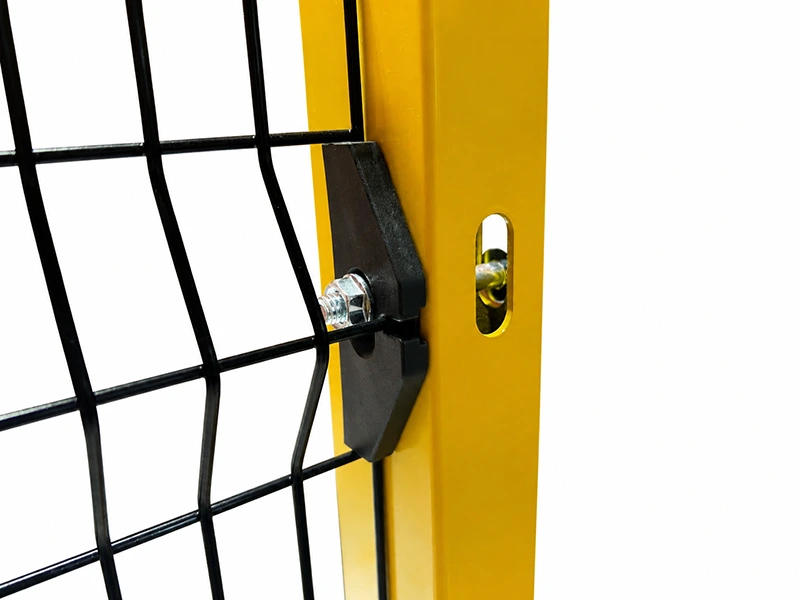
The connector close-up shows why the layout stays consistent: slotted holes, bolt fastening, and rigid post geometry keep every panel aligned. For export projects, that matters more than decoration. Wire diameter 3mm or 4mm, mesh opening 50×50 or 20×100, and post 40×60 or 60×60 can be specified once, then copied into every factory without changing the installation logic.
3) Access, mezzanine, and traffic separation stay under one standard
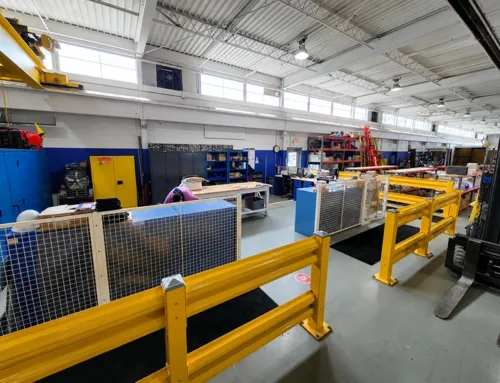
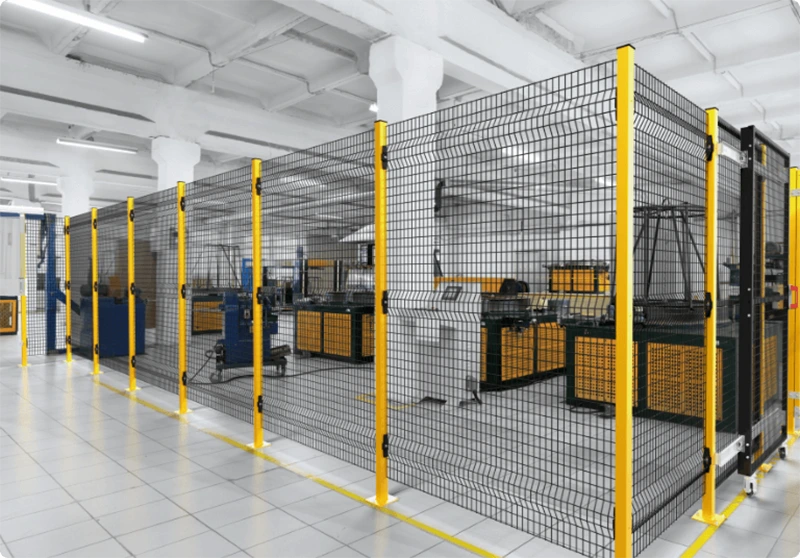
Food plants rarely need only one fence line. They need machine guarding around mixers and conveyors, forklift path barrier lines in warehouse zoning, and safe edges near stairs or mezzanines. Mefence handles those jobs with the same panel family, the same base plate post, and the same color system, so the group can define one standard and still adapt each local plant to the site plan.
Where safety fencing industrial fits best
- Warehouse zoning: separate raw materials, finished goods, and cleaning access paths with a clear industrial safety fencing line.
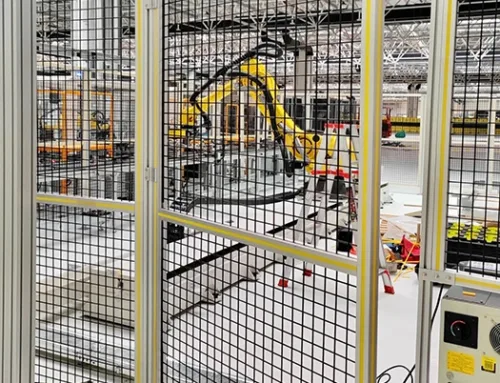
- Robotic workstation enclosure: protect automated equipment and define safe access around filling, packing, and conveyor areas.
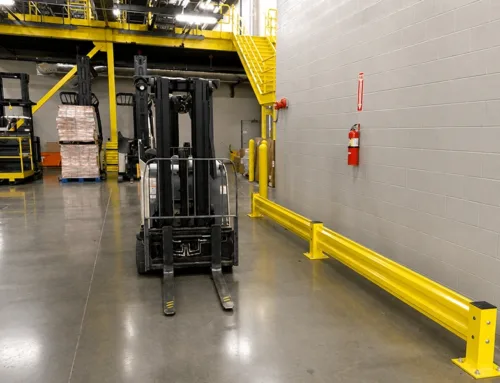
- Forklift path barrier: keep pedestrian vehicle separation visible and easy to maintain.
- Workshop isolation: build temporary partition lines for maintenance shutdowns or seasonal layout changes.
- Mezzanine and stair guarding: use the same modular safety fence system for elevated edge protection.
That is why the product is not just a fence panel. It is a repeatable way to turn an EHS drawing into a physical boundary in every country, with the same appearance, the same installation logic, and the same handover standard.
Specify once, roll out everywhere
If your group procurement team needs OEM supply or batch collection, Mefence can be shipped as a standardized package: mesh panel, post, clip, and gate hardware. Color can follow group rules, including yellow black safety fence or custom color safety fence, so the drawing, the purchase order, and the final site all match. That is what makes a frameless safety fence useful at group level: one spec sheet, one approved layout, one repeatable outcome.
Build the global standard without depending on local welding quality
Use safety fencing industrial to convert a plant zoning rule into a standard part number. The result is faster installation, less rework, cleaner handover, and a layout that can be copied across regions without losing consistency.