EN
EN  DE
DE  RU
RU  PT
PT  JA
JA  ES
ES  IT
IT Global food plant standardization
The problem is not the design brief. Global food groups can write one EHS and food-safety standard for every plant. The weak link is execution: if the guard is welded locally, the final quality depends on the country, the subcontractor, and the welder on site. That is where rework starts.
Why global food plants keep running into the same problem
In a multinational food factory, the target is usually clear: machine guarding, area demarcation, pedestrian separation, and hazard zone separation must look the same in every region. The reality is different. Welded square tube frames, traditional framed fence builds, and ad hoc site welding all look acceptable on paper, but they drift in the field. Hole positions change. Gate gaps change. Powder coating gets damaged during rework. A plant in one country looks compliant; another looks patched together.
That inconsistency is expensive. It creates repeat inspections, local repair work, and endless arguments between the global EHS team and the local contractor. For food factories, the problem is even sharper because the same fence must also support clean, repeatable factory zoning and equipment protection without turning every rollout into a welding project.
Why Mefence fits this job better than local welding
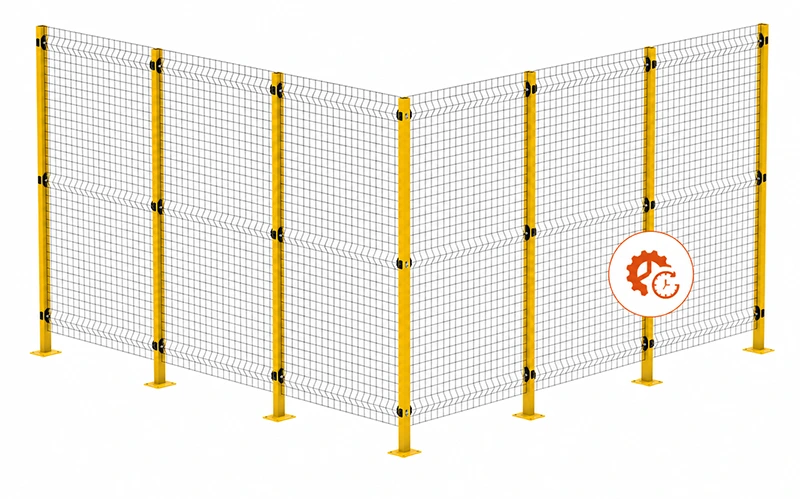
Mefence is a frameless safety fence built around a simple logic: standardize the panel, standardize the post, standardize the clip fixing, then let the site assemble it without welding. The system uses Q235 carbon steel, welded wire mesh panels, powder coating, and modular connections so the layout can be copied from one country to another without depending on local welding skill.
| What the project needs | Mefence answer | Why it matters |
|---|---|---|
| One standard for every plant | Modular reconfigurable system | One drawing, global replication |
| No welding on site | Plastic clip fixing, self-tapping screw, expansion bolt | Lower skill requirement, less rework |
| Fast rollout | One-person installation | Cut install time by up to 50% |
| Layout flexibility | Panel width 200-1400mm, height 200-3000mm | Works across zoning, guarding, and partition jobs |
| Global branding | Yellow black safety fence or custom color safety fence | Group standard colors across markets |
The structure also helps the global sourcing team. If a group wants OEM supply or bulk procurement, the specification can be locked once: wire diameter 3mm or 4mm, mesh opening 20×100 or 50×50, post 40×60 or 60×60, then shipped as a standardized part set instead of a local fabrication instruction.
Evidence in the structure, not just the promise
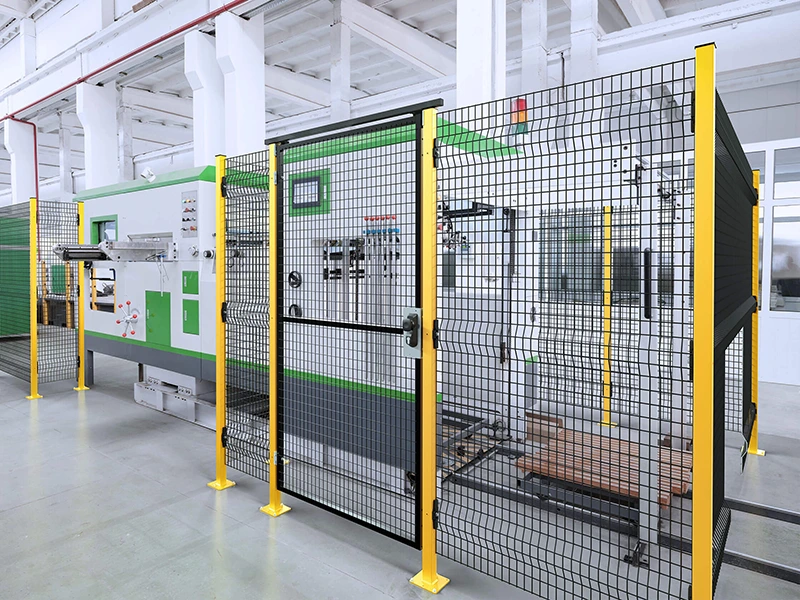
The gate image shows why this system works for food plants: the enclosure stays modular, but access is controlled. That is exactly what a machine guard fence must do around production equipment, conveyors, and service corridors.
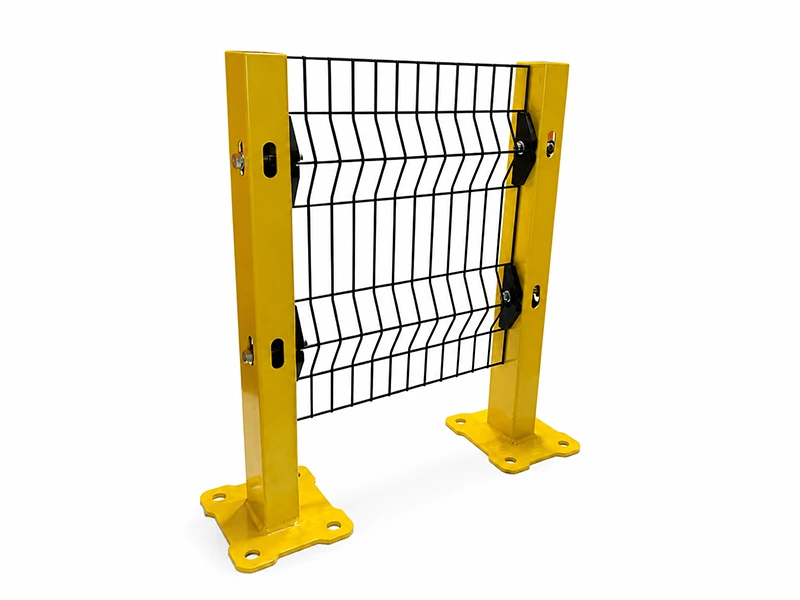
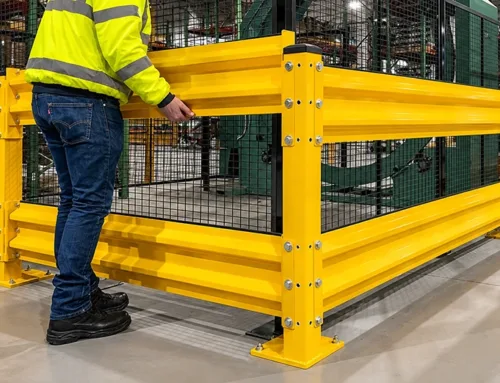
The bolt-down base plate detail matters because it keeps the fence relocatable and reusable. Instead of cutting and re-welding when the line changes, maintenance teams can remove and reinstall the same industrial safety fencing modules.
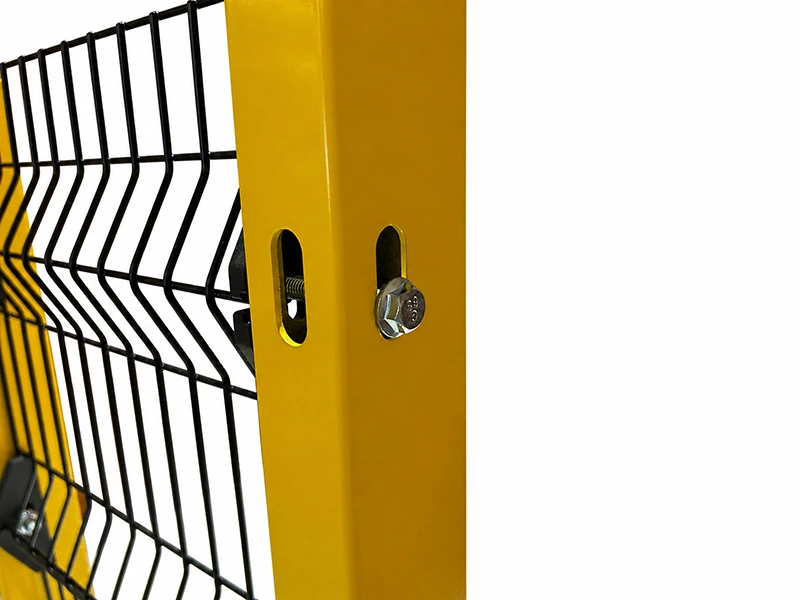
Slotted mounting holes and clip fixing turn alignment into a simple task. That is why the system can be installed by a factory maintenance worker reading a drawing, without waiting for the best local welder.
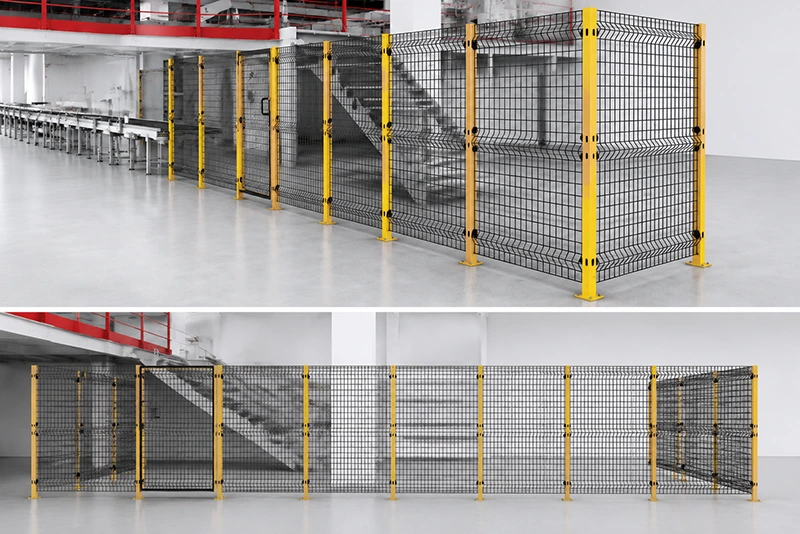
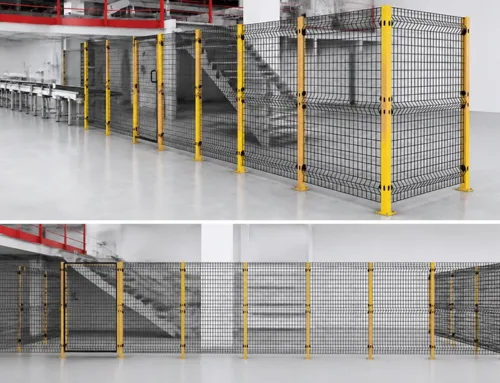
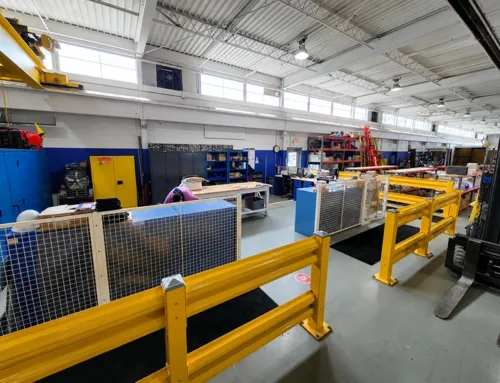
The warehouse enclosure view shows the final result: clean area demarcation, consistent yellow posts, and a wire mesh machine guard that looks the same from one site to the next.
Where this approach is most valuable
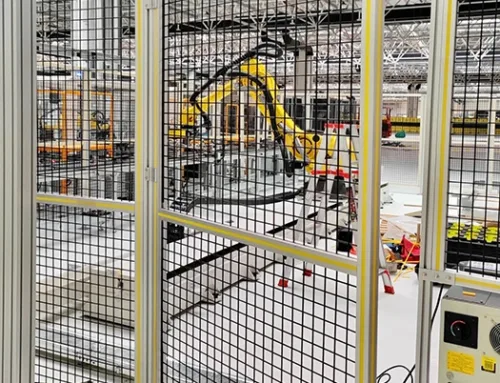
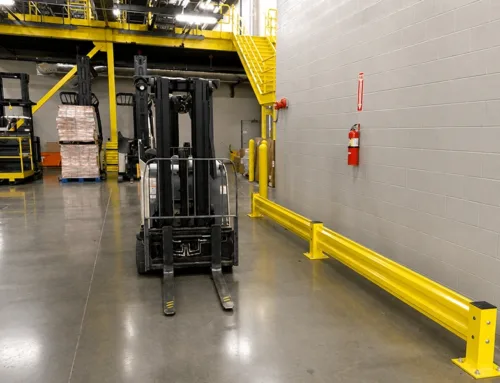
For cross-border food groups, the best use case is not a one-off project. It is a standard package that can be copied into every plant: warehouse zoning, storage area separation, robotic workstation enclosure, automated equipment guarding, and pedestrian vehicle separation. The same modular fence can be used in a new build, a line upgrade, or a regional retrofit.
Because the system is framed around repeatable parts, the procurement team can lock the spec, the EHS team can lock the safety intent, and the local site team can lock the installation method. That is the real advantage: the fence becomes a global standard item, not a local fabrication problem.
What the final result looks like
Instead of a welded fence that depends on local workmanship, Mefence gives you a construction safety fence that is easy to specify, easier to install, and easier to replicate. The result is predictable compliance, cleaner handover, and less rework across every country in the group.
For OEM and bulk projects, the next step is simple: lock the color card, lock the panel dimensions, and ship the same industrial safety fence package everywhere the group operates.