EN
EN  DE
DE  RU
RU  PT
PT  JA
JA  ES
ES  IT
IT Industrial safety fence vs machine guarding
Mefence vs Machine Guarding: Area Demarcation vs Impact-Rated Protection in Factory Layouts
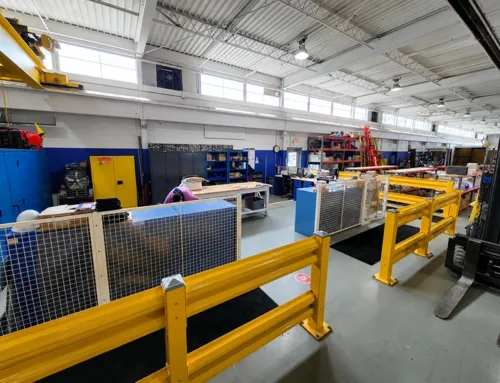
Mefence is built for area demarcation, access control, and factory zoning. It is the right tool when you need a clear boundary around a robot workstation, automation zone, or warehouse lane, but it is not an impact-rated barrier and should not be used to claim direct protection against robots, conveyors, forklifts, or other moving equipment.
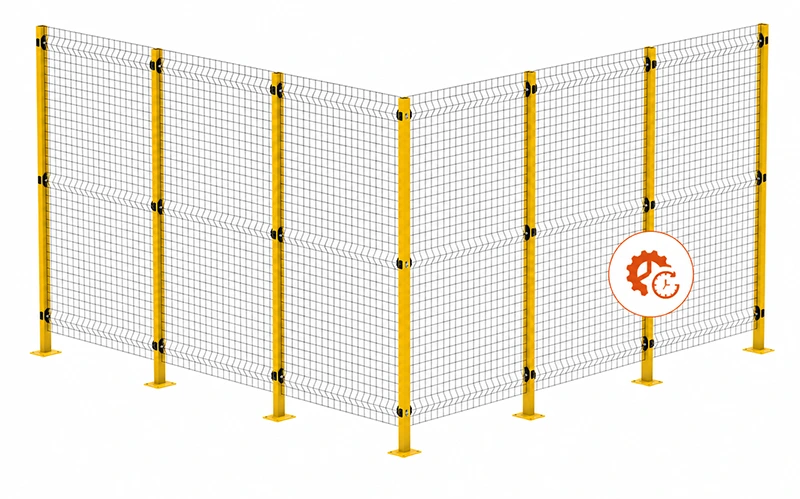
Where Mefence fits — and where machine guarding is required
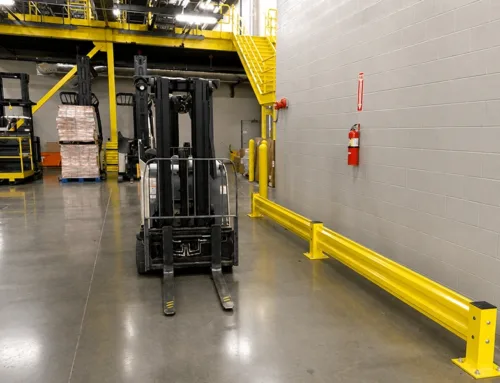
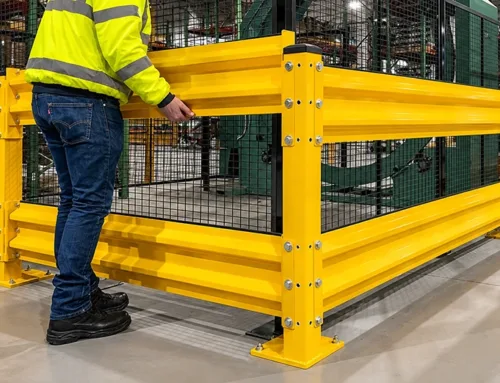
The decision is simple: if the job is to mark space, manage traffic, and keep people out of a defined zone, Mefence fits. If the job is to stop impact, contain debris, or survive contact with moving equipment, you need impact-rated machine guarding or a higher-spec protective barrier.
| Decision point | Practical answer |
|---|---|
| Use Mefence when… | You need area demarcation, warehouse zoning, pedestrian separation, or a clear boundary around automation areas. |
| Use machine guarding when… | The hazard includes direct contact, collision loads, thrown parts, or any requirement for impact-rated protection. |
| Installation method | Field cutting, clip fixing, self-tapping screw fastening, and no welding on site. |
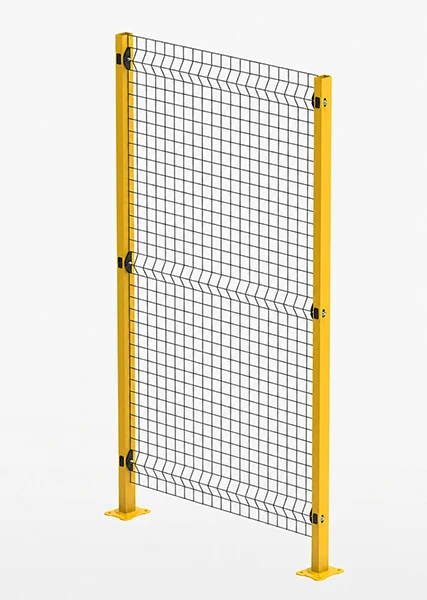
| Common geometry | Wire diameter 3mm or 4mm, mesh opening 20×100 or 50×50, panel width 200-1400mm, panel height 200-3000mm, post 40×60 or 60×60. |
Why Mefence works for zoning projects
1) Frameless 3D welded mesh gives a clean boundary
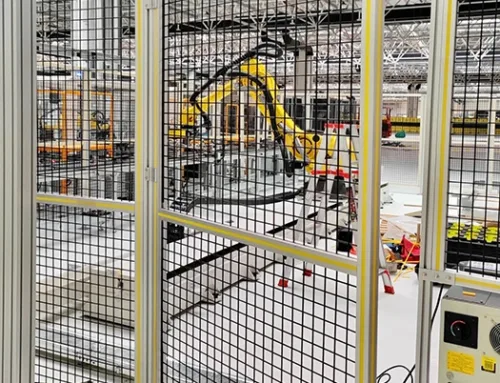
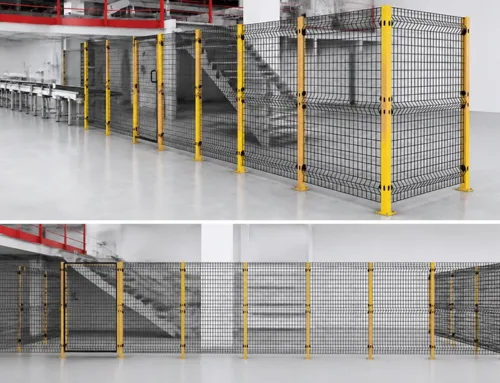
The frameless design keeps the system compact and easy to read on the floor. The 3D welded mesh panel provides a solid visual boundary for robot workstation enclosures, warehouse partitions, and storage area separation without pretending to be impact-rated protection.
2) Field cutting and no-welding installation speed up layout work
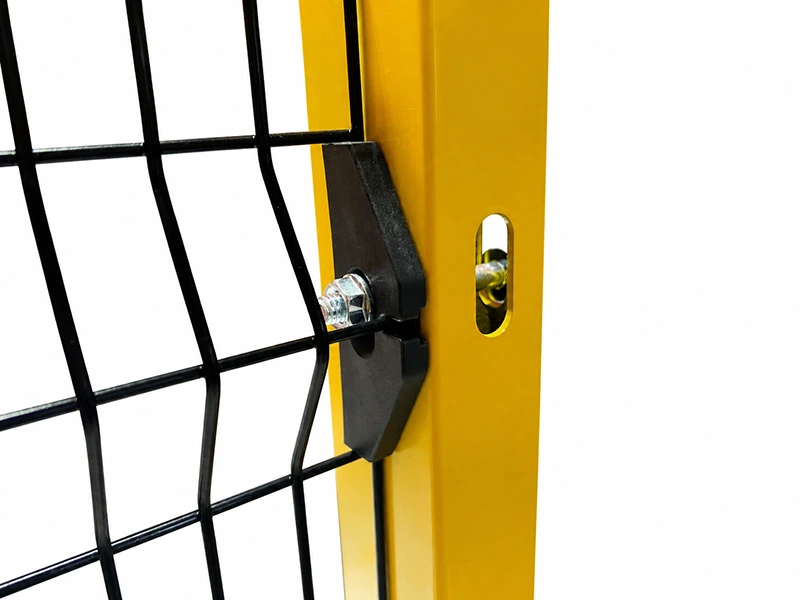
When the floor plan changes, the panel can be cut on site and fixed with clips plus self-tapping screws. That matters in factories where the boundary line is still being refined during commissioning, FAT follow-up, or warehouse slotting.
3) Modular reconfiguration keeps the boundary useful after the line changes
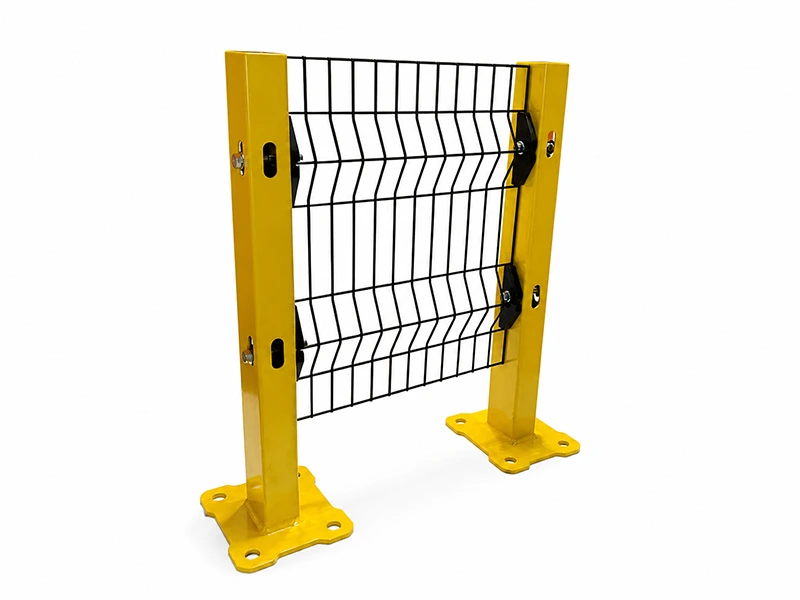
Because the system is modular, the same fence line can be extended, shortened, or re-routed as production changes. That is the real value of Mefence: fast area definition today, then a reusable layout tomorrow.
Typical use cases for area demarcation
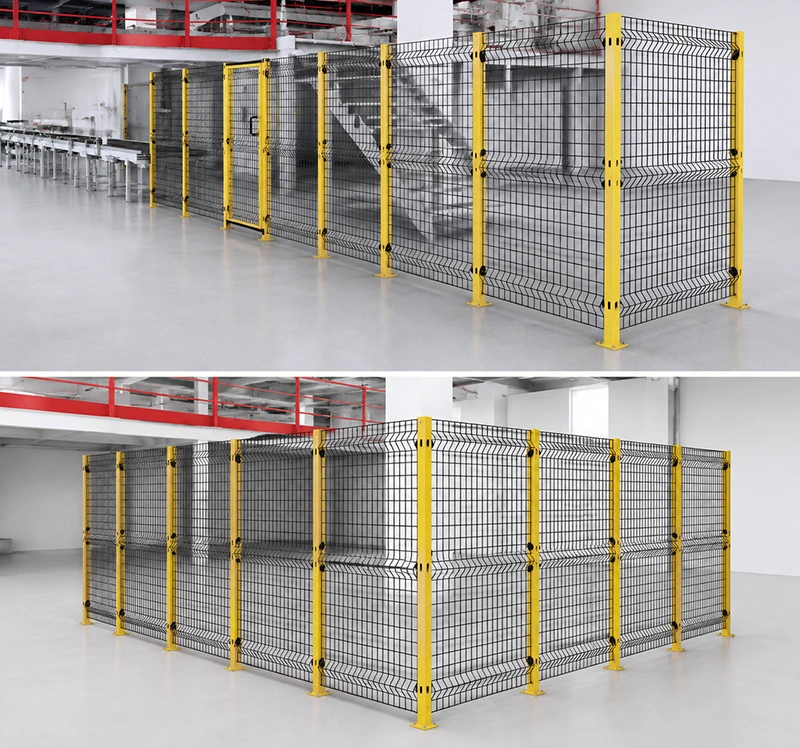
- Warehouse zoning and storage area separation
- Pedestrian vehicle separation in mixed traffic aisles
- Robot workstation boundary lines where access control is required
- Automated equipment area demarcation during layout planning
- Workshop isolation and temporary partitioning
In these cases, Mefence helps the site team define space, control flow, and keep the layout readable. If the hazard assessment requires impact resistance, choose machine guarding instead of treating a zoning fence like a protective barrier.
What to ask for before you specify a fence
Start with the boundary job, not the color. Share the floor plan, access points, aisle width, and whether the requirement is zoning or impact-rated protection. If you only need demarcation, Mefence is usually the cleaner and faster build. If the line must resist direct impact, upgrade the protection concept before you buy the fence.
Need a boundary that matches the risk level?
Send the layout and we will map the boundary, panel sizes, and install method first. Then we can confirm whether Mefence is enough for area demarcation or whether the project needs machine guarding with impact-rated protection.