EN
EN  DE
DE  RU
RU  PT
PT  JA
JA  ES
ES  IT
IT WAREHOUSE FLOOR PROTECTION
Self-Rebounding Barrier for Forklift Aisles and Loading Bays
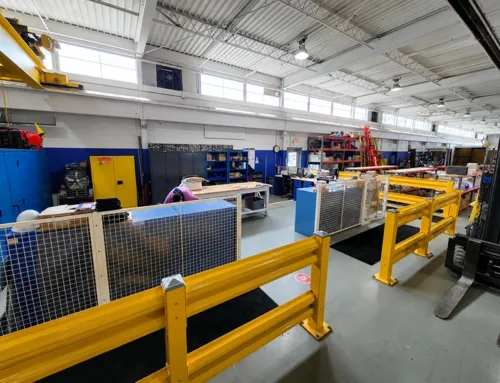
When steel rails transfer impact into the slab, the result is often anchor pullout, cracked concrete, and avoidable downtime. FCBarrier is a Self-Rebounding Barrier built for warehouse safety barrier layouts, loading dock protection, and retrofit barrier projects where floor integrity matters.
Why rigid barriers fail at the floor
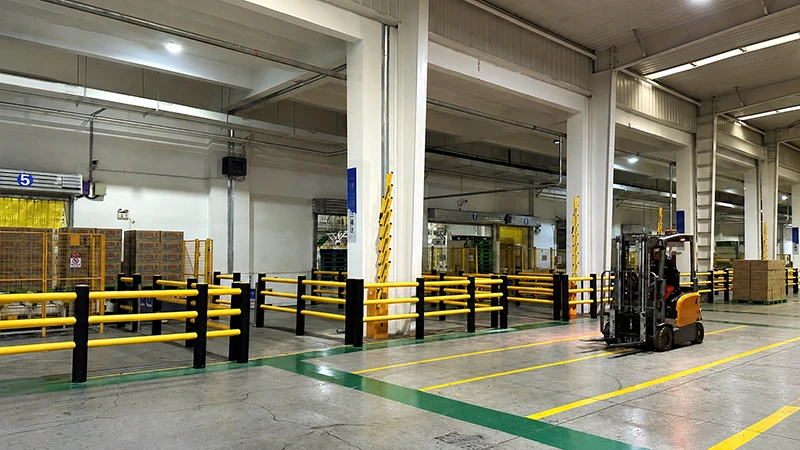
In warehouse and distribution centre safety projects, the problem is not only vehicle impact. The bigger cost is often what happens after impact: the force moves into the floor, damages anchors, and turns one collision into a repair shutdown. FCBarrier uses an energy absorbing polymer barrier concept to keep residual force lower than steel and help protect building structure.
| Problem | FCBarrier response |
|---|---|
| Steel barrier transfers load into anchors and slab | Self-Rebounding Barrier design helps absorb impact and reduce residual force at the base |
| Concrete cracks around the impact point | Floor-anchored base layout is used to protect the slab and simplify future replacement |
| Repair work blocks aisles and loading bays | Modular barrier sections support quick install and retrofit barrier upgrades in live sites |
| Repeated collisions create maintenance cost | Low maintenance, corrosion free polymer construction is designed for long service life |
Why the Self-Rebounding Barrier fits live facilities
1. Lower floor damage than rigid steel rails
FCBarrier is positioned as a Flexible Safety Barrier for forklift safety barrier rows where the key KPI is not only stopping the vehicle, but reducing repair cost after the strike. The product traffic profile highlights impact resistant, energy absorbing, and self-rebounding performance.
2. Modular installation for retrofit projects
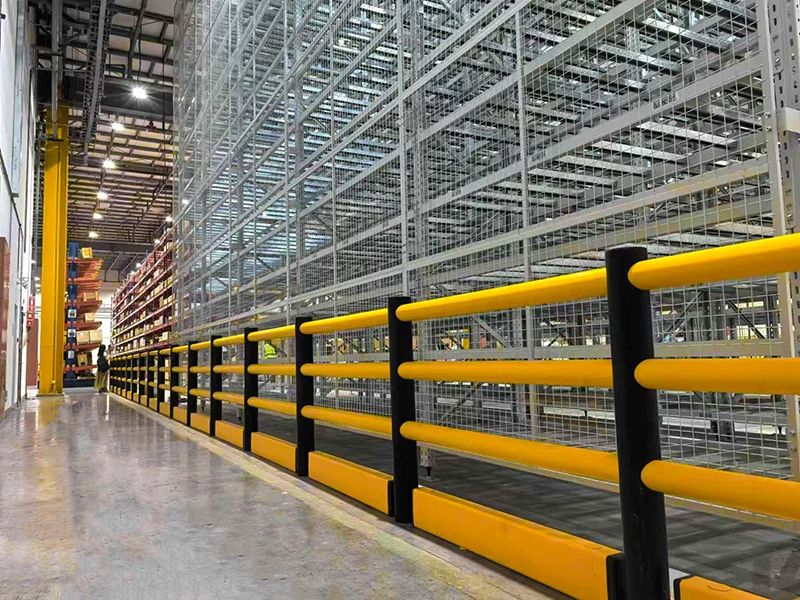
For distribution centre safety upgrades, a modular barrier is easier to add around existing traffic routes, columns, and loading docks. That means less demolition, less shutdown time, and faster repair / replace cycles when a section needs service.
3. Structural detail that supports safe anchoring
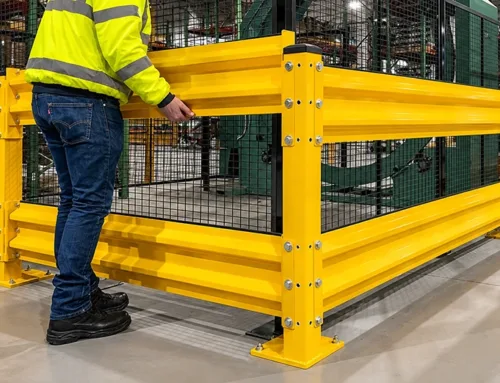
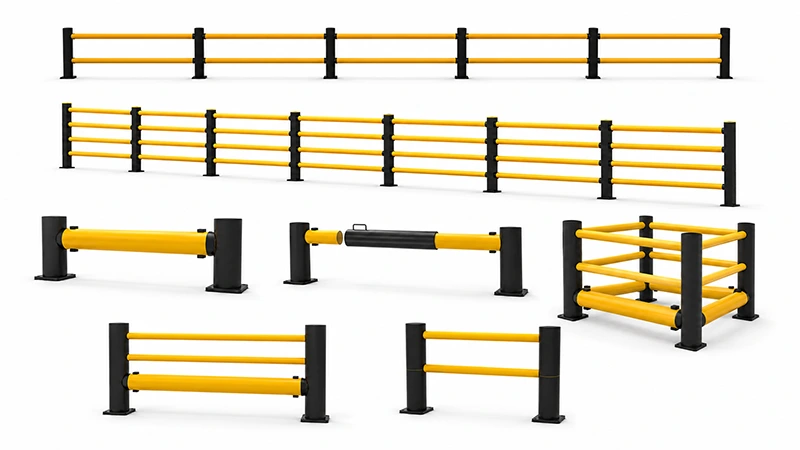
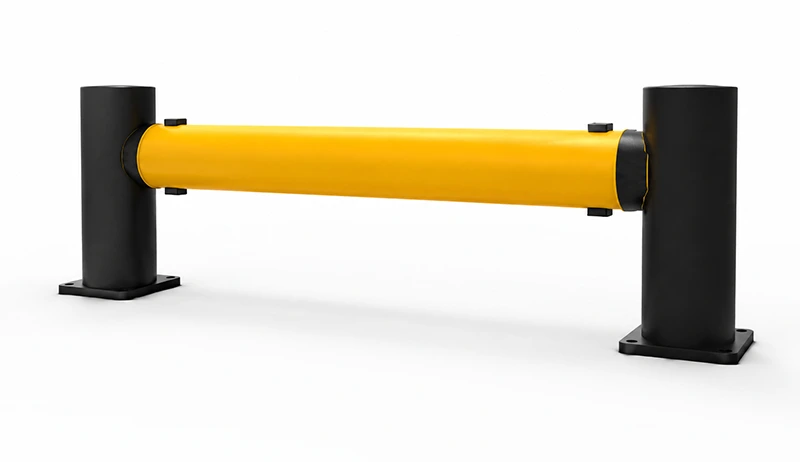
The visual evidence matters: bolted base plates, floor-mounted posts, and multi-rail configurations help explain how the system is built for warehouse safety barrier use. The traffic profile also lists Mortise & Tenon Quick-Install and Floor-Anchored Base as part of the installation vocabulary.
Where FCBarrier is typically specified
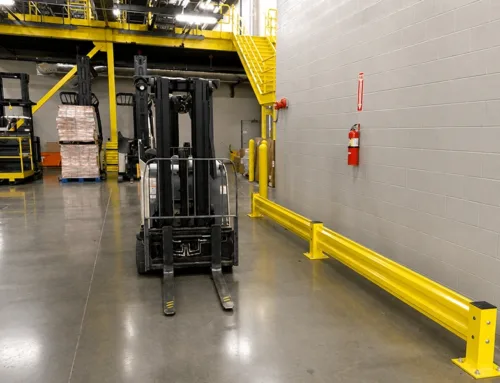
- Warehouse Safety Barrier layouts around forklift aisles and racking protection zones
- Loading Dock Protection where traffic and slab protection both matter
- Logistics Centre Barrier retrofits in live distribution centres
- Manufacturing Plant Safety and machinery protection at access points
- Food & Beverage Safety Barrier projects where corrosion free, low maintenance hardware is preferred
For facilities that want Pedestrian & Asset Protection without turning every collision into a concrete repair job, a Self-Rebounding Barrier can be the practical step between rigid steel and full redesign.
Evidence and specification notes
Traffic terms used here follow the FCBarrier product profile: Self-Rebounding, Energy Absorbing, Impact Resistant, Modular Installation, Retrofit Barrier, and PAS 13 Compliance as a content and certification target. The system is presented as a flexible crash barrier option for sites that need lower residual force at the floor and faster recovery after impact.
Plan the barrier line before the next impact
If your current steel barrier is cracking concrete, pulling anchors, or forcing aisle closures after impact, FCBarrier is built to change that maintenance pattern. Send the aisle width, truck route, and protected assets, and we will map the barrier line for your site.