EN
EN  DE
DE  RU
RU  PT
PT  JA
JA  ES
ES  IT
IT FCBarrier Application Brief · Loading Bay & Mezzanine Edge
Loading Dock Doors and Mezzanine Edges: A Self-Rebounding Polymer Crash Barrier for Repeated Forklift Impact
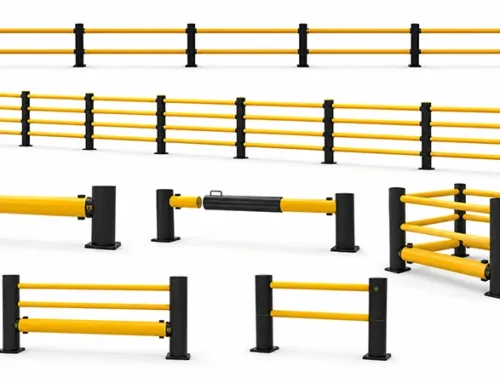
A modern fulfilment or distribution centre usually runs two elevated hazard surfaces: the dock door apron where a forklift reverses into a wall position at the end of every load, and the mezzanine / loft deck perimeter where pickers stage pallets three or four metres above the floor. Standard practice is to weld a steel angle or bolt a steel corner guard to the slab. The first hard hit cold-forms the steel, the anchor pulls a chip out of the concrete, and the deformed guard itself becomes the next snag hazard for the next trailer. FCBarrier ARMORFLEX™ polymer flexible crash barriers absorb roughly 80% of strike energy and rebound to shape, with a mortise & tenon quick-release cell that lets a maintenance team swap one damaged segment in minutes without grinding out anchors or shutting the dock.
Where the Forklift Energy Actually Lands at a Dock or Mezzanine
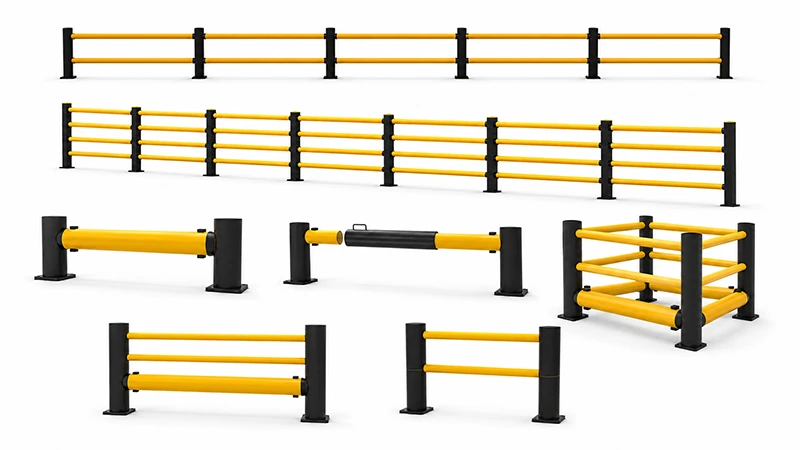
At a busy loading dock, the forklift does not hit the racking — it hits the column, the dock door post, or the slab edge where the concrete pour stops. At a mezzanine, the same truck often reverses toward a 3- to 4-metre drop while the picker steps back from the pallet face. OSHA 29 CFR 1910.178 (powered industrial trucks) and 1910.212 (general workplace requirements) treat both surfaces as elevated hazard zones that need a physical impact-rated boundary, not a painted line. The FCBarrier Joule ladder maps a typical dock and mezzanine layout to the correct series without oversizing the spec.
| Application zone | FCBarrier series | Energy rating | Equivalent forklift hit |
|---|---|---|---|
| Dock door apron & dock column | CTR190+ column protector | 28,950 J | 8 t @ 9.6 km/h |
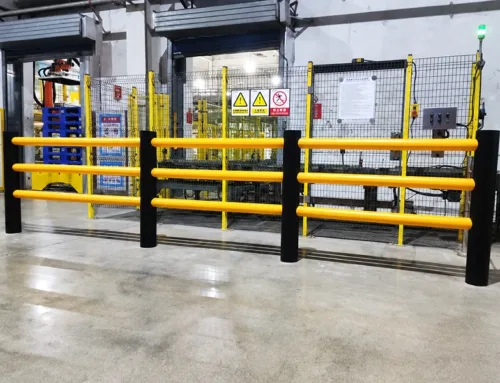
| Loading dock outer perimeter | DR190 double rail | 28,950 J | 8 t @ 9.6 km/h |
| Mezzanine / loft deck edge | TR190+ traffic rail | 28,950 J | 8 t @ 9.6 km/h |
| Pedestrian walkway at mezzanine | TR148+ traffic rail | 19,000 J | 6 t @ 9 km/h |
| Light-mezzanine returns, pallet staging | SR148 single rail | 14,400 J | 4 t @ 9.6 km/h |
Why Polymer Outperforms Steel at the Dock and Mezzanine Edge
1. Self-Rebounding Polymer Cell That Catches the First Forklift Hit
The ARMORFLEX™ polymer body of an FCBarrier segment deflects on impact and returns to its original profile — the published figure is up to 80% of strike energy absorbed and a working shape recovered after the load leaves. A steel corner guard does the opposite: it cold-forms permanently, and that permanent deformation is the next pallet tear or the next operator injury waiting to happen. Over a twelve-month dock cycle, a polymer cell can take dozens of hits without the anchor being pulled, the slab being chipped, or the guard having to be cut out and re-welded. For a mezzanine deck that already carries a fall-of-consequence penalty, the difference between a recoverable deflection and a permanent buckle is the difference between a near miss and a recordable incident.
2. Mortise & Tenon Quick-Release for the Damaged Segment, Not the Whole Run
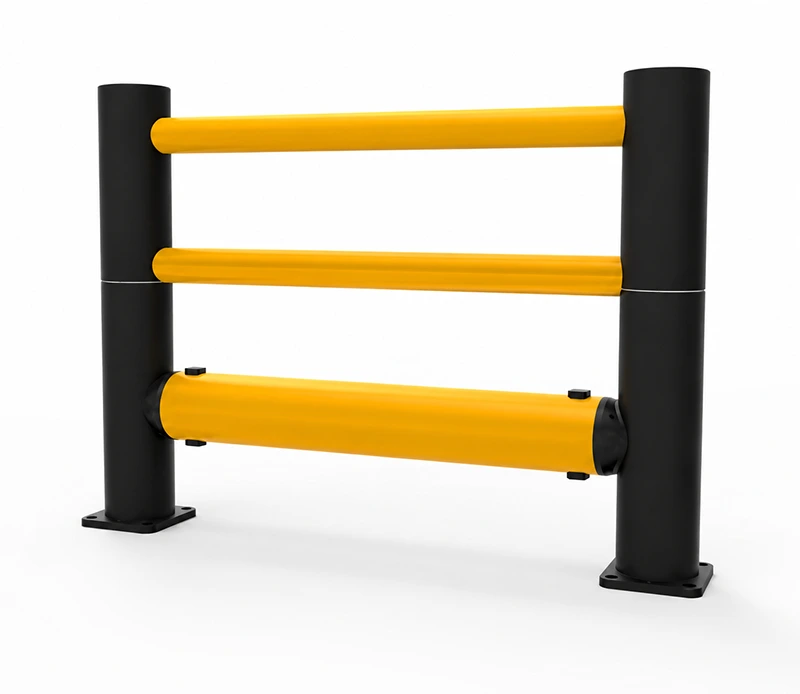
Every FCBarrier segment is a modular cell — rails pass through pre-machined mortise slots in the uprights and are locked by an internal pin driven in with a rubber mallet. When one rail takes a serious hit, two people knock the pin out, slide the damaged rail off, and slide a fresh rail in. No torch, no welder, no hot-work permit, no concrete cutting at the anchor. On a live dock where every minute of a stuck door is a missed trailer appointment, the cell-level repair model is the difference between a 15-minute swap and a five-day shutdown. The mortise geometry is the same across the SR, DR, TR and CTR families, so a spare rail inventory of one size covers the whole loading perimeter.
3. Corrosion-Free Polymer Body Suits the Wet, Oily Dock Floor
A loading dock apron is one of the wettest, oiliest surfaces in any building — truck washdowns, hydraulic drips, snow melt in winter, and condensation in cold-storage returns. Painted steel bollards and corner guards start to rust at the first chip, and a rust line at the weld is exactly where the next fork impact will crack. ARMORFLEX™ polymer body runs corrosion-free across the dock apron, takes dock-cleaning chemicals without recoating, and keeps a high-visibility yellow surface that does not chalk under UV from the open dock door. The maintenance routine drops from a quarterly repaint to a soap-and-water wipe, and the high-visibility profile does not fade the way a repainted steel guard does after a season of UV and abrasion.
Where to Place FCBarrier at a Dock or Mezzanine
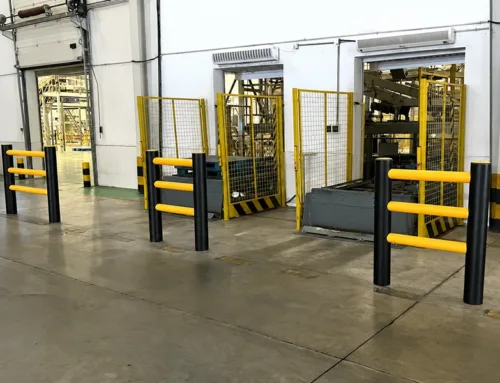
- Dock door apron: CTR190+ column protector on each side of every dock door post to absorb reverse-in impacts and protect the dock-level column.
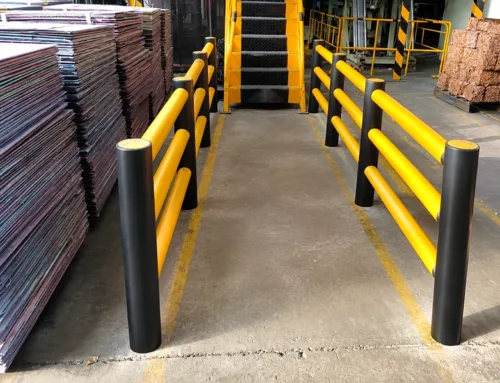
- Mezzanine / loft deck perimeter: TR190+ traffic rail along the open edge where pickers stage pallets above a 3- to 4-metre drop.
- Inside corner of L-shaped loading bays: SR148 single rail at the lower-impact corners, DR190 at the high-impact apex.
- Pedestrian walkway at mezzanine pick face: TR148+ to keep foot traffic off the truck approach lane.
- Cross-dock transfer lane: DR148 to prevent load shift from one side of the dock to the other during a busy sort.
A short on-site walkthrough with a FCBarrier engineer will catch the corner geometry, the slab thickness and the forklift turning radius that the table above cannot show on its own. Slab strength and anchor pattern must be verified against the actual concrete before procurement signs off.
Specification Sheet and Datasheet
Request the FCBarrier impact series datasheet for the full Joule ladder, segment dimensions, anchor specification, and a sample dock-and-mezzanine layout drawing in DWG and PDF. Honest disclosure: FCBarrier does not currently hold a public third-party certification such as PAS 13 or TÜV — that documentation workstream is on our roadmap, and we will share the test reports as soon as they are released.
Plan the Loading Dock and Mezzanine Edge Barrier Layout Before the First Pallet Lands
Send your dock door count, mezzanine perimeter length, slab thickness, and busiest shift forklift tonnage. A FCBarrier engineer will return a marked layout with the correct series per zone, a bill of segments, and a documented anchor pattern for your concrete.