EN
EN  DE
DE  RU
RU  PT
PT  JA
JA  ES
ES  IT
IT 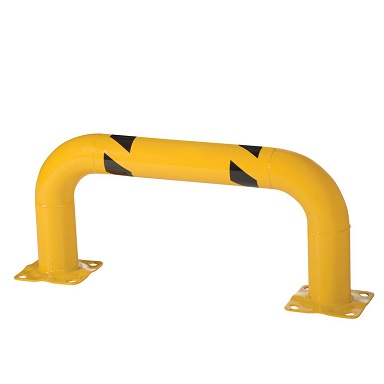
Machinery Protection Barriers
When it comes to safeguarding your valuable shelving and storage systems, Machinery Protection Barriers are your go-to solution. These barriers are designed to provide comprehensive protection against accidental impacts, collisions, and damage caused by industrial machinery or forklifts. In this guide, we will explore how to effectively use Machinery Protection Barriers to ensure the safety and longevity of your shelving systems.
Understanding Machinery Protection Barriers
Machinery Protection Barriers, often made from durable materials such as high-strength steel, are engineered to withstand significant force and absorb impact energy. They act as a protective shield, creating a buffer zone between your shelving and potentially harmful equipment or vehicles.
Installation and Configuration
The first step in using Machinery Protection Barriers is proper installation. Here’s how to do it:
- Identify high-risk areas: Begin by assessing your facility to pinpoint areas where collisions or impacts are likely to occur.
- Choose the right barrier type: Select the Machinery Protection Barrier type that best suits your needs, whether it’s a bollard, guardrail, or other configuration.
- Proper positioning: Install the barriers strategically, placing them in front of shelving units, rack systems, or other sensitive areas that require protection.
- Secure installation: Make sure the barriers are securely anchored to the floor or the surrounding structure. Proper anchoring is crucial for effective protection.
- Clear labeling: Use clear and visible signage to indicate the presence of Machinery Protection Barriers, ensuring that employees and equipment operators are aware of their location.
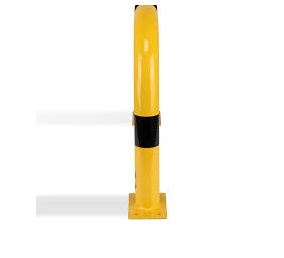
Benefits of Using Machinery Protection Barriers
Using Machinery Protection Barriers offers several advantages:
- Damage Prevention: Machinery Protection Barriers act as a shield against accidental impacts, minimizing damage to your shelving and storage systems.
- Safety Enhancement: These barriers create a safer work environment by reducing the risk of accidents and injuries caused by equipment collisions.
- Longevity: By protecting your shelving and storage systems, you extend their lifespan, reducing maintenance and replacement costs.
- Regulatory Compliance: Many safety regulations require the use of protective barriers in industrial settings, ensuring you remain compliant with relevant standards.
Usage Tips and Best Practices
Here are some tips and best practices for using Machinery Protection Barriers effectively:
- Regular Inspection: Periodically inspect your barriers to ensure they remain in good condition. Replace damaged barriers promptly.
- Employee Training: Educate your employees and equipment operators about the purpose and location of Machinery Protection Barriers.
- Customization: Some barriers can be customized to suit specific shelving configurations. Consider customization for maximum protection.
- Periodic Risk Assessment: As your facility evolves, conduct regular risk assessments to identify new areas where barriers may be needed.
Conclusion
Utilizing Machinery Protection Barriers is a proactive and effective approach to safeguarding your shelving and storage systems. By following the installation guidelines, recognizing the benefits, and implementing best practices, you can ensure the safety of your employees and the longevity of your valuable storage infrastructure.
Interlock Switch Mounting Without Drilling: Why Alfence T-Slot Posts End Phantom Stops
Bolting an interlock switch bracket through a powder-coated steel post drills the coating, drops swarf into the cell and leaves a rust line — and when the hinged leaf sags, the tongue misaligns and the PLC reports a phantom guard fault. Alfence mounts sensors, e-stops and conduit in the T-slot groove of a 40×40 mm or 45×45 mm aluminum post, with door hardware sized to keep the safety switch aligned.
Phantom Safe Torque Off Stops: T-Slot Guarding Fence Posts Mount Interlocks Without Drilling
Painted steel guarding posts force maintenance to drill for interlock switches, dropping swarf in the cell and breaking the coating where rust starts. Sagging hinge doors then misalign the interlock tongue and the PLC trips Safe Torque Off while the gate is closed. Alfence industrial safety fence mounts sensors, e-stops and cable routing into the T-slot aluminum profile post without drilling, and uses hinged, folding or sliding door frames that keep interlock geometry stable - protecting OEE through phantom stops and line changes.
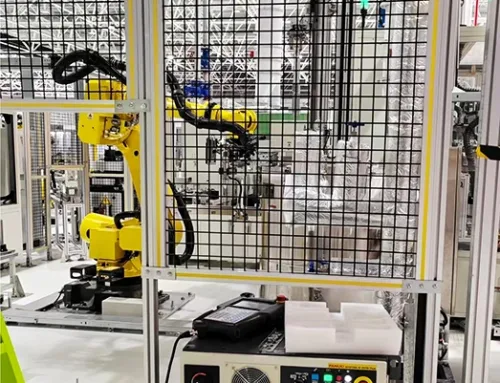
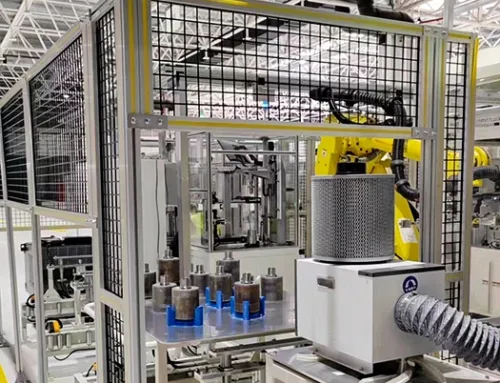
Automotive Plant Industrial Safety Fence: Keep the Robot Cell Close to the Hazard
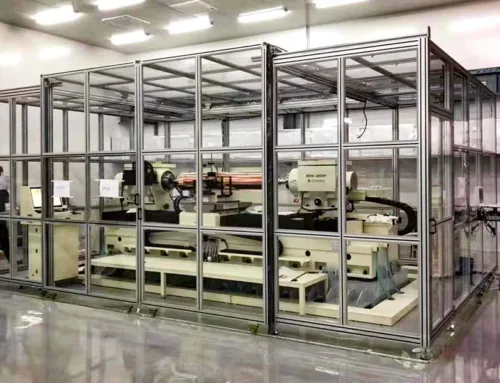
Automotive plants cannot afford to lose production floor to an oversized machine guarding perimeter. Alfence combines 20×100 mm mesh with slim 40×40 mm or 45×45 mm aluminum posts for a compact, reconfigurable industrial safety fence layout, with final clearance confirmed by the project risk assessment.