EN
EN  DE
DE  RU
RU  PT
PT  JA
JA  ES
ES  IT
IT Beverage Bottling · Forklift-Impact Standardization
The Bottling Plant You Don’t Own Is Still Forklift-Impacting Your Brand
A beverage HQ with 20+ independent bottling partners can publish a corporate safety standard on paper, but each plant still buys its own barriers locally — and the lowest-bidder tubular steel wins the PO. FCBarrier’s ARMORFLEX polymer impact barrier gives the HQ one audited impact-energy ladder (3,850 J up to 28,950 J), one modular quick-release cell, and one documentation pack that every bottling partner can replicate plant by plant. Honest disclosure upfront: we do not currently hold a public PAS 13 third-party certificate; closing that gap is the next item on our roadmap before any bottling-HQ procurement board signs off a multi-plant rollout.
SR / DR / TR / CTR Impact-Rated Ladder for Typical Bottling-Plant Forklifts
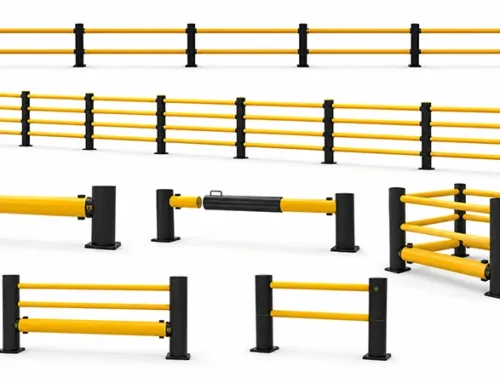
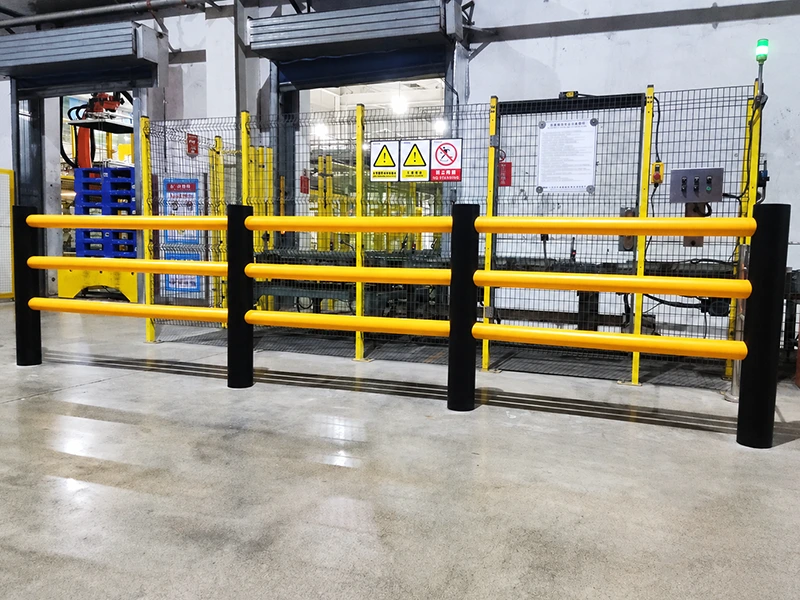
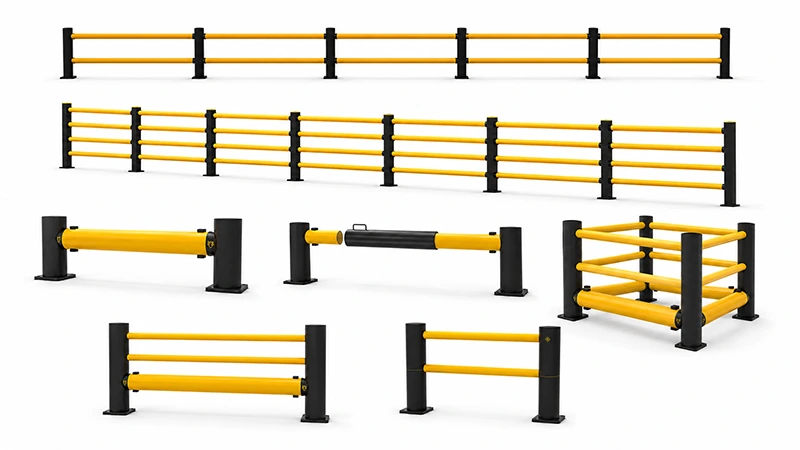
The full FCBarrier ladder covers 3,850 J to 28,950 J across four series — single rail (SR), double rail (DR), pedestrian traffic rail (TR), and column protector (CTR). Each cell is rated by impact joules and equivalent truck weight at a stated travel speed, so a corporate standard can plant the same spec across plants with 1.5–8 t counter-balance or reach forklifts running at 7.5–9.6 km/h.
| FCBarrier Model | Impact Energy & Equivalent Forklift Condition |
|---|---|
| SR100 (Single Rail) | 3,850 J — 1.5 t @ 8 km/h |
| SR148 (Single Rail) | 14,400 J — 4 t @ 9.6 km/h |
| SR190 (Single Rail) | 21,350 J — 6 t @ 9.6 km/h |
| DR100 (Double Rail) | 6,500 J — 3 t @ 7.5 km/h |
| DR148 (Double Rail) | 19,000 J — 6 t @ 9 km/h |
| DR190 (Double Rail) | 28,950 J — 8 t @ 9.6 km/h |
| TR100 / CTR100 | 8,200 J — 3 t @ 8.4 km/h |
| TR148+ / CTR148+ | 19,000 J — 6 t @ 9 km/h |
| TR190+ / CTR190+ | 28,950 J — 8 t @ 9.6 km/h |
What FCBarrier Brings to a Multi-Site Bottling Network
One Modular Cell, Replicated Across Every Bottling Plant
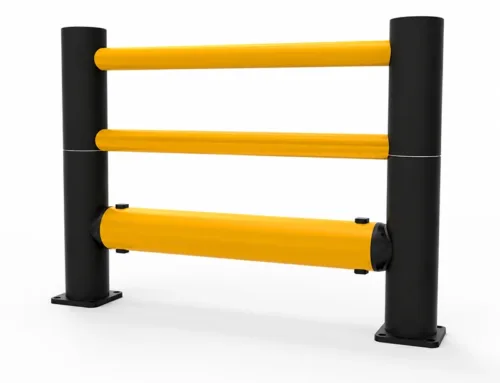
The base FCBarrier unit is 3 rails + 2 posts with a mortise-and-tenon quick-release joint, internal long pin, and rubber-mallet tap-in. Two trained operators with a rotary hammer, hand drill, torque wrench and rubber mallet stand up a base cell on a sound concrete floor; a struck rail is replaced as a single rail with a single post swap — not a full-run teardown. That’s how a bottling-HQ standard stays teachable: one cell geometry, one install sequence, one repair playbook, replicated across 20+ franchise sites.
ARMORFLEX Polymer Absorbs Up to 80% of Impact and Rebounds
FCBarrier rails are ARMORFLEX polymer, not painted tubular steel. The official rating claims the polymer absorbs up to 80% of the collision energy and rebounds to shape after the strike, which is exactly what a bottling-pallet aisle needs when the same pallet bay is clipped twice a shift. A rigid steel rail bends and stays bent, the anchor takes the rest of the load, and the floor patch becomes the next repair. A polymer cell takes the strike and comes back — that is the difference between a one-shift repair and a one-week maintenance project.
DR190 28,950 J for 8-Ton Forklifts — and the PAS 13 Gap We Have to Close
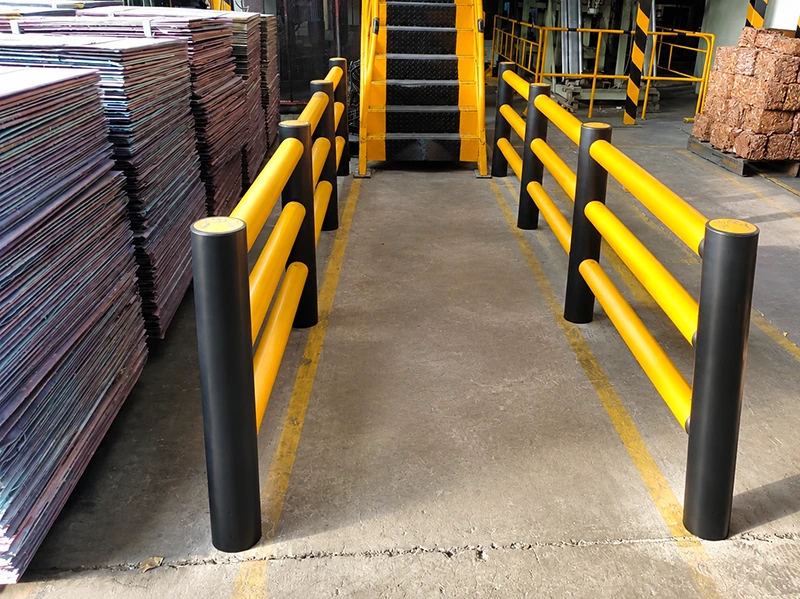
For an 8-tonne reach stacker or large counter-balance truck running at 9.6 km/h, the top-tier DR190 (and CTR190+ / TR190+) at 28,950 J is the only spec that survives the math. Lower-rated cells under-spec and bend; over-rated cells over-spend and bloat the corporate budget. Honest disclosure for the corporate procurement board: the 28,950 J figure is from FCBarrier in-house and partner testing — FCBarrier does not currently publish a third-party PAS 13:2017 certificate. A bottling-HQ audit will require that, and it is the next deliverable on our 2026 testing roadmap, not a hidden gap.
Where This Spec Lands in a Beverage Bottling Plant
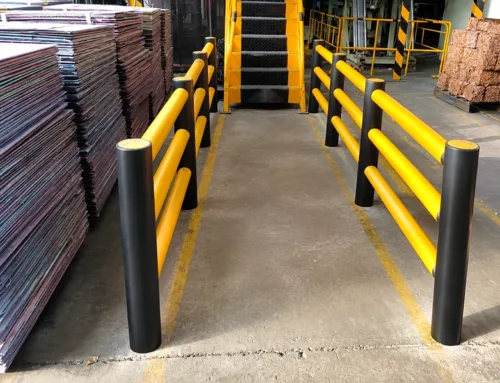
- Forklift-pallet aisle in finished-goods warehouse — DR / SR series at the rack end
- Syrup room and tank-farm perimeter — CTR column protectors on building columns and process-pipe supports
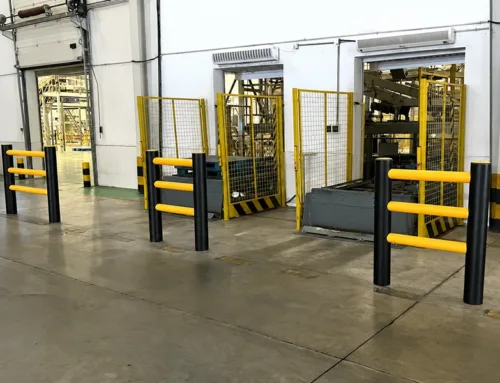
- Empty-bottle pallet staging zone — DR190 around the pallet bay corners
- Loading-dock edge with TR traffic rail — pedestrian-vehicle separation
- Building column protection with CTR series — rack-end and structural columns
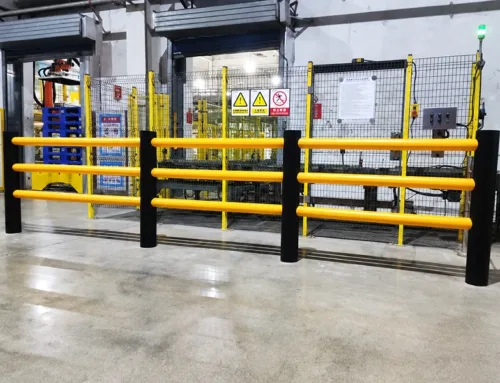
- Conveyor and shrink-wrap line opening — barrier + mesh-gate configuration to keep people out of the strike zone
- Cross-dock and AGV handover lane — modular cells with single-rail replacement for struck segments
- Cold-storage intake door — polymer spec aligns with low-temperature duty (project-specific verification required per site)
One ARMORFLEX spec, one modular cell, one install sequence — replicated across every bottling partner.
Documentation That Survives an HQ Audit
For each FCBarrier order we provide the impact-energy data sheet, the rail and post dimensional drawing, the floor-anchor torque specification, the modular cell assembly sequence, and the bill-of-materials by cell length. The pack is structured so a bottling HQ can audit one plant and replicate the same evidence file across the rest of the network. Honest note: third-party PAS 13 / independent-lab impact test reports are not yet on the public certificate list — request the latest status from the FCBarrier engineering team before procurement approval.
Standardize One Cell, Then Replicate It Plant by Plant
Tell us how many bottling sites, what forklift class (1.5–8 t), and what aisle / loading-dock geometry you need to protect. We return a per-site impact spec (SR / DR / TR / CTR), a modular cell layout, and a documentation list — with an honest disclosure of what is third-party certified today and what is on our 2026 testing roadmap.