
 EN
EN  DE
DE  RU
RU  PT
PT  JA
JA  ES
ES  IT
IT 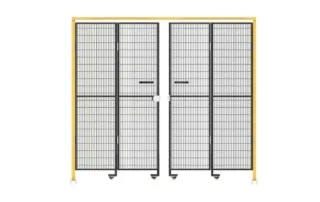
Safety fence for machinery in outdoor applications?
Deploying automated scrap conveyors, outdoor robotic palletizers, or AGV transit lanes between factory halls exposes your critical equipment to harsh elements and heavy yard traffic. Standard indoor fencing rusts within months, while cheap chain-link sags the moment a 10,000 lbs forklift bumps it. You need a physical barrier engineered for
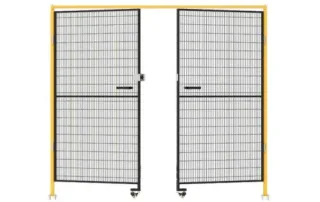
Benefits of TUV certified Machine Guarding Systems?
You are commissioning a high-speed automotive welding cell, and the deadline is next week. If your perimeter guarding fails the EHS impact test or the safety interlocks don't align perfectly with the PLC, the entire automated line halts. You don't need generic wire mesh that sags; you need a TUV-certified
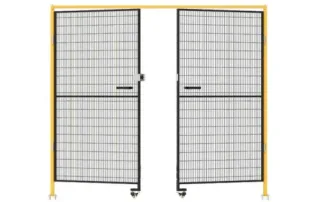
Can I customize machine guarding fence panels onsite?
When deploying a turnkey solution for a high-speed mechanical assembly line, the CAD drawings rarely match the 100% exact reality of the factory floor. A misaligned cable tray or a shifted CNC machining center usually means one thing: bringing an angle grinder onto the floor. Waiting for custom-welded panels or
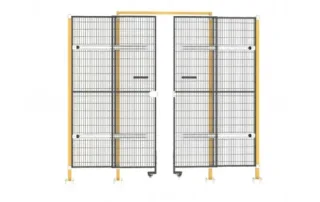
Polycarbonate vs mesh machine guard fencing?
When engineering turnkey solutions for automated production lines, system integrators constantly hit a wall: should the robotics layout be enclosed in clear polycarbonate or steel wire mesh? Make the wrong choice, and you are either starving servo motors of airflow, blinding operators with scratched, coolant-stained panels, or failing ISO 13857
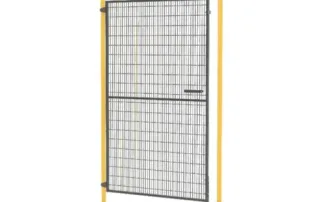
Is an Industrial Safety Fence required for conveyors?
Integrating conveyors into your robotics layout without failing ISO 13857 safety audits is a nightmare for system integrators. Hand-cutting and welding standard mesh on the factory floor leaves sharp edges, destroys the powder coating, and delays your turnkey delivery. You need a modular barrier that bridges the gap between active
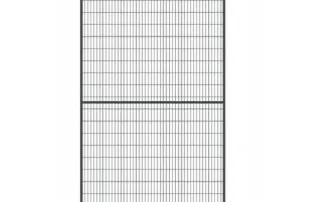
Standard colors for Robot Safety Fence visibility?
In automated automotive production lines, poor visibility into robotic welding cells isn't just an annoyance—it's a direct threat to your OEE (Overall Equipment Effectiveness). When operators cannot clearly see a misaligned part or a jammed CNC spindle through glaring silver mesh, they are forced to break the safety interlock circuit
Common mistakes in Machine safety fence installation?
You just spent $500K on a new FANUC robotic welding cell, but your perimeter guarding is holding up the commissioning. Why? Because the local fabricator welded the panels on-site, triggering hot work permits, and the mesh size fails the ISO 13857 reach distance audit. Stop letting amateur installations tank your
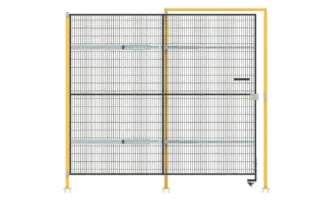
Does a Machine Fence need a dedicated safety switch?
When designing a high-speed mechanical assembly machine or a robotic welding cell, a simple padlock won't cut it. If an operator opens the cell door to clear a jammed component, the robotic arm must instantly drop to a Safe Torque Off (STO) state. Relying on passive gates without dedicated safety
How to ground a safety fence industrial against static?
In high-speed mechanical assembly machines and robotic welding stations, an ungrounded perimeter acts as a massive capacitor. Static buildup from fast-moving conveyors and robotic arms doesn't just shock operators—it creates Electrostatic Discharge (ESD) that fries sensitive PLCs, triggers phantom E-stops, and disrupts your lights-out automation cells. Bypassing the dielectric powder
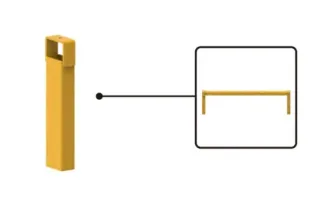
Best floor anchors for Industrial Safety Fencing?
When an automated guided vehicle (AGV) drifts off its path or a 6-axis robot drops a 100 lb engine block, your perimeter protection is only as strong as its weakest link. For system integrators designing high-speed mechanical assembly machines, the failure point isn't usually the steel mesh—it's the floor anchors

