
 EN
EN  DE
DE  RU
RU  PT
PT  JA
JA  ES
ES  IT
IT 
Machine perimeter guarding for multi-axis robots.
When you are integrating a high-speed 6-axis robot arm, the "work envelope" isn't just a line on a CAD drawing—it's a high-risk zone. A standard wire mesh partition isn't enough when you need to calculate stopping times and safety distances according to ISO 10218. You need a perimeter that integrates
Modular dedicated manufacturing lines safety system.
Designing a dedicated manufacturing line is complex enough without the safety sign-off becoming a bottleneck. Whether you are integrating high-speed assembly machines or robotic welding cells, the physical barrier shouldn't be an afterthought—it needs to be as engineered as the automation itself. We provide modular, TUV-certified guarding that integrates seamlessly
Ensuring high speed mechanical assembly machines safety.
You are engineering high-speed rotary indexers and complex robotics layouts where cycle times are measured in milliseconds. The last thing you need during the FAT (Factory Acceptance Test) is a safety perimeter that fails impact standards or requires hours of on-site drilling to mount a simple Omron interlock. Your "build-to-print"
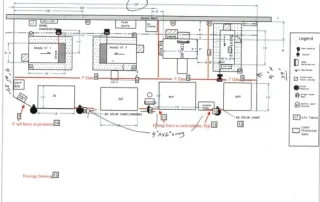
Small-footprint robotics layouts protection ideas.
Stop sacrificing valuable floor space to clumsy safety barriers. In high-density automotive assembly lines and compact robotic cells, every square inch counts. You need a protection system that hugs the machine perimeter without compromising ISO safety distances or hindering maintenance access. Discover how modular engineering solves the "dead space" problem
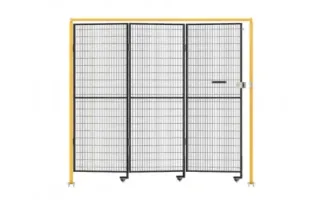
Integrating safety locks into machine guarding systems.
Stop improvising brackets on the assembly floor. For automotive system integrators, the bottleneck isn't the robot programming—it's the mechanical integration of safety hardware. Discover how pre-engineered lock carriers and rigid framing eliminate "nuisance tripping" and slash installation hours in your next robotic cell deployment. Talk With An Expert In the
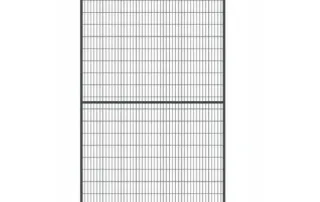
Can industrial safety fence panels be modified on-site?
Your CAD layout was perfect. The factory floor wasn't. For system integrators, the "As-Built" reality rarely matches the "As-Designed" plan. When a structural column interferes with your robotics cell or a conveyor line shifts by 2 inches, you cannot afford to wait weeks for custom-fabricated panels. You need a Machine
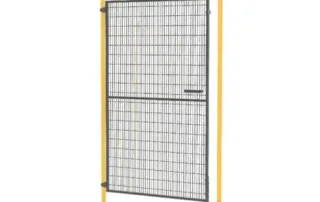
Impact rating of machine guarding fence panels.
In high-speed automotive assembly and robotic welding cells, a visual barrier isn't enough. When a 6-axis arm malfunctions or a workpiece is ejected, you need a physical shield capable of absorbing kinetic energy without catastrophic failure. We engineer impact-rated barriers that keep your automated lines compliant and your workforce safe.
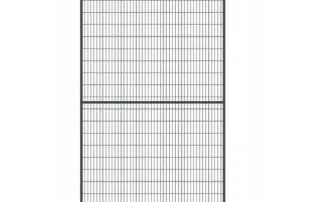
Safety fencing machine guarding: Bolt-on vs. welded.
Stop waiting for hot work permits. In high-speed automotive assembly and robotics integration, a static welded barrier is a liability, not an asset. Discover why top-tier System Integrators are switching to modular, bolt-on Industrial Safety Fencing that matches the strength of custom fabrication without the rigid footprint. Talk With An
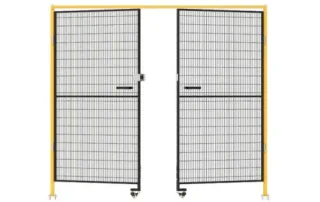
Optimizing visibility through machine guard fencing.
In a high-speed automotive assembly cell, a "blind" barrier is a liability. When a robotic arm faults or a pneumatic line bursts, your operators need visual confirmation instantly—without breaching the safety perimeter and triggering costly downtime. We engineer visibility directly into the structural integrity of your guarding. Talk With An
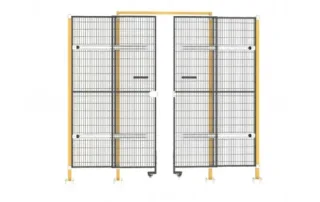
Meeting OSHA with industrial perimeter guarding.
In the high-speed world of automotive automation, a failed safety audit during the Factory Acceptance Test (FAT) is a project manager's nightmare. Whether you are integrating a new robotic welding cell or retrofitting a stamping line, OSHA compliance isn't just about ticking a box—it's about ensuring your Industrial Perimeter Guarding

