
 EN
EN  DE
DE  RU
RU  PT
PT  JA
JA  ES
ES  IT
IT 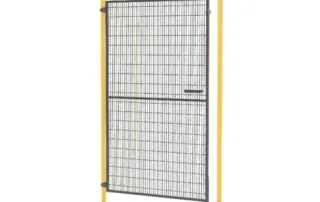
Does Your Safety Fencing Limit Your Automation Design Freedom?
For System Integrators creating bespoke turnkey solutions, the factory floor is a canvas of constraints. You spend weeks optimizing the reach of industrial robots and the flow of conveyors to save milliseconds. Yet, when it comes to the perimeter, you are often forced to compromise your optimized layout to
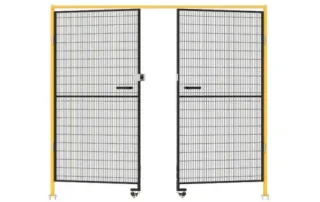
Is Your Safety Strategy the Weakest Link in High-Speed Automation Projects?
As a System Integrator delivering turnkey solutions, your reputation rests on the seamless orchestration of industrial robots, PLC logic, and mechanical assemblies. You design automated production lines that push the boundaries of speed and precision. However, the physical perimeter—the Industrial Safety Fencing—often remains a source of unpredictable delays. Whether
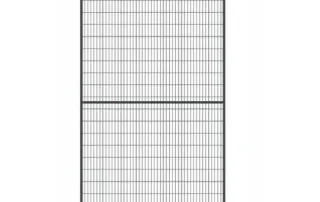
Is Your Industrial Safety Fencing the Bottleneck in Turnkey Automation?
In the high-stakes world of turnkey solutions, System Integrators face a constant battle: syncing mechanical assembly with electrical commissioning. You are integrating high-speed industrial robots and complex PLC systems into a seamless automated production line. Yet, the final sign-off often stalls at the physical barrier. Why? Because traditional fencing
Is Your Corporate Safety Policy Getting Lost in Translation at the Factory Level?
You have a global ISO 45001 manual that sits on a shelf in every plant manager's office, from Berlin to Bangalore. But walk onto the shop floor, and the reality is often different. In one plant, you see professional guarding; in another, you find rusted angle iron and chicken
Does Your Safety Standard Vary by Time Zone? The Hidden Risk of Local Sourcing.
For a Global Operations Director managing facilities from Detroit to Shanghai, consistency is the holy grail. You standardize your PLCs, your robotics, and your ERP systems. Yet, when it comes to Industrial Safety Fencing, many multi-national companies fall into the trap of "local fabrication." The result? A patchwork of
Why Is Your “Cost-Effective” Safety Fence Blowing Your Project Budget?
In the world of Industrial Procurement, the lowest bid often carries the highest risk. You might save 10% on the raw material cost of generic wire mesh, but you lose it immediately when your installation contractors spend days grinding, welding, and repainting on-site to make it fit. Real cost
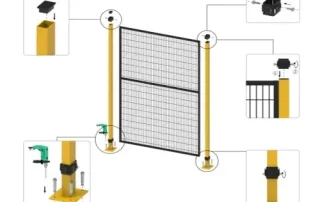
Is Your Factory’s “Safety Fence” a Legal Liability Waiting to Happen?
As an EHS Manager, you know that "visual deterrence" isn't enough. When an accident occurs, the first thing auditors check is your Risk Assessment and the integrity of your safeguards. If your machine guarding is just generic wire mesh bought from a catalog without certification, your company is exposed
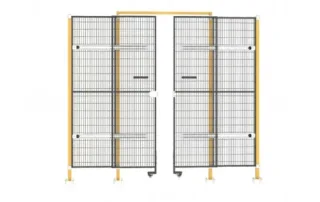
Is Your Welding Cell Fencing Strong Enough to Stop a 200kg Robot Arm?
In Automotive Body-in-White (BIW) and heavy manufacturing, the risks are kinetic and thermal. You are managing high-payload 6-axis robots moving at blinding speeds, often wielding spot welding guns or lasers. A standard wire mesh fence is a visual deterrent, but is it a physical shield? When a programming error
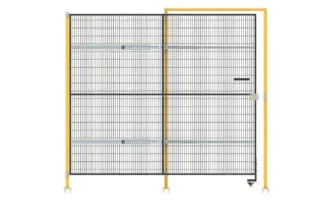
Is Your Machine Guarding Violating Your Cleanroom Protocols?
In Precision Electronics and Medical Device Manufacturing, the environment is just as critical as the equipment. You invest millions in cleanroom facilities and high-speed SCARA robots, yet standard industrial fencing often introduces contaminants and wastes expensive floor space. Traditional "cut-and-weld" fencing has no place in a modern SMT line
Can Your Warehouse Safety Fencing Survive Forklift Traffic and AGV Integration?
In the high-paced world of Intralogistics and 3PL fulfillment, your floor space is a battlefield. Heavy forklifts race to meet shipping deadlines, while Automated Guided Vehicles (AGVs) navigate complex paths. In this environment, standard wire partitions are not just a safety barrier; they are a maintenance nightmare waiting to

