
 EN
EN  DE
DE  RU
RU  PT
PT  JA
JA  ES
ES  IT
IT 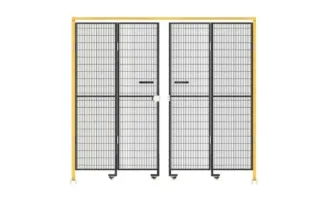
How Can Modular Safety Fencing Accelerate Your Robotic Integration?
For system integrators, the Automated Production Line is your masterpiece, but the physical guarding is often the bottleneck. Why waste valuable engineering hours designing simple barriers for your Turnkey Solutions? We provide a TUV-certified, modular Industrial Safety Fencing system that integrates seamlessly with your upstream Industrial Robots and downstream
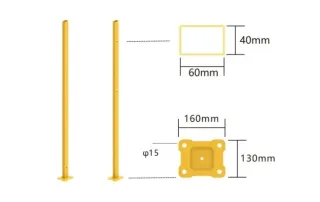
Can a Single Fencing System Manage Every Hazard on Your Line?
Modern Turnkey Solutions rarely involve just one type of process. A single Automated Production Line might transition from a wet CNC Machining Center to a high-heat Automotive Welding Station, and finally to a clean assembly zone. Using different guarding suppliers for each zone creates a disjointed, messy look and
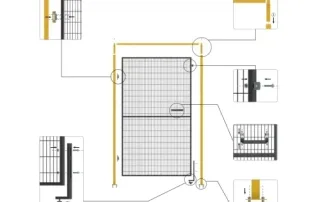
Is Your Safety Fence the Weak Link in Your Control Circuit?
The most critical interface in an Automated Production Line is not where the robot meets the part, but where the operator meets the hazard. If your Safety Interlocks are mounted on flimsy, hand-drilled brackets, you are introducing a weak point into your safety PLC logic. Why let a $50
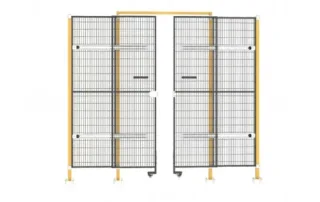
Why Force-Fitting Standard Fencing Kills Engineering Efficiency?
You design highly specialized Custom Machinery to fit precise customer footprints. So why compromise your layout with a rigid, "off-the-shelf" fencing catalog? Forcing standard 1500mm panels into a non-standard Robotics Layout leads to wasted floor space, awkward gaps, and messy on-site cutting. Partnering with a manufacturer who offers true
Does Your Safety Access Design Create a Hidden Bottleneck in Automated Production?
In the pursuit of optimizing cycle times for High Speed Mechanical Assembly Machines, engineers often obsess over robot speed but overlook the "Human Factor." If an operator struggles to open a jamming safety door every 10 minutes for material replenishment, your line's theoretical throughput collapses. The Industrial Safety Fencing
Can Modular Safety Fencing Lower the Total Cost of Ownership for Automated Lines?
For Plant Managers and System Integrators, the purchase price of an Automated Production Line is only the tip of the iceberg. The real cost lies in Operation and Maintenance (O&M). A rigid, welded barrier may seem cheaper upfront, but the first time a forklift backs into it, the hidden
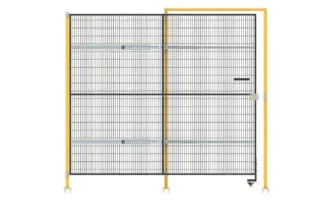
Is Your Perimeter Guarding a Liability Trap for Global Projects?
For System Integrators operating in a global market, navigating the fragmented landscape of safety standards—ISO 14120 in Europe, OSHA 1910.212 in the US, and GB standards in China—is a legal minefield. A safety fence is not just a metal barrier; it is your primary risk mitigation measure against catastrophic
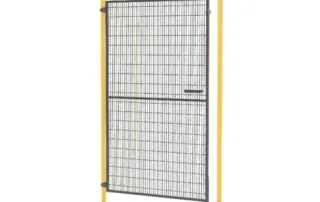
Can Modular Safety Fencing Cut On-Site Commissioning Time by 30%?
For System Integrators delivering Turnkey Solutions, the final week of a project is often a race against the clock. The physical installation of the perimeter guard shouldn't be the bottleneck that delays the sign-off of an entire Automated Assembly Line. Traditional fabrication methods involving on-site welding are slow and
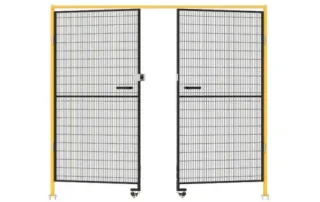
Can Modular Machine Guarding Optimize Floor Space in Automated Assembly Lines?
For manufacturing engineers designing high-speed Automated Assembly Lines, floor space is often the most expensive asset. Standard off-the-shelf fencing forces compromised layouts, creating unusable "dead zones" around CNC Machinery and Conveyor Systems. Utilizing flexible Industrial Safety Fencing allows integrators to tighten the production footprint without violating ISO 13857 safety
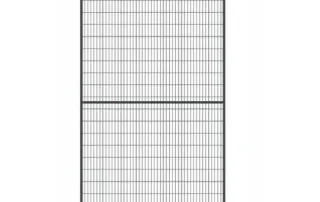
How to Optimize Robotics Integration with Modular Industrial Safety Fencing?
For System Integrators delivering Turnkey Solutions, the physical perimeter is often the final hurdle before project sign-off. It is not just a barrier; it is the interface between the Automated Production Line and the operator. Choosing the right Industrial Safety Fencing determines whether your commissioning phase runs smoothly or

