EN
 DE
 RU
 PT
 JA
 ES
 IT
Profile Rack Guard : The FAQ
When it comes to security, there are a lot of moving parts. If you’re not in the security business, it can be difficult to keep track of all the different products and services that are offered. Protective barriers are one such service. But what exactly are they? How do they work? In this blog post, we’ll answer all your questions about protective barriers so you can make an informed decision about whether they’re right for you.

A protective barrier, also known as a security barrier, is a physical structure or device that is designed to block or prevent unauthorized access to a restricted area. Protective barriers can be found in a variety of environments, from high-security facilities such as military bases and government buildings to more mundane places such as schools and office buildings.
There are many different types of protective barriers, from simple fences and gates to complex electronic systems. The type of barrier used will depend on the level of security required and the nature of the threat. In some cases, multiple layers of security may be used, with each layer providing progressively tighter levels of protection.
A protective barrier works by creating a physical barrier between you and the person or object you are trying to protect yourself from. This physical barrier is the most common type of barrier, and this type of protective barrier can be made of a variety of materials, including wood, metal, or concrete.
There is a lot of debate around the effectiveness of protective barriers, some people believe they are an important part of keeping people safe, while others assert that they do more harm than good Are protective barriers effective? The short answer is that it depends. How the protective barrier should be used and the scenario in which it is used.
Now that we have a basic understanding of what protective barriers are and how they work, the best way to find out if they are right for you is to experiment with them.
Money Welded to the Floor: Mefence Frameless Industrial Safety Fence Re-Zones a Packaging Plant in One Weekend
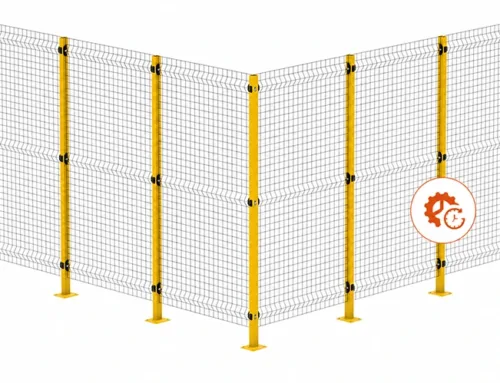
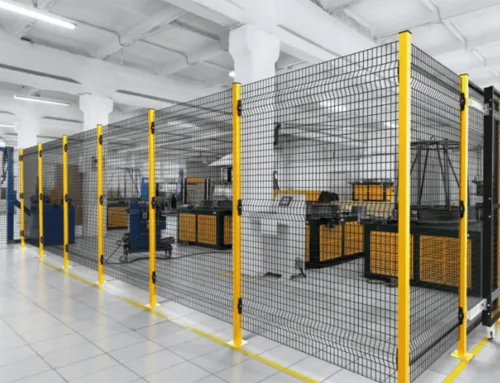
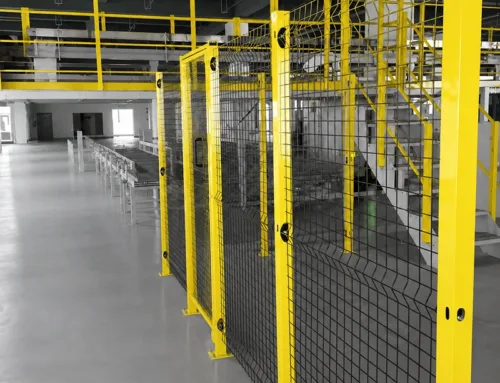
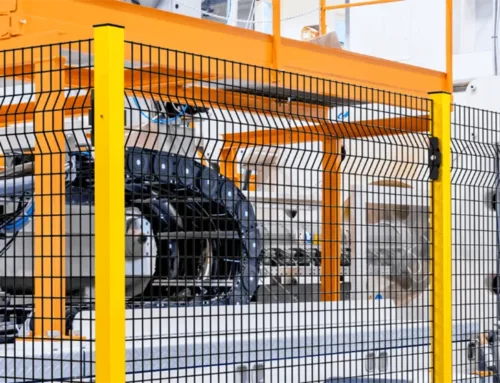
A packaging plant on a 14-day order book redraws its zones faster than a welded perimeter can be justified. Mefence frameless industrial safety fence is a Q235 welded mesh boundary with 3-4 mm wire, 20x100 or 50x50 mm mesh openings and clip-and-screw fixing on base plate posts with slotted mounting holes - unclip the panels, cut the last bay on site, re-bolt them into the new layout. Built for warehouse zoning, storage area separation, pedestrian vehicle separation, forklift path barrier and AGV lane control, with strike points routed to the impact-rated Machine Fence line.
Mesh Opening Over Panel Thickness: Frameless 3D Industrial Safety Fence for Robot Palletizer Cells
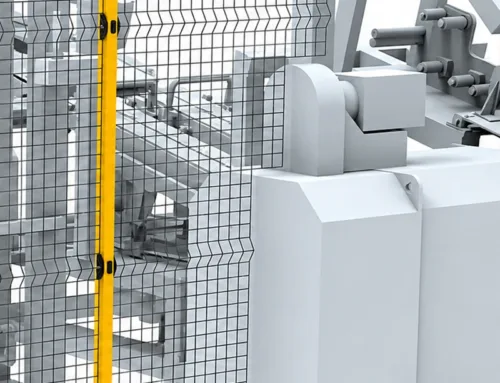
An end-of-line palletizer needs a boundary that keeps people out without taking the sightline with it. Mefence frameless 3D industrial safety fence is a Q235 welded mesh boundary with 20 x 100 mm or 50 x 50 mm openings, clip and self-tapping screw fixing on base plate posts, on-site cut panels and T-shaped ridges that carry interlock, sensor and camera cable — built for robotic workstation enclosure, AGV lane separation and warehouse zoning, with impact-rated strike points on the Machine Fence line.
Open-Mesh Frameless Safety Fencing for Robot Palletizing Cells: Sightline, Camera and AGV LiDAR Without a Solid Panel Wall
Solid panel walls around an end-of-line palletizer keep people out and blind everyone else: the operator cannot see the cycle, the camera sees a grey rectangle, and the AGV map has a new hard surface in it. Mefence frameless 3D safety fencing is a Q235 welded mesh boundary with 20x100 or 50x50 mm openings, clip and self-tapping screw fixing on base plate posts, on-site cut panels and a T-shaped ridge that carries interlock and camera cable — built for robotic workstation enclosure, AGV lane separation and warehouse zoning, with strike points routed to the impact-rated Machine Fence line.