EN
EN  DE
DE  RU
RU  PT
PT  JA
JA  ES
ES  IT
IT Safety First: Implementing Heavy Duty Guard Rails for Factory Security

Factory security is a top priority for maintaining a safe and productive work environment. One essential element in ensuring factory safety is the implementation of heavy-duty guard rails. These robust protective barriers play a vital role in preventing accidents, guiding traffic, and safeguarding both employees and equipment.
Preventing Accidents and Mitigating Risks
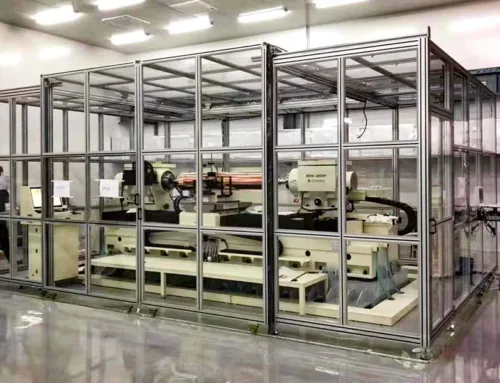
Heavy-duty guard rails are a formidable barrier against potential hazards within a factory setting. They serve as a physical barrier that prevents unauthorized access to restricted areas, reducing the risk of accidents caused by unauthorized personnel or vehicles entering dangerous zones. By strategically placing guard rails near machinery, walkways, and sensitive equipment, factories can significantly decrease the likelihood of collisions and accidents.
Traffic Management and Flow
In a bustling factory environment, the smooth flow of vehicular and pedestrian traffic is crucial to maintaining operational efficiency. Heavy-duty guard rails help regulate the movement of vehicles, guiding them along designated paths and preventing unintended deviations. By delineating safe pathways for pedestrians and vehicles, guard rails reduce congestion and prevent collisions that can disrupt operations.
Protection of Assets and Infrastructure
Factories house valuable equipment, machinery, and inventory. Heavy-duty guard rails provide extra protection against accidental damage or impact caused by vehicles or heavy machinery. By safeguarding these assets, factories can avoid costly repairs, downtime, and interruptions to production.
Employee Safety and Well-being
The well-being of factory employees is paramount. Guard rails contribute to a safer work environment by preventing accidental falls, collisions, and injuries. Employees can work with greater confidence and focus when they know that appropriate safety measures are in place.
Implementing heavy-duty guard rails is a proactive step towards enhancing factory security and promoting a culture of safety. These barriers not only prevent accidents and protect assets but also contribute to smoother traffic flow and improved employee morale. With heavy duty guard rails in place, factories can prioritize safety while ensuring the continued success of their operations.
Interlock Switch Mounting Without Drilling: Why Alfence T-Slot Posts End Phantom Stops
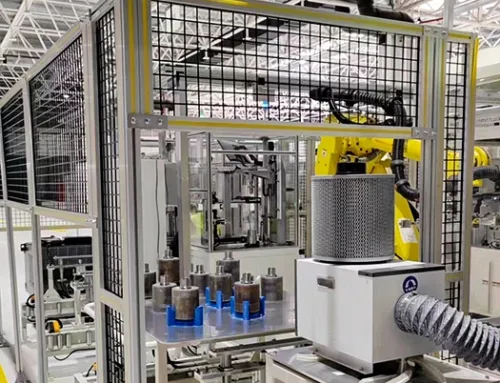
Bolting an interlock switch bracket through a powder-coated steel post drills the coating, drops swarf into the cell and leaves a rust line — and when the hinged leaf sags, the tongue misaligns and the PLC reports a phantom guard fault. Alfence mounts sensors, e-stops and conduit in the T-slot groove of a 40×40 mm or 45×45 mm aluminum post, with door hardware sized to keep the safety switch aligned.
Phantom Safe Torque Off Stops: T-Slot Guarding Fence Posts Mount Interlocks Without Drilling
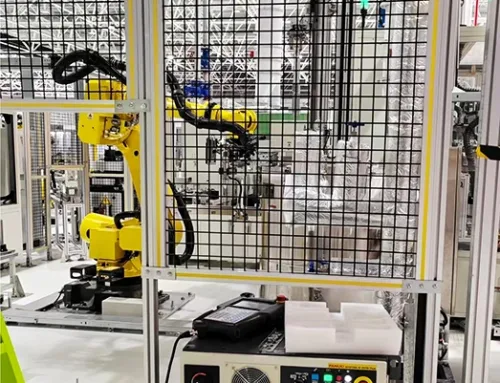
Painted steel guarding posts force maintenance to drill for interlock switches, dropping swarf in the cell and breaking the coating where rust starts. Sagging hinge doors then misalign the interlock tongue and the PLC trips Safe Torque Off while the gate is closed. Alfence industrial safety fence mounts sensors, e-stops and cable routing into the T-slot aluminum profile post without drilling, and uses hinged, folding or sliding door frames that keep interlock geometry stable - protecting OEE through phantom stops and line changes.
Automotive Plant Industrial Safety Fence: Keep the Robot Cell Close to the Hazard
Automotive plants cannot afford to lose production floor to an oversized machine guarding perimeter. Alfence combines 20×100 mm mesh with slim 40×40 mm or 45×45 mm aluminum posts for a compact, reconfigurable industrial safety fence layout, with final clearance confirmed by the project risk assessment.