EN
 DE
 RU
 PT
 JA
 ES
 IT

The Vital Importance of Roof Fall Protection

Roof fall protection is of vital importance to anyone who works on a roof or is in proximity to a roof. Falls from roofs can result in serious injury or even death, making it critical to take the necessary steps to protect workers and anyone else who may be in harm’s way.
There are a number of factors that contribute to falls from roofs, including slick surfaces, uneven terrain, and unprotected edges. It is important to take steps to address each of these factors in order to prevent falls.
One of the most effective ways to prevent falls from roofs is to use fall protection equipment. This can include harnesses, lanyards, and anchor points that are designed to keep workers secure while they are working on the roof. Other measures, such as guardrails and safety nets, can also be effective in preventing falls.
In addition to using fall protection equipment, it is also important to provide proper training to workers. Workers should be trained on how to use the equipment properly, as well as how to identify and avoid potential hazards.
It is also important to regularly inspect and maintain the roof and any fall protection equipment to ensure that it is in good condition and functioning properly. This can help to identify any potential hazards before they become a problem.
In short, roof fall protection is absolutely critical to the safety and well-being of workers and anyone else who may be in proximity to a roof. By using the right equipment, providing proper training, and regularly inspecting and maintaining the roof and equipment, it is possible to prevent falls and ensure a safe working environment.
Money Welded to the Floor: Mefence Frameless Industrial Safety Fence Re-Zones a Packaging Plant in One Weekend
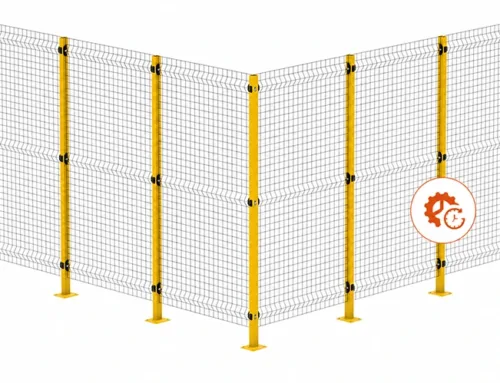
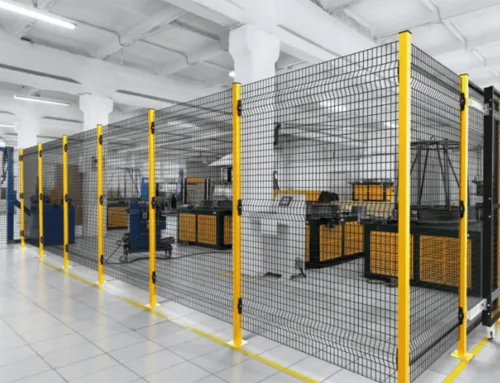
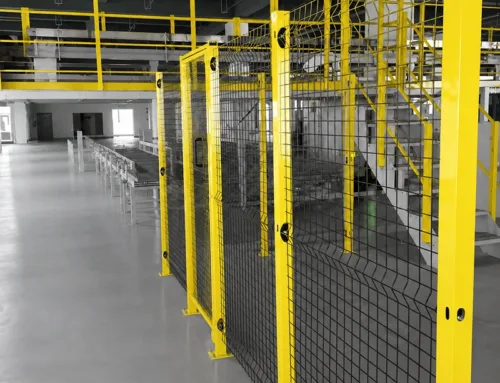
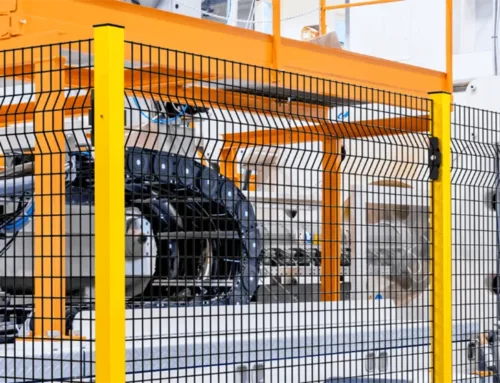
A packaging plant on a 14-day order book redraws its zones faster than a welded perimeter can be justified. Mefence frameless industrial safety fence is a Q235 welded mesh boundary with 3-4 mm wire, 20x100 or 50x50 mm mesh openings and clip-and-screw fixing on base plate posts with slotted mounting holes - unclip the panels, cut the last bay on site, re-bolt them into the new layout. Built for warehouse zoning, storage area separation, pedestrian vehicle separation, forklift path barrier and AGV lane control, with strike points routed to the impact-rated Machine Fence line.
Mesh Opening Over Panel Thickness: Frameless 3D Industrial Safety Fence for Robot Palletizer Cells
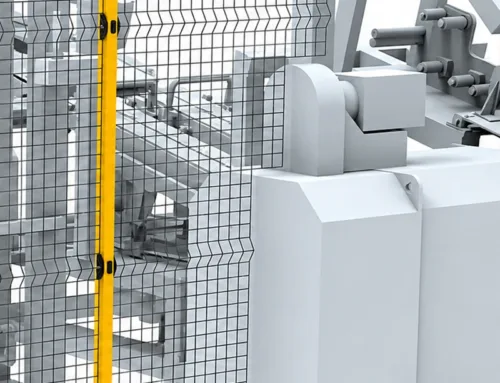
An end-of-line palletizer needs a boundary that keeps people out without taking the sightline with it. Mefence frameless 3D industrial safety fence is a Q235 welded mesh boundary with 20 x 100 mm or 50 x 50 mm openings, clip and self-tapping screw fixing on base plate posts, on-site cut panels and T-shaped ridges that carry interlock, sensor and camera cable — built for robotic workstation enclosure, AGV lane separation and warehouse zoning, with impact-rated strike points on the Machine Fence line.
Open-Mesh Frameless Safety Fencing for Robot Palletizing Cells: Sightline, Camera and AGV LiDAR Without a Solid Panel Wall
Solid panel walls around an end-of-line palletizer keep people out and blind everyone else: the operator cannot see the cycle, the camera sees a grey rectangle, and the AGV map has a new hard surface in it. Mefence frameless 3D safety fencing is a Q235 welded mesh boundary with 20x100 or 50x50 mm openings, clip and self-tapping screw fixing on base plate posts, on-site cut panels and a T-shaped ridge that carries interlock and camera cable — built for robotic workstation enclosure, AGV lane separation and warehouse zoning, with strike points routed to the impact-rated Machine Fence line.