DE
DE  EN
EN  RU
RU  PT
PT  JA
JA  ES
ES  IT
IT 

Your robotic cell is engineered to perfection, but a delayed safety buy-off can kill your project timeline. Stop wrestling with generic fencing that requires on-site fabrication to fit your layout. We provide pre-engineered, modular integration solutions that clear FAT (Factory Acceptance Tests) faster.
For automation system integrators and manufacturing engineers, choosing the right Maschinenschutzzäune is rarely just about buying steel. It is about the seamless integration of a physical barrier into a complex logic control system. Whether you are designing a robotic welding cell for an automotive Tier 1 supplier or a high-speed assembly line, the fence is the final hurdle between installation and commissioning.
The wrong choice leads to on-site cutting (creating conductive swarf near sensitive PLCs), retrofitting nightmares for safety interlocks, and layout clashes that violate safety distances. Here is how to select a guarding system that supports your engineering goals rather than hindering them.
1. Prioritize Modular Layout Flexibility Over “Cut-to-Fit”
In der Welt der Robotik-Integration, the CAD drawing is law, but the site reality often differs. You might encounter a structural column that wasn’t in the original DWG, or a cable tray that interferes with a standard post height. Generic fencing often forces installers to cut panels on-site, compromising the powder coating and structural integrity.
Die Lösung: Look for a truly modular system. You need a partner who can take your CAD layout and deliver a mix of standard and custom-width panels. Mdfence provides a “design-for-automation” approach.

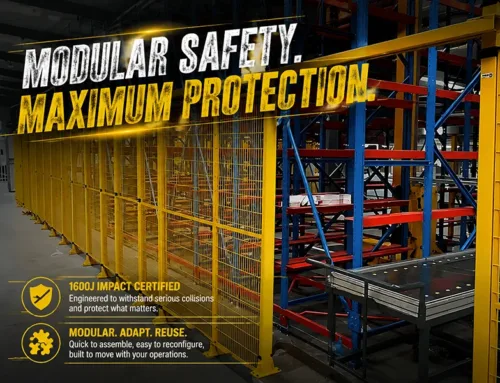
Figure 1: Complex layouts require precise modular planning to accommodate corners and multiple access points without on-site modification.
By utilizing variable width panels and adjustable fixing rings, you can navigate complex geometries—like the 45-degree corners often found in tight AGV/AMR paths—without resorting to angle grinders. This ensures your Industrielle Perimetersicherungen remains compliant with ISO 14120 immediately upon installation.
2. The “Interlock Headache”: Integration with Safety Logic
The most common friction point during installation isn’t the steel; it’s the electronics. Your electrical team needs to mount safety switches (like Omron D4NL, Sick, or Pizzato) to the gates. With standard fences, this involves drilling and tapping holes into the frame manually—a slow process that often results in misalignment, causing the safety circuit to trip intermittently during operation.
Die Lösung: Choose a system that acts as a Träger mit Sicherheitsverriegelung. Mdfence offers pre-engineered mounting kits specifically designed for major safety switch brands.

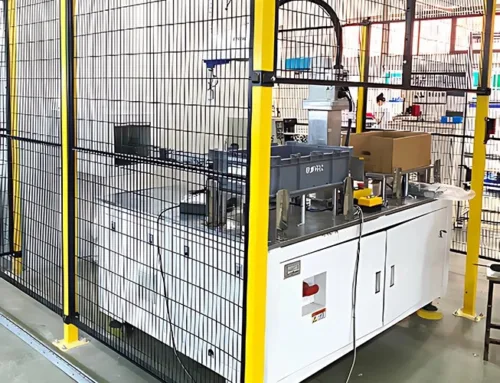
Figure 2: Dedicated mounting brackets for safety switches eliminate on-site fabrication and ensure reliable circuit integration.
This “Plug-and-Play” capability means your Roboter-Schutzzäune arrives ready to accept the sensors. This significantly reduces the time required for the electrical team to wire the safety circuit, accelerating the path to the functional safety test.
3. Door Systems: Optimizing Cycle Times and Maintenance Access
In an automated cell, the door is not just an entry; it is part of the workflow. A hinged door that swings into a forklift aisle creates a collision hazard. A door that is too narrow prevents the removal of a servo motor or a heavy jig for maintenance.
Die Lösung: Match the door type to the operational flow.
- For tight aisles: Use sliding doors (suspended top track) to eliminate swing radius.
- For large equipment removal: Utilize folding doors or wide double-sliding systems (up to 4300mm) to allow forklift access into the cell without dismantling the fence.

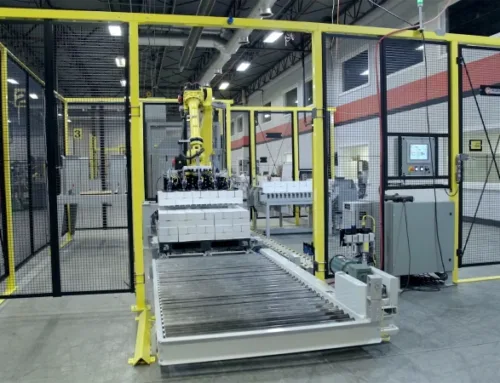
Figure 3: Double sliding doors are essential for robotic cells requiring frequent material handling or maintenance access.
Unser Maschinenschutzzaunfelder on sliding tracks run on smooth bearings, ensuring that operators can open and close the gate effortlessly thousands of times, reducing fatigue and maintaining cycle efficiency.
4. Structural Integrity: Surviving the “Worst Case” Scenario
In a high-energy robotic cell, the fence must contain a potential failure—whether it’s a part ejected from a CNC lathe or a robotic arm exceeding its envelope due to a singularity error. A flimsy wire mesh might stop a person, but it won’t stop a 50lb workpiece moving at speed.
Die Lösung: Specify Q235 Kohlenstoffstahl with framed panels. Unlike “frameless” mesh which is easily deformed, Mdfence uses a 20x30mm steel tube frame welded to the mesh.

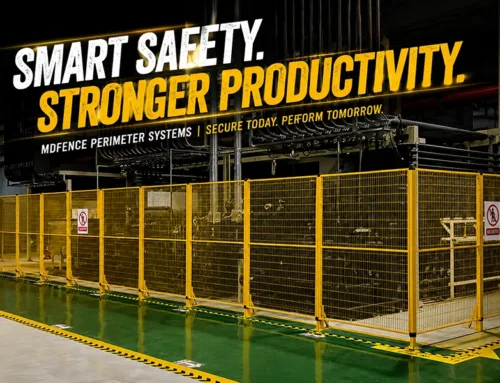
Figure 4: Robust 60x60mm posts with heavy-duty base plates provide the necessary anchor strength to withstand impact.
This structure, combined with 60x60mm posts and heavy-duty expansion bolts, provides the Schlagfestigkeit required to protect expensive automation assets and, more importantly, personnel. This durability is critical for passing safety audits in the automotive and heavy industrial sectors.
5. Installation Speed: Protecting Your Project Margin
For a System Integrator, time on site is the biggest margin killer. Welding, grinding, and repainting are unacceptable delays. Your installation team needs a system that assembles rapidly so they can move on to leveling the robot and programming the PLC.
Die Lösung: A bolt-on system with intuitive hardware. Mdfence utilizes a fixing ring system that allows for vertical adjustability and rapid panel attachment.

Figure 5: The modular assembly process eliminates hot work, allowing for rapid deployment in clean manufacturing environments.
By standardizing on a system designed for rapid assembly, you reduce labor hours per linear meter, directly improving the profitability of your turnkey solution.
Häufig gestellte Fragen
Q1: Can your fencing integrate with Keyence or Omron safety light curtains?
Yes. While the fence provides physical guarding, we offer compatible posts and brackets to mount light curtains at entry points (such as palletizer infeeds) to create a hybrid safety system.
Q2: Do you provide CAD files for us to drop into our SolidWorks/AutoCAD layouts?
Absolutely. We support the “Design for Automation” method. We provide STEP or DWG files of our Roboter-Schutzzaun-Systeme so your engineers can simulate the cell layout and collision checks before ordering.
Q3: Our automotive client requires a specific RAL color (e.g., Safety Yellow or Brand Blue). Is this possible?
Yes. While our standard is RAL 1023 (Yellow) for posts and RAL 9005 (Black) for mesh to maximize visibility into the cell, we offer custom Pulverbeschichtung to match specific end-user branding or safety coding requirements.
Q4: How do you handle floor unevenness in older factories?
Our connection system allows for vertical adjustment of the panels on the posts. Additionally, the expansion bolt anchoring system allows for shimming at the base plate to ensure the posts are plumb, even on imperfect concrete slabs.
Q5: Does the system meet ISO 14120 and OSHA requirements for reach distances?
Yes. Our mesh aperture (grid size) and safety distances are calculated to comply with ISO 13857 and OSHA standards, ensuring that operators cannot reach through the mesh to contact the hazard zone.