DE
DE  EN
EN  RU
RU  PT
PT  JA
JA  ES
ES  IT
IT 

|
In high-speed automotive assembly and robotic welding cells, a visual barrier isn’t enough. When a 6-axis arm malfunctions or a workpiece is ejected, you need a physical shield capable of absorbing kinetic energy without catastrophic failure. We engineer impact-rated barriers that keep your automated lines compliant and your workforce safe. |
The Physics of Perimeter Protection in Automation
In the realm of Maschinenschutzzäune, “impact rating” is not just a specification on a datasheet; it is the difference between a dented panel and a fatality. For plant managers in automotive manufacturing or heavy robotics, the primary concern is the containment of kinetic energy.
Standard fencing might define a boundary, but it often fails under the dynamic loads of a robot collision or flying debris from a machining center. Our system is engineered using Q235 Kohlenstoffstahl, specifically chosen for its balance of tensile strength and ductility. This ensures that upon impact, the system absorbs energy through controlled deformation rather than brittle fracture.

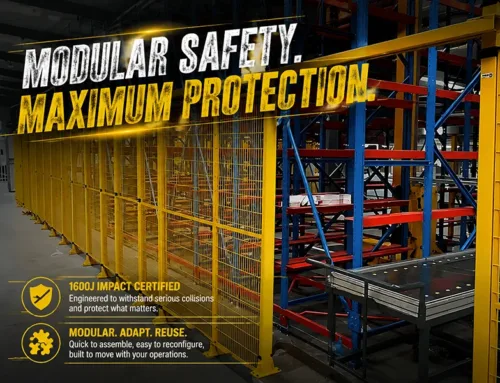
Figure 1: Cross-section of the 60x60mm Q235 steel post, the backbone of our high-impact resistance.
Structural Integrity: The 60x60mm Advantage
The weak point in many Industrielle Perimetersicherungen systems is the post. While 40x40mm posts are common in light warehousing, they are insufficient for robotic work cells. Mdfence utilizes a standard 60 x 60mm post with a wall thickness up to 2.0mm. This robust profile provides the necessary rigidity to withstand lateral forces verified by TUV impact testing.
This structural rigidity is critical when calculating safety distances (ISO 13857). A stiffer fence deflects less under load, allowing you to position the guard closer to the hazard without risking contact with the danger zone during an impact event.
Framed Panels: Engineering Out the Weak Points
In high-vibration environments like stamping press lines or CNC machining areas, spot-welded mesh often fails at the join points over time. Our solution utilizes a Gerahmte Tafel design. The wire mesh is fully welded into a 20 x 30mm steel tube frame, not just tack-welded to the surface.
This “frame-integrated” approach significantly increases the Schlagfestigkeit of the entire panel. Even if individual wires are compromised by a projectile, the structural frame maintains the integrity of the barrier, preventing a complete breach of the safety cell.

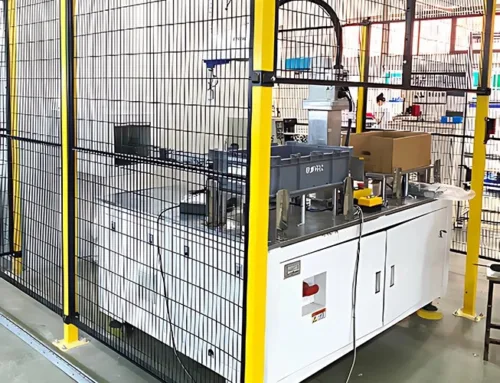
Figure 2: The framed panel design ensures mesh rigidity and eliminates sharp edges, crucial for operator safety.
Furthermore, our manufacturing process employs flat welding technology. This eliminates the sharp burrs and inconsistent weld beads found in cheaper alternatives, reducing the risk of cuts to operators (“meat hooks”) and ensuring a smooth surface for the Pulverbeschichtung application.
Access Points: Maintaining the Shield
A safety fence is only as strong as its weakest link, which is often the door. In Roboter-Schutzzäune applications, large openings are required for forklift access or bringing in heavy jigs. Standard hinges often sag under the weight of wide panels, causing misalignment with safety interlocks.
For wide openings in restricted spaces, such as automotive body-in-white lines, we deploy heavy-duty sliding door systems. These doors utilize the same framed panel construction as the fixed walls, ensuring that the access point offers the same impact rating as the rest of the perimeter.

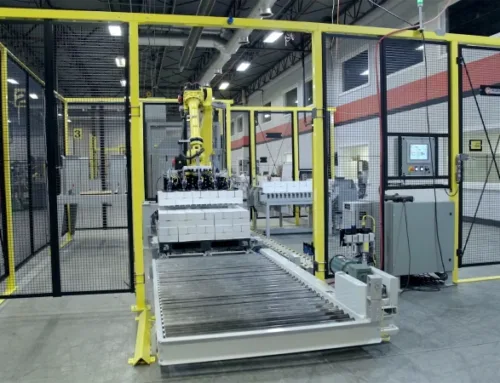
Figure 3: Double sliding door system designed for large robot work cells, maintaining full impact protection across the opening.
Integration with Safety Logic
Physical impact is only half the battle; the other half is control logic integration. Modern automation requires that opening a gate immediately triggers a Safe Torque Off (STO) condition. Mdfence systems are designed with pre-engineered Träger mit Sicherheitsverriegelung kits.
Whether you are using Omron D4NL or Pizzato switches, our mounting plates ensure rigid alignment. This prevents “door fault” errors caused by vibration or sagging, which are a leading cause of nuisance tripping and downtime in automated facilities.
Customization for Complex Layouts
Automotive and Tier 1 supplier facilities rarely have simple rectangular footprints. You are dealing with conveyors, pillars, and existing machinery. A “one-size-fits-all” panel often leads to onsite cutting and welding, which destroys the protective coating and compromises the impact rating.
We analyze your CAD layouts to provide a tailored Maschinenschutzzaunfelder solution. As seen in our work with major automation integrators, we can modulate panel widths and post heights (up to 2440mm) to fit tight geometries without sacrificing structural integrity.

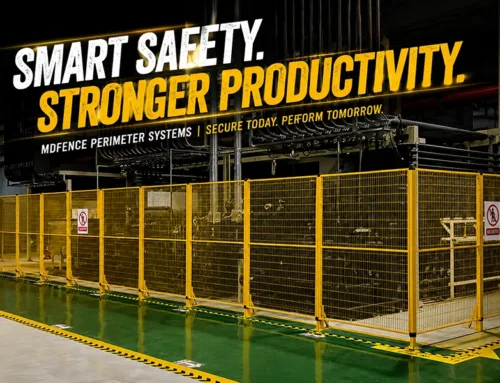
Figure 4: Custom layout design for a complex automation cell, ensuring 100% perimeter coverage without onsite fabrication.
Häufig gestellte Fragen
1. Does the Mdfence system meet ISO 14120 standards for impact resistance?
Yes, our system is designed and TUV certified to meet ISO 14120 requirements. The combination of 60x60mm posts and framed welded mesh panels ensures the system can withstand the required impact energy (Joules) for industrial machinery guarding.
2. Can your fencing withstand the impact of a robotic arm collision?
Our fencing is engineered for high-risk robot cells. While no fence is indestructible, our heavy-duty Q235 steel construction and secure floor anchoring (M10 expansion bolts) are designed to contain impacts and prevent the robot from breaching the perimeter, protecting personnel outside the cell.
3. How do you prevent corrosion in harsh industrial environments?
All components undergo a rigorous powder coating process (standard RAL 1023 Yellow / RAL 9005 Black) that meets GB/T9286-1998 adhesion standards. We have also passed ISO 9227 salt spray testing, ensuring long-term durability even in humid or chemically active environments.
4. Is the system compatible with non-contact safety switches?
Absolutely. We provide specialized mounting kits (Safety Interlock Carriers) compatible with major safety switch brands like Omron, Sick, and Pizzato. This ensures rigid mounting for both mechanical tongue interlocks and non-contact RFID sensors.
5. Can I replace a single damaged panel without dismantling the whole line?
Yes, the Mdfence system is modular. Panels are attached to posts using metal fixing rings and flange bolts. If a forklift damages one panel, it can be unbolted and replaced individually in minutes, minimizing maintenance downtime.