DE
DE  EN
EN  RU
RU  PT
PT  JA
JA  ES
ES  IT
IT 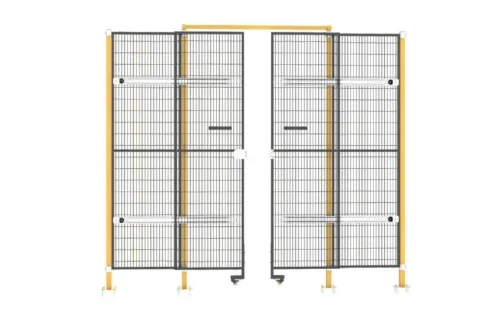

|
In a perfect world, every factory floor is laser-leveled. In the real world of brownfield retrofitting, you are dealing with drainage slopes, cracks, and decades of settling. Don’t let an uneven substrate halt your automation rollout. Our modular system is engineered to absorb floor tolerances without compromising ISO 14120 compliance or door alignment. |
The “Brownfield” Reality: Why Rigid Welding Fails
If you are installing a new robotic cell in a newly constructed facility, the floor is likely pristine. But for 90% of our clients in the automotive and heavy machining sectors, the reality is different. You are dealing with existing concrete slabs that have drainage gradients (often 1-2% slopes for fluid runoff) or uneven settling from heavy machinery loads over the years.
This is where traditional “cut-and-weld” fencing becomes a nightmare. If you try to install a rigid, pre-welded fence frame on a sloping floor, one of two things happens:
- The “V” Gap: The posts stand vertical (plumb), but the horizontal rails don’t follow the floor, creating a widening gap at the bottom that exceeds the 180mm OSHA/ISO limit for crawl-under protection.
- The Lean: The installer forces the fence to follow the floor, causing the posts to lean. This makes installing Industrielle Sicherheitszäune doors impossible because the hinges bind and safety interlocks (like Omron D4NL) will never align.
The Solution: Shimming and Modular Adjustability
Einrichtung can and should proceed on uneven floors, provided you utilize a modular system designed for tolerance. The Mdfence system handles floor irregularities through a combination of structural adjustability and standard installation protocols.

Step-by-step assembly allowing for vertical adjustments independent of floor grade.
1. Independent Post Anchoring & Shimming
Unlike continuous barrier rails, our system uses independent posts. During installation, we use a laser level to establish a “high point” datum. For posts located in lower spots (dips), we utilize industrial steel shims under the 140x140mm baseplate.
The Q235 steel baseplate is secured with M10 x 70mm expansion bolts (or chemical anchors for cracked concrete). The shimming ensures every post is perfectly plumb (vertical), which is non-negotiable for the structural integrity of the system.
2. Floating Mesh Connections
This is the critical differentiator. Our Maschinenschutzzaunfelder are connected to the posts via adjustable retaining clips, not fixed weld points.
If the floor slopes downwards, the mesh panel can be lowered on the post to maintain the required safety distance (typically <180mm from the floor) without tilting the post. The clip system allows for vertical micro-adjustments of ±20mm, ensuring the visual line remains clean while the bottom edge follows the general contour of the floor.
Solving the “Door Jam” on Sloped Floors
The biggest risk with uneven floors is door failure. If the two door posts are not perfectly parallel due to floor variance, a standard hinge door will “sag” or bind, and the safety key will miss the interlock switch. This causes nuisance tripping—where the machine stops because the sensor thinks the door is open.
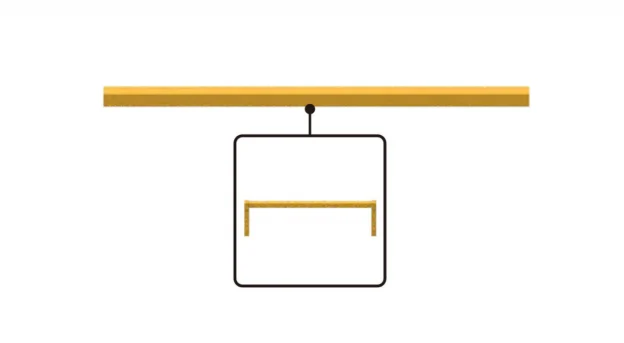
The overhead door frame beam forces post alignment regardless of floor conditions.
Wir lösen dies mit dem Door Frame Beam (Header) shown above. By mechanically linking the tops of the door posts, we create a rigid portal frame. Even if the floor underneath creates a slight twisting force, the header bar forces the posts to remain parallel. This guarantees that your sensitive RFID or tongue-actuated safety switches align perfectly every time, preventing downtime in your automation cell.
Summary: Preparation is Key
Yes, installation can proceed. However, for gradients steeper than 3% or steps larger than 2 inches, we may need to specify longer posts (e.g., 2200mm instead of 2000mm) to account for the leveling loss.
Don’t let a bad floor dictate your safety standards. By using a modular, adjustable system like Mdfence, you save the massive civil engineering cost of re-pouring concrete while ensuring your Roboter-Schutzzaun-Systeme remain compliant and functional.
Häufig gestellte Fragen (FAQ)
Q1: How much floor slope can the standard Mdfence system handle without customization?
A: The standard adjustable clips and shimming protocols can comfortably handle a gradient of up to 1-2 degrees. For steeper slopes (common in wash-down areas), we can cut mesh panels on an angle (raked panels) at the factory to match the specific slope.
Q2: My concrete is old and has some cracks. Can I still anchor the posts?
A: Yes, but standard expansion bolts might fracture brittle concrete. In these cases, we recommend using chemical anchors (epoxy resin) which bond to the concrete without exerting outward expansion pressure, ensuring a secure hold even in aged substrates.
Q3: Will shimming the posts leave a dangerous gap under the baseplate?
A: If the shim height exceeds 10mm, we recommend grouting the gap with non-shrink industrial grout. This prevents debris accumulation and provides full load-bearing support for the post base.
Q4: Does an uneven floor affect the swing of the hinge doors?
A: It can. If the floor rises in the direction of the door swing, the door bottom might scrape. We use adjustable hinges that allow us to raise the door leaf slightly, or we can install a “rise-on-open” hinge for severe slopes.
Q5: How do I measure my floor unevenness before ordering?
A: A simple laser level survey is best. Mark your intended fence line and measure the elevation variance every 2 meters. Share this data with our engineering team, and we will determine if standard posts or custom-length posts are required.