DE
DE  EN
EN  RU
RU  PT
PT  JA
JA  ES
ES  IT
IT

|
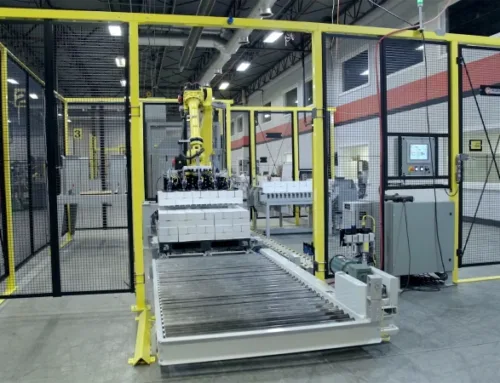
In automotive automation and robotics integration, a perimeter guard is more than just a physical barrier—it is the foundational carrier of your machine’s safety logic. When integrating PLe/SIL3 safety interlocks into high-speed mechanical assembly machines, relying on flimsy mesh that sags causes switch misalignment, triggering phantom machine stops and destroying your OEE (Overall Equipment Effectiveness). Discover how engineered Industrielle Sicherheitszäune eliminates these integration nightmares, ensuring seamless PLC communication and zero mechanical deflection. |
How do safety interlocks work with perimeter guarding?
For system integrators deploying 6-axis industrial robots or CNC machining centers, the handshake between physical Schutzsysteme für Maschinen and electronic control systems is critical. An interlock switch (such as an Omron D4NL or Pizzato) acts as the logic gate. When a worker opens a hinged door to access a robotic welding station, the mechanical actuator key is pulled from the switch body. This physical separation instantly breaks the Safety Torque Off (STO) electrical circuit, signaling the PLC to cut motive power to the hazardous equipment. The machine cannot be restarted until the door is securely closed and the circuit is reset.
The Before: The Nightmare of Misaligned Automation Cells
In traditional automotive assembly lines, facility managers often face a recurring headache: phantom downtime. The root cause rarely lies in the PLC software, but rather in the physical hardware of cheap, frameless wire mesh. Over time, constant vibrations from stamping presses or the sheer weight of a wide access door causes the hinges to sag. Even a 0.08-inch (2mm) deflection in the door frame means the actuator key no longer aligns perfectly with the interlock switch. The result? The safety circuit fails to close, the high-speed assembly line refuses to start, and maintenance crews spend hours adjusting hinges while production grinds to a halt. Furthermore, attempting to retrofit these switches onto standard posts requires on-site hot work (drilling and welding), which destroys the powder coating and introduces rust.

The Logic: Why Mdfence Ensures Seamless Interlock Integration
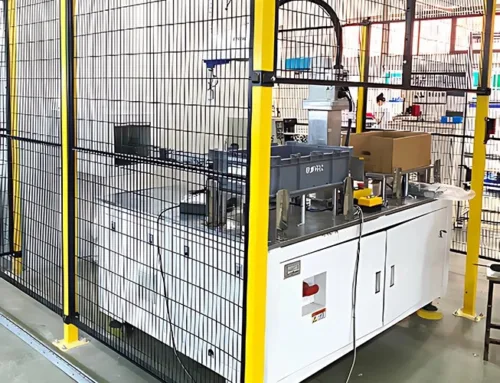
The Mdfence system solves this by treating the Roboter-Schutzzäune as a precision-engineered mounting substrate. Instead of frameless wire, every panel utilizes a 0.78″ x 1.18″ (20x30mm) Q235 carbon steel tubular frame. This provides immense out-of-plane stiffness. When hung on heavy-duty 2.36″ x 2.36″ (60x60mm) posts anchored by M10 expansion bolts, the structural integrity prevents any sagging, even on wide double-hinged doors.
More importantly, the system features dedicated Träger mit Sicherheitsverriegelung. These pre-fabricated, standardized mounting plates are engineered to perfectly match the hole patterns of industry-standard switches. They bolt directly onto the rigid steel frames using a modular clip system—requiring zero on-site drilling. The alignment is mathematically precise from day one and remains locked in place, absorbing the operational vibrations of material handling areas without shifting.

Get a Custom CAD Layout for Your Robot Cell Integration
The After: Maximized OEE and ISO 14120 Compliance
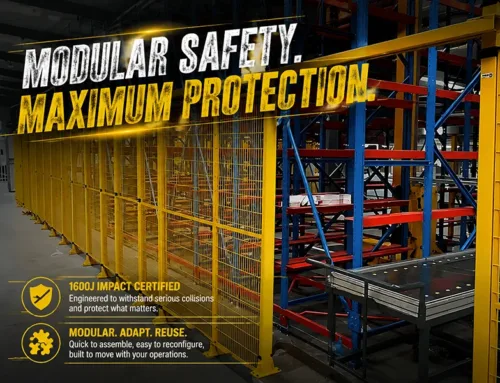
By utilizing this integrated approach, automation system integrators cut their mechanical commissioning time by up to 40%. There is no hot work permit required, no metal shavings contaminating nearby electro-optical elements, and no painting touch-ups. When the EHS auditor arrives, the Sicherheitszäune Maschinenschutz system easily passes ISO 14120 and OSHA inspections. The 1180 ft-lbs (1600 Joules) impact resistance guarantees that even if a workpiece is ejected from a high-speed lathe or an AGV bumps the perimeter, the structural deflection will not compromise the electronic interlock mechanism. Your production line stays running, and your workers stay safe.

Space Optimization in High-Density Manufacturing Lines
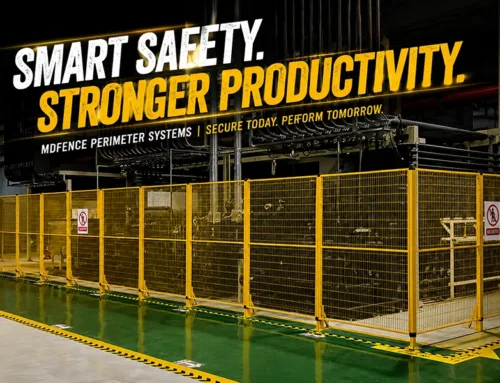
In tight automotive facilities, every square foot matters. A critical factor in interlock and perimeter guarding is the safety distance calculation dictated by ISO 13857. Standard 2″ x 2″ (50x50mm) mesh allows fingers to pass through, forcing integrators to install the fence up to 33.5 inches (850mm) away from the hazardous robot arm. The Mdfence system utilizes a specialized 0.78″ x 3.93″ (20x100mm) finger-safe mesh. This engineered aperture restricts penetration, safely allowing the Industrielle Perimetersicherungen to be installed as close as 4.7 inches (120mm) to the hazard. This allows you to place safety interlocked doors exactly where operators need them for rapid tooling changes, without wasting valuable floor space along AGV pathways.

Frequently Asked Questions (FAQs)
| Can I mount my existing Omron or Pizzato safety switches directly to the fence without drilling? | Yes. The system includes pre-engineered Safety Interlock Carriers (mounting plates) that bolt onto the Q235 steel frame using modular clips. This eliminates on-site drilling, prevents rust, and ensures perfect alignment for the actuator key. |
| How does the door design prevent the safety circuit from failing due to sagging? | Our doors utilize a 20x30mm fully welded tubular steel frame and heavy-duty hinges supported by 60x60mm posts. For oversized openings, we use caster wheel kits or bearing rails. This extreme rigidity prevents the micro-deflections that typically cause interlock misalignment and phantom machine stops. |
| Does the mesh size affect where I can install the interlocked door in a robot cell? | Absolutely. According to ISO 13857, our 20x100mm “finger-safe” mesh allows the perimeter guarding to be installed as close as 4.7 inches (120mm) to the hazard. This allows you to position interlocked access doors closer to the CNC machine or robot, saving valuable floor space. |
| If an automated guided vehicle (AGV) hits the fence, will the safety interlock break? | The perimeter guarding is tested to withstand 1600 Joules of impact energy. The energy is dissipated through the framed panels and the M10 expansion bolts into the concrete floor, isolating the shock from the safety switch mounting points and protecting your PLC logic hardware. |
| Is the system compatible with safety light curtains for high-frequency loading zones? | Yes. For automotive assembly lines requiring frequent material handling without opening a physical door, we provide specialized 80x80mm posts with internal cable routing to seamlessly integrate safety light curtains alongside mechanical interlocked doors. |