DE
DE  EN
EN  RU
RU  PT
PT  JA
JA  ES
ES  IT
IT 

|
Securing a high-speed robotics layout isn’t just about the steel panels—it’s about how that steel interacts with your factory floor. When a 5,000 lb forklift nudges a perimeter guard, or a CNC machining center generates constant low-frequency vibration, poorly anchored fences transfer sheer kinetic force directly into your concrete slab. The result? Spalling concrete, blown-out anchor holes, misaligned safety interlocks, and unexpected downtime on your Automatisierte Produktionslinie. You need an anchoring system designed to absorb impact, not fight the foundation. |
The Reality of Anchoring Robot Safety Fencing to Factory Floors
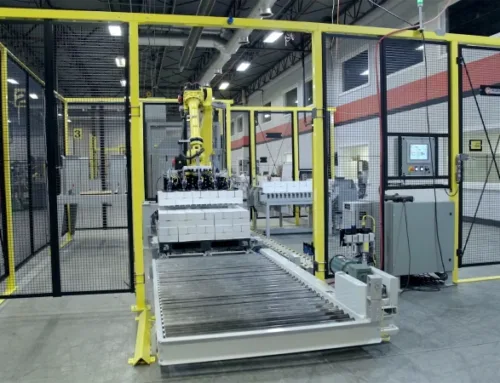
In automotive manufacturing and heavy system integration, the factory floor is a hostile environment. Before upgrading their perimeter protection, plant engineers often deal with “rigid” welded fences. When a malfunctioning robotic arm ejects a heavy workpiece, or an AGV strays off its path, these cheap, frameless fences don’t flex. Instead, they act as a lever, ripping their mounting hardware straight out of the polished concrete. This causes severe concrete spalling, destroys the epoxy coating, and forces maintenance teams to pour new concrete footings—halting the entire assembly system for curing time.
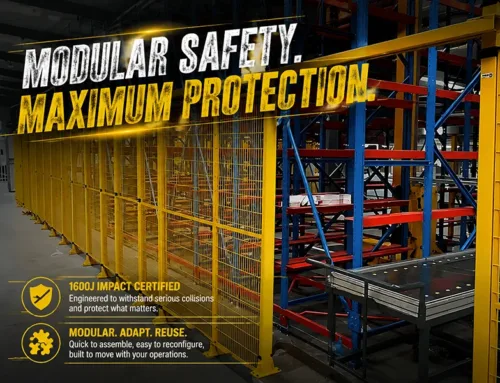
Why our logic works: The Mdfence Industrielle Sicherheitszäune system is engineered around the principles of kinetic energy dissipation. Our standard 2.36″ x 2.36″ (60x60mm) Q235 carbon steel posts feature a specialized lateral “ear” base plate. We secure these to the slab using four heavy-duty M10 x 70mm (approx. 3/8″ x 2.75″) expansion bolts. Because Q235 steel possesses excellent plasticity, an extreme impact (up to 1,600 Joules) causes the post to flex and absorb the energy—much like a car’s crumple zone. It prevents the sheer force from transferring entirely to the anchor bolts.
The Aftermath: Your concrete slab remains intact. The expansion bolts hold firm, ensuring your Schutz von Maschinen stays strictly compliant with ISO 14120 and OSHA standards. If a panel is struck, you replace a single modular section in 10 minutes using cold work, rather than shutting down the CNC center for hot-work welding and concrete repair.

Protecting the Anchor Points in High-Traffic AGV Zones
In dedicated manufacturing lines where material handling equipment operates inches away from robotic work cells, exposed anchor bolts are a liability. A pallet jack clipping an exposed bolt can bend the threaded stud, making future post removal impossible without grinding. To combat this, our system includes a two-piece plastic post base protective cover (shown above). This completely shrouds the M10 expansion bolts, deflecting minor tire impacts, preventing operators from tripping, and stopping coolant or machining fluids from pooling around the drilled concrete holes and causing premature oxidation.
Structural Integrity: The Framed Panel Advantage
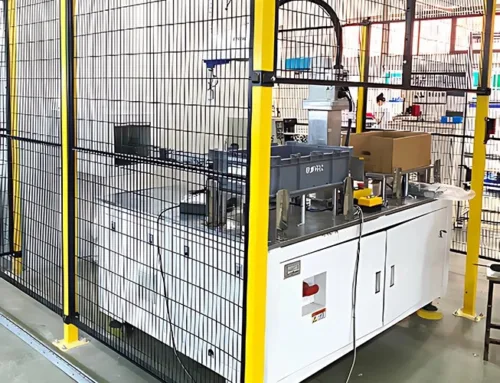
Anchoring is only half the battle; the panels must bridge the gap without sagging. When system integrators build Schlüsselfertige Lösungen, they cannot rely on cheap, frameless wire mesh. Frameless mesh acts like a hammock under load, pulling the posts inward and putting lateral stress on the concrete anchors.

Our framed panels utilize a 20x30x1.5mm seamless steel tubular frame. The 3.0mm or 4.0mm wire is attached using a flattened weld point process. This out-of-plane stiffness means that when a high-speed mechanical assembly machine ejects a part, the frame distributes the point load evenly across the fixing rings and into the posts, keeping the dynamic load on your concrete anchors perfectly balanced.
Concrete Anchoring & System Specifications
| Component / Metric | Engineering Specification |
| Anchor Hardware | 4x M10 x 70mm Wedge Expansion Bolts per post. |
| Post Material & Profile | Q235 Cold-rolled carbon steel, 60x60mm (2.36″x2.36″), 1.5mm-2.0mm wall thickness. |
| Base Plate Design | Welded lateral “ear” style to maximize footprint and distribute overturning moments across the concrete slab. |
| Auswirkungsbewertung | 1600 Joules (TUV Certified) – prevents anchor pull-out by allowing controlled plastic deformation of the post. |
Integrating Access Doors in Space-Constrained Layouts
Automotive plant real estate is expensive. When designing a robotics layout, you rarely have the clearance for a massive 3-meter hinged door to swing open into an active forklift aisle. To maintain tight safety distances (up to 120mm from the hazard, thanks to our 20x100mm finger-safe mesh) while allowing overhead crane or forklift access, sliding doors are the integrator’s preferred choice.

Our sliding doors utilize a top bearing rail system. Because the heavy door panel is suspended and guided, it doesn’t drag across the concrete floor or require a bottom track that would disrupt AGV paths. Furthermore, the rigid top door frame beam ensures the posts remain perfectly parallel. This prevents the heavy door from pulling the posts inward over time, which would otherwise stress the concrete anchors and cause safety interlock switches (like Omron D4NL or Pizzato) to misalign and trigger phantom machine shutdowns.
Häufig gestellte Fragen
1. What is the minimum concrete thickness required for anchoring your robot safety fencing?
For standard installations utilizing our M10x70mm expansion bolts, we recommend a minimum reinforced concrete slab thickness of 4 to 5 inches (100-125mm) to ensure the bolts achieve their maximum pull-out resistance without spalling the underside of the slab.
2. Can we install the fencing over existing epoxy coatings in our automotive assembly line?
Yes. The installation is a cold-work process. You simply drill through the epoxy directly into the concrete using a 14mm masonry bit. There is no welding or hot work required that would scorch or melt your expensive floor coatings.
3. How do the expansion bolts handle the constant vibration from CNC machining centers?
The base plates are designed to sit flush against the concrete, and the M10 wedge anchors provide high tension. For extreme high-vibration environments (like stamping presses), chemical anchors (epoxy resin) can be used as an alternative to mechanical wedge anchors to prevent long-term loosening.
4. If we reconfigure our robotics layout, can the anchor holes be reused or patched?
If you move the fencing, the existing expansion bolts can be cut flush with the floor or driven deeper into the slab, and the hole filled with an industrial concrete patch or epoxy. The modular fence posts can then be re-anchored in their new location with a 95% asset reuse rate.
5. Does your installation process require hot work permits on the factory floor?
Absolutely not. The entire Mdfence system is 100% modular. From securing the base plates to attaching the framed panels with fixing rings, the assembly only requires standard hand tools and hammer drills. This means zero sparks, zero welding fumes, and no need to halt surrounding production.