DE
DE  EN
EN  RU
RU  PT
PT  JA
JA  ES
ES  IT
IT 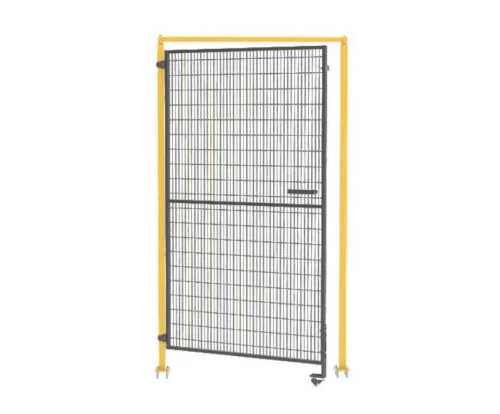

|
For robotics system integrators, nothing kills a turnkey project timeline faster than field-fitting safety interlocks. Drilling into flimsy fencing on-site creates metal shavings that threaten PLC cabinets, ruins factory powder coatings, and inevitably leads to sagging doors. This structural sagging misaligns the interlock key, triggering false Safe Torque Off (STO) signals and devastating OEE on high-speed assembly lines. Stop engineering custom workarounds. Discover how pre-engineered interlock door mounting guarantees seamless integration and zero nuisance tripping. |
The Engineering Bottleneck: Nuisance Tripping in Robotic Cells
When integrating a new CNC machining center or an automotive welding station, the physical barrier is often treated as an afterthought. System integrators frequently rely on standard frameless wire mesh. The critical failure point? You cannot reliably mount a heavy-duty safety interlock (like an Omron D4NL or Pizzato FS series) onto a structurally weak frame.
Without a standardized mounting plate, your technicians are forced to perform on-site hot work or drill directly into the posts. This destroys the ISO 9227 salt-spray-tested powder coating, leading to rapid rust in harsh environments. More critically, as the automated production line runs, vibrations and continuous operator access cause the frameless door to sag. A misalignment of just a few millimeters pulls the actuator key out of the switch, sending an unexpected STO command to the PLC. The robot halts, the conveyor stops, and you face severe downtime costs while maintenance struggles to realign the door hinges.

The Logic of Pre-Engineered Integration: Rigid Frames and Standardized Carriers
To eliminate these integration delays, Schutzsysteme für Maschinen must be designed as active components of your safety circuitry, not just passive steel. The Mdfence modular architecture solves the sagging and alignment issues through uncompromised structural integrity.
Instead of bare wire, every door utilizes a 0.