DE
DE  EN
EN  RU
RU  PT
PT  JA
JA  ES
ES  IT
IT

|
Your project timeline is non-negotiable, but a failed EHS audit or a last-minute welding permit can derail everything. The physical barrier around your robot cell shouldn’t be the source of your biggest delays and downtime. A misaligned gate causing a single nuisance trip can cost more in lost production than the fence itself. |
In the world of automation integration, Overall Equipment Effectiveness (OEE) is king. The safety systems designed to prevent catastrophic failures are, ironically, often a primary cause of chronic, low-level downtime. A sagging gate, a misaligned interlock switch, or the need to shut down a line for a simple modification—these “minor” issues bleed productivity and erode profit margins. The problem isn’t the principle of safety, but the implementation.
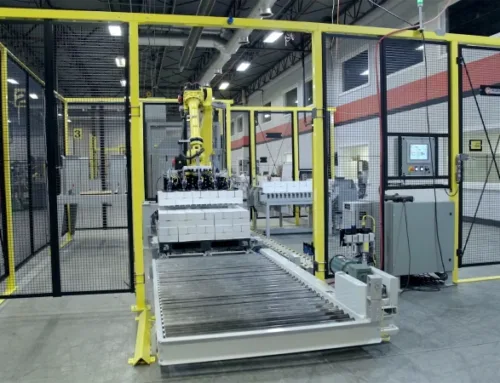
A truly effective Roboter-Schutzzäune system doesn’t just pass an audit; it actively contributes to maximizing uptime. It’s not a static barrier but a dynamic component engineered to reduce Mean Time To Repair (MTTR) and eliminate the common pain points that plague system integrators and plant managers.
The Commissioning Nightmare: Hot Work Permits vs. Cold Assembly
The “Before” Scenario: The robot is installed, the PLC is programmed, but the safety fence is still being fabricated on-site. Your team is scrambling to get hot work permits. Welding sparks are flying, forcing adjacent lines to shut down. Grinding dust threatens to contaminate sensitive robot controllers and vision systems. The result is a permanent, inflexible cage that caused days of delays and created a hazardous installation environment. The project timeline is already in jeopardy before the line has even run a single part.
Our Logic—Engineered for Speed: Mdfence systems are designed for “cold assembly.” Every component, from the Q235 carbon steel posts to the framed mesh panels, is pre-fabricated and bolts together with standard tools. There is zero on-site welding, cutting, or grinding. Our modular design means a two-person team can assemble over 150 feet of fencing in a single day, a task that would take a welding crew the better part of a week.

The “After” Payoff: Installation is clean, quiet, and predictable. It can be scheduled during off-hours or weekends without disrupting ongoing production. You pass the EHS audit with flying colors, not just for the final product, but for the safe installation process itself. Your project stays on schedule, and you deliver a system that looks as professional as it performs.
Eliminating Nuisance Trips: The High Cost of a Misaligned Switch
The “Before” Scenario: The line stops. Again. The HMI shows a “Safety Circuit Open” fault. Maintenance spends 20 minutes tracing the issue, only to find the gate on the robot cell has sagged by a quarter-inch, causing the safety interlock plunger to misalign. They force it shut and the line restarts, but everyone knows the problem will be back. These intermittent nuisance trips are OEE killers, creating unpredictable downtime that is infuriatingly difficult to diagnose.
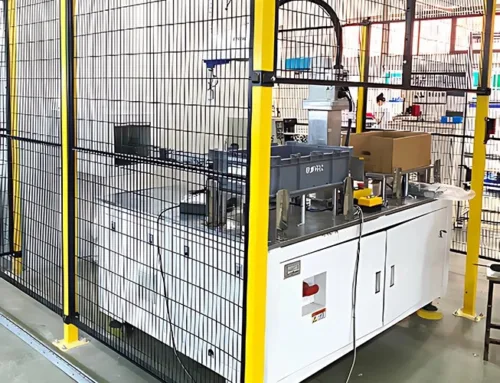
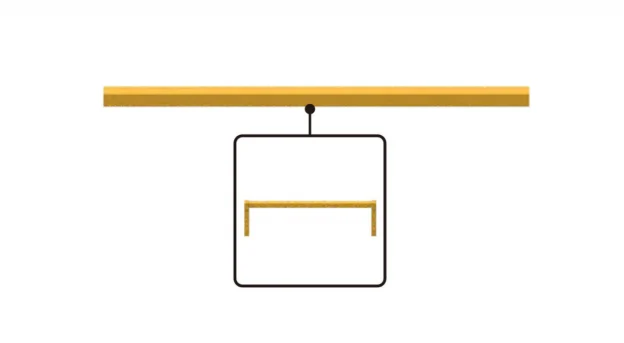
Our Logic—Structural Integrity is Non-Negotiable: This failure point is engineered out of the Mdfence system. Unlike flimsy, frameless mesh, our standard panels feature a fully-welded 20x30mm tubular steel frame. This provides exceptional rigidity, preventing the sagging and warping that cause interlock misalignment. For door systems, we add a top Türrahmenbalken—a simple but critical component that connects the two door posts, ensuring they remain perfectly parallel and the gate closes precisely, every single time, for years.
The “After” Payoff: Your safety circuit is rock-solid and reliable. The machine runs when it’s supposed to, and stops only when there’s a genuine safety event. Your client’s OEE improves, and their maintenance team can focus on preventative tasks instead of chasing phantom faults. The Schutz von Maschinen becomes a source of reliability, not frustration.
Future-Proofing Your Automation: The Myth of a “Permanent” Layout
The “Before” Scenario: Six months after commissioning, the end-client needs to re-tool the line to accommodate a new product model. A conveyor path needs to change, and a new inspection station must be added. Your welded-in-place fence is now a multi-thousand-dollar obstacle. It has to be destroyed with an angle grinder and sent to the scrapyard. The entire initial investment is lost, and the modification process involves more costly downtime and hot work permits.
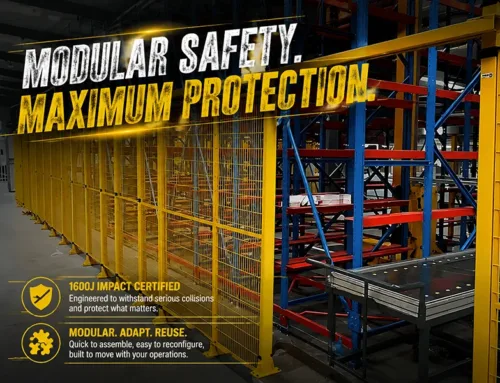
Our Logic—Assets, Not Consumables: The core principle of Mdfence is modularity. Because the entire system is bolted together, it can be easily disassembled, reconfigured, and redeployed. Need to move a panel to improve maintenance access? It takes ten minutes. Need to expand a cell or change the entire layout? 95% of your components are reusable. This transforms the safety fence from a one-time construction expense into a flexible, long-term capital asset.

The “After” Payoff: When the client requests a line modification, you present a smart, cost-effective solution. You reconfigure the existing Mdfence system, saving them the cost of a full replacement and reinforcing your value as a long-term partner. The client’s initial investment is protected, and your team looks like heroes for planning ahead.
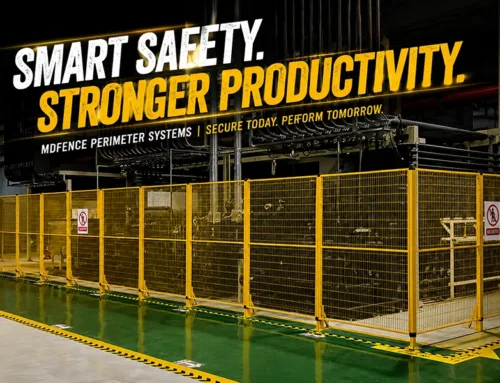
Ultimately, less downtime is achieved not by cutting corners on safety, but by investing in a safety infrastructure that is as intelligently designed as the automation it protects. The right fencing system accelerates commissioning, enhances operational reliability, and adapts to future needs—turning a mandatory safety requirement into a competitive advantage.
Frequently Asked Questions for Automation Integrators
1. Can your system integrate with our preferred safety interlocks like Omron, Pizzato, or Schmersal?
Absolutely. This is a core part of our value proposition. We’ve moved beyond being a simple barrier to an integrated safety system. We offer a range of pre-engineered mounting plates and “lock carriers” specifically designed for popular interlocks like the Omron D4NL or Pizzato FS series. This eliminates the need for on-site drilling or custom bracket fabrication, ensuring a clean, robust, and repeatable installation that saves significant integration time.
2. We have a conveyor passing through the robot cell. How do you handle openings?
We manage conveyor pass-throughs with custom-sized “tunnel guards.” These are openings in the mesh panels that are sized to be compliant with ISO 13857 safety standards. The principle is to make the opening large enough for the product or pallet to pass through, but small enough to prevent human access to the hazard zone. This is a standard solution we provide for many logistics and assembly line projects.
3. How does your system’s impact rating (≥1600 Joules) translate to a real-world scenario in a robot cell?
The 1600 Joule rating is a certified value that means the system can absorb the energy of a 220 lbs (100 kg) object moving at 12.5 mph (20 km/h) without failure. In a robot cell, this translates to containing a dropped workpiece from an end-of-arm-tool (EOAT) or withstanding an accidental impact from a maintenance cart or AGV. It ensures that in a failure event, the energy is absorbed by the fence’s plastic deformation, preventing catastrophic failure and the creation of secondary projectiles.
4. Our end-client’s facility has uneven concrete floors. How does your system accommodate this?
This is a very common issue. Our system has several built-in adjustment features. The connection clips that hold the panels to the posts allow for minor vertical adjustment to follow the slope of the floor. Additionally, the use of shims under the post base plates is a standard procedure to ensure the posts are perfectly plumb, even on an uneven surface. This flexibility ensures a professional, secure installation without requiring perfect site conditions.
5. We need to get this project quoted and installed urgently. What’s your typical lead time for standard components?
We understand that project timelines are critical for integrators. We maintain a significant inventory of our standard components, including the most common post heights (e.g., 2000mm), panel widths, and door systems in our standard yellow/black color scheme. For standard configurations, we can often ship within a matter of days to meet urgent project deadlines.