DE
DE  EN
EN  RU
RU  PT
PT  JA
JA  ES
ES  IT
IT 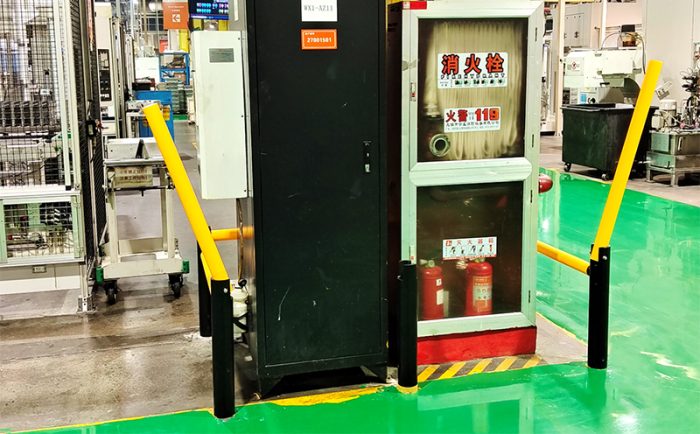
Wir haben ihn alle schon erlebt. Der Moment, in dem das ganze Lagerhaus den Atem anhält.
It’s late afternoon, the pressure is on to get the last shipments out. Sarah, one of your most diligent team members, is focused on her picklist, her back to the main aisle. At the same time, John, a forklift operator with a clean record, rounds the corner, perhaps a little too quickly, his view momentarily obscured by a stack of pallets.
Dann kommt das Geräusch, das alles durchschneidet: das hohe Quietschen von Reifen auf poliertem Beton.
A collective flinch. The deafening silence that follows. You look up to see the forklift stopped, its forks less than a yard from where Sarah is standing, her face pale with shock.
Alle atmen aus. Es war ein Beinahe-Zusammenstoß. Nur ein Beinahe-Zusammenstoß.
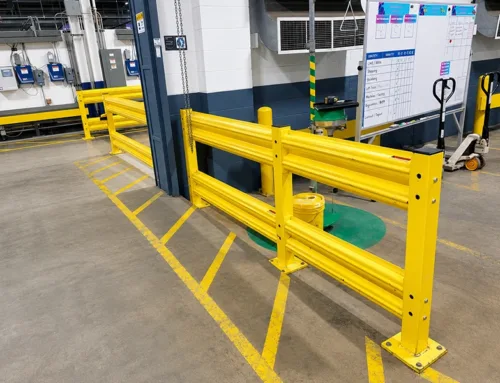
You follow the protocol. You talk to John, who is visibly shaken. You check on Sarah. You file the incident report, and at the next safety meeting, you re-emphasize the importance of operator awareness and pedestrian vigilance. The yellow line painted on the floor, the one separating the walkway from the vehicle lane, did its job as a visual reminder—or so the thinking goes.
But later that night, the image replays in your mind. You start running the variables. What if the floor had been slightly damp? What if John’s reaction time had been a fraction of a second slower? That near-miss report could have been a life-altering accident investigation. And the weight of that “what if” rests squarely on your shoulders.
Die unbequeme Wahrheit über unser häufigstes Sicherheitsinstrument
Seit Jahrzehnten ist die aufgemalte gelbe Linie der Eckpfeiler der Sicherheit von Fußgängern in Lagerhäusern. Wir ergänzen sie durch Schulungen, Beschilderung und Warnwesten. Wir arbeiten nach einem System aus Regeln, Bewusstsein und Vertrauen. Wir vertrauen darauf, dass unsere Mitarbeiter wachsam sind und unsere Fußgänger aufmerksam bleiben.
But let’s be honest with ourselves: what is that yellow line, really?
It’s a psychological boundary, not a physical one. It’s a gentleman’s agreement between a 180-pound person and a 9,000-pound machine. It’s a line that can be instantly erased by a moment of distraction, a blind spot, or simple human error.
Wir investieren Tausende in die Ausbildung und verlangen von unseren Mitarbeitern Perfektion in einem Umfeld, das von Natur aus unvollkommen ist. Wir verlangen von ihnen, dass sie acht, zehn, zwölf Stunden am Tag, umgeben von Lärm, Druck und sich wiederholenden Aufgaben, ein einwandfreies Situationsbewusstsein bewahren. Wir stützen unser Sicherheitssystem auf die Hoffnung auf menschliche Unfehlbarkeit. Und als Manager wissen wir, dass dies ein Glücksspiel und keine Strategie ist.
Berechnung der wahren Kosten eines Glücksspiels
When the gamble fails, the cost is catastrophic. We can talk about the direct financial impact—the worker’s compensation claims, the OSHA fines, the legal fees, and the soaring insurance premiums. These are the numbers that can be quantified on a spreadsheet, and they are substantial.
But the true cost runs much deeper. It’s the operational cost of shutting down a section of your facility for an investigation, the productivity loss from a demoralized team, and the immense amount of your time and emotional energy consumed by the fallout. And most profoundly, it’s the human cost—the impact on an employee and their family. A near-miss is not a sign that your system is working. It’s a warning that your system is based on luck. And luck, eventually, runs out.
Von einem System der Hoffnung zu einem System der Gewissheit
What if we could engineer luck out of the equation? This requires a fundamental shift in mindset: from relying on awareness to guaranteeing protection. It means moving from a system of trust to a system of engineering. It means accepting that humans will make mistakes, and designing a workplace that forgives them.
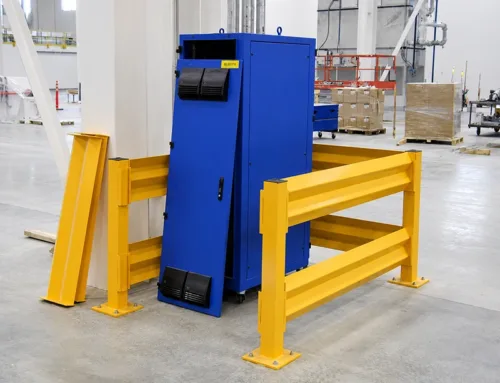
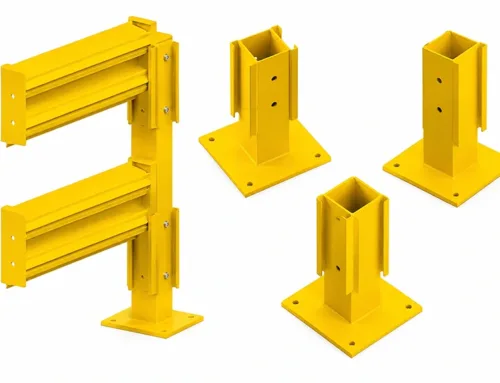
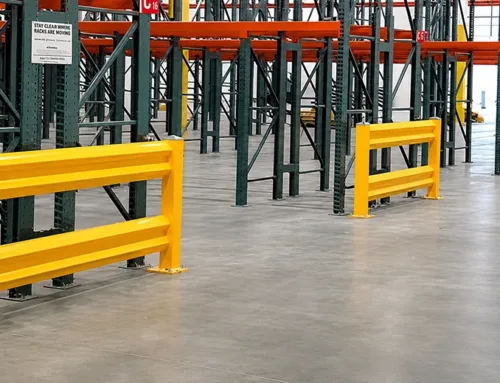
This is the principle behind mandatory physical separation. It’s about creating designated, protected spaces where your team can work with absolute certainty that they are safe from vehicle traffic. Imagine your warehouse again. Sarah is checking her list. John is rounding the corner. But now, between them, stands a physical barrier. It’s not an aggressive steel wall that would damage the forklift. It’s one of the advanced flexible Sicherheitsbarrieren made from polymer.
When the forklift makes contact, the barrier flexes, absorbing the impact like a cushion. It gently deflects the machine, bringing it to a safe stop. The barrier then returns to its original position, ready to do its job again. Sarah might be startled, but she is completely unharmed. The forklift has minimal, if any, damage. The operation barely pauses. In this scenario, the engineering did its job. The system worked.
For a manager, this is the ultimate value proposition. It’s not about technical specifications. It’s about trading the constant anxiety of “hoping for the best” for the peace of mind that comes from “engineering for certainty.” Investing in engineered solutions like flexible Sicherheitsbarrieren is about transforming your role from a reactive incident manager to a proactive architect of a genuinely safe workplace.
Wenn Sie also das nächste Mal über den Boden Ihrer Einrichtung gehen und auf die aufgemalte gelbe Linie schauen, stellen Sie sich eine einfache Frage: Handelt es sich dabei um eine Vertrauenslinie oder um eine Linie im Sand, die Sie nicht durch einen vermeidbaren Unfall überschreiten lassen wollen?