DE
DE  EN
EN  RU
RU  PT
PT  JA
JA  ES
ES  IT
IT 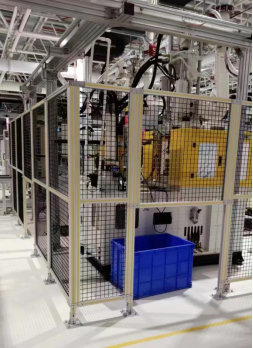
A Lean Consultant’s Guide to Seeing Waste in Your Factory’s Foundation
As a Lean practitioner, your world revolves around a core mission: the relentless pursuit of perfection through the elimination of waste (Muda) and the empowerment of people to drive continuous improvement (Kaizen). You invest in training, you conduct value stream mapping workshops, and you fill your facility with visual management boards. But what if the most significant source of waste on your floor isn’t in your process, but in the physical infrastructure that contains it?
Many well-intentioned Lean initiatives stall because they are fighting against a factory “hardware” that is fundamentally rigid and resistant to change. The most common culprit? The traditional, welded-steel safety fence. A modern, modular system from a quality aluminum fencing supply can be the key to unlocking flexibility.
This guide is not about fencing. It’s about Lean. It’s a tool to help you put on your “Muda glasses” and see how a seemingly static piece of infrastructure could be actively undermining your efforts to build a truly Lean culture.
Seeing the Unseen: How Rigid Fencing Creates the 8 Wastes
Let’s walk the Gemba together and identify how a fixed, welded-steel fence directly generates the eight forms of waste that you work so hard to eliminate.
- The Waste of Waiting (Time on Hand)
This is the most obvious and painful waste. When a line reconfiguration is needed, a welded fence forces massive periods of waiting. The production line waits for the maintenance crew. The crew waits for the hot work permit. The project waits for the welders to cut, grind, and re-weld. Every hour of waiting is a direct hit to your Takt time and overall flow. - The Waste of Over-processing (Doing More Than Necessary)
The entire process of modifying a welded fence is a masterclass in over-processing. The tasks—cutting with an angle grinder, creating sparks and fumes, grinding down welds, repainting scarred metal—add absolutely no value for the end customer. A modular system that requires only unbolting and re-bolting reduces this non-value-added work by over 90%. - The Waste of Transportation (Unnecessary Movement of Materials)
Consider the logistics of a welded fence rework. It involves transporting heavy raw steel from storage, moving welding carts and gas cylinders to the site, and hauling away heavy sections of scrap metal. This is all unnecessary movement that could be eliminated if the existing “inventory” of fence panels could be reconfigured in place. - The Waste of Motion (Unnecessary Movement of People)
Observe the “spaghetti diagram” of a welder and their support team during a rework. They are constantly walking back and forth to get tools, manage safety equipment, and position materials. This is wasted human energy that could be channeled into value-creating activities. With a simple modular system, a small team can work efficiently in a contained area with just a few hand tools. - The Waste of Defects (Rework and Scrap)
A fence rework is inherently a dirty process. The airborne dust and metal particulates created from grinding can easily contaminate sensitive products or equipment, leading to defects and rework. Furthermore, the old fence itself becomes a defect—a scrapped asset that must be discarded, representing 100% material waste. - The Waste of Inventory (Excess Parts and Products)
To mitigate the long lead time of a welded rework, a plant might be tempted to hold inventory of raw steel or pre-fabricated fence sections. A modular system, being 100% reusable, becomes its own inventory. The parts you need for the next reconfiguration are already on your factory floor, simply serving a different purpose today. - The Waste of Underutilized Talent
This is perhaps the most tragic waste. You have brilliant engineers and skilled operators who know how to optimize your production flow. But when the barrier to implementing their ideas is a multi-day, high-cost construction project, what happens? They stop suggesting improvements. A rigid infrastructure stifles the very Kaizen spirit you want to foster. It sends the message that change is difficult and discouraged.
Kaizen Culture Demands a Flexible Gemba
A true Lean culture thrives when the cycle of “Plan-Do-Check-Act” (PDCA) can happen rapidly. The goal is to make many small, low-cost improvements. If an operator has an idea to rearrange a workstation for better ergonomics and flow, they should be empowered to try it.
A modular aluminum fencing supply is a powerful enabler of this culture. It lowers the barrier to experimentation to virtually zero. It transforms the conversation from “We can’t, it’s too much work,” to “Let’s try it this afternoon.” This shift is the essence of empowering your team and respecting their knowledge of the process.
This flexibility is also a prerequisite for advanced Lean concepts:
- Zellulare Fertigung: As demand changes, you need the ability to quickly form, disband, or resize production cells. Modular walls make this a practical reality.
- 5S-Einführung: A clean, well-designed modular system with clear floor markings is far easier to “Set in Order,” “Shine,” and “Sustain” than a permanently welded and often-repainted structure.
Ihre Infrastruktur sollte Ihrer Philosophie dienen
Take a walk around your facility tomorrow. Don’t look at your fencing as just a safety barrier. Look at it as part of your operating system.
Is it enabling flow, or is it creating stagnation? Is it empowering your people to make improvements, or is it silently telling them that change is too hard?
Your goal is to build a fast, flexible, and intelligent production system. It is only logical that the physical infrastructure supporting it should share those same essential qualities. If you are serious about your Lean journey, you must address the foundational hardware of your factory. Eliminating the waste locked into your infrastructure can unleash a new wave of efficiency and innovation that ripples through your entire value stream.