DE
DE  EN
EN  RU
RU  PT
PT  JA
JA  ES
ES  IT
IT 
Sie haben eine strategische Entscheidung getroffen. Sie sind bereit, ein physisches Zugangskontrollsystem zu installieren. Sie beginnen mit der Suche und sehen sich sofort mit einer Reihe von Optionen konfrontiert, die auf den ersten Blick bemerkenswert ähnlich aussehen. Im Grunde handelt es sich bei allen um Mauern aus Drahtgewebe. Aber genau hier kann ein entscheidender Fehler gemacht werden.
The difference between a system that serves as a reliable asset for a decade and one that becomes a maintenance headache in a year lies in the engineering details. A professional-grade system isn’t just a barrier; it’s a piece of industrial equipment, designed to withstand the harsh realities of a high-traffic warehouse. Before you make a capital investment, it’s crucial to understand what separates a professional solution from a basic perimeter fence.
1. Der Stahl selbst: Drahtstärke und Schweißnahtqualität
A true industrial-grade cage or steel mesh partition is constructed from heavy-duty 6-gauge or even 4-gauge steel wire. Furthermore, every wire intersection should be fully welded. This creates a single, monolithic unit that distributes force across the entire panel. Imagine a pallet jack, loaded with over 2,000 lbs of goods, accidentally bumping the unit. A lighter, tack-welded fence will likely dent or deform. A heavy-gauge, fully welded panel will absorb the impact with minimal damage. This detail is the difference between a visual deterrent and a genuine physical asset.
2. Das Finish: Spritzlackierung vs. industrielle Pulverbeschichtung
A premium system undergoes an industrial powder-coating process, which melts a polymer powder into a thick, hard shell bonded to the metal. After just six months in a busy warehouse, a painted finish will inevitably be chipped and scratched, exposing the raw steel to potential corrosion. A powder-coated finish is significantly more resistant to impact and abrasion, preventing rust and maintaining its professional appearance for years.
3. Die Tür und das Schloss: Ein nachträglicher Gedanke vs. ein integriertes System
The door is the single most used component. A professional system’s door is engineered with heavy-duty hinges and an integrated locking mechanism. Options should range from a built-in cylinder lock to a mechanical keypad or an electric strike that can be wired into your building’s master access control system. This is the difference between simply securing a space and streamlining an operation.
4. Die Designphilosophie: Einheitsgröße für alle vs. echte Modularität
A professional offering is a true modular system, not just a set of standard panels. It includes panels in a wide variety of widths and the capability to provide custom-sized or cut-out panels to perfectly accommodate any obstruction like a support column or conduit. A one-size-fits-all approach forces you to compromise; a true modular steel mesh partition conforms to your building.
5. Die Hilfskomponenten: Die kleinen Details, auf die es ankommt
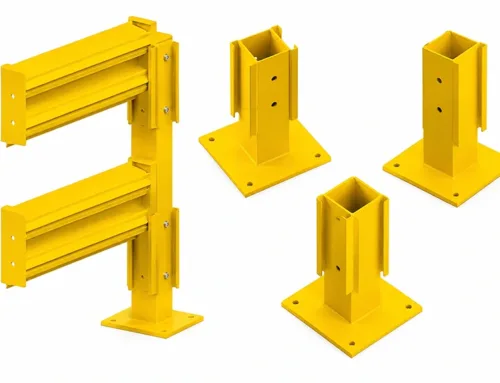
It’s the small, thoughtful features that truly separate a professional product. The floor anchor plates should be oversized, thick steel for a rock-solid footing. A service window should be purpose-built, with a smooth, finished edge and sized to allow paperwork transfer but prevent human passage. These details are proof that the manufacturer understands the intense, real-world demands of your environment.
Werden Sie ein gebildeter Einkäufer
When you begin to evaluate your options, look past the initial price. Ask the right questions. Request a spec sheet. Inquire about the wire gauge, the finish, the lock options, and the modular capabilities. By understanding these critical details, you are no longer just a buyer. You are an informed stakeholder, equipped to invest in a professional-grade solution that will deliver safety, efficiency, and long-term value for years to come.