DE
DE  EN
EN  RU
RU  PT
PT  JA
JA  ES
ES  IT
IT 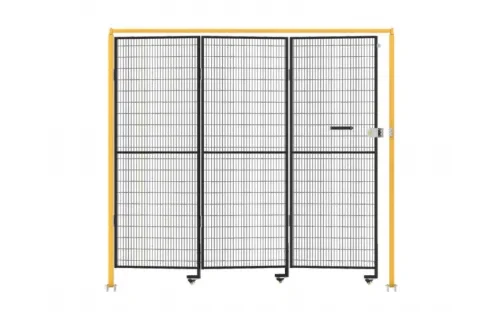

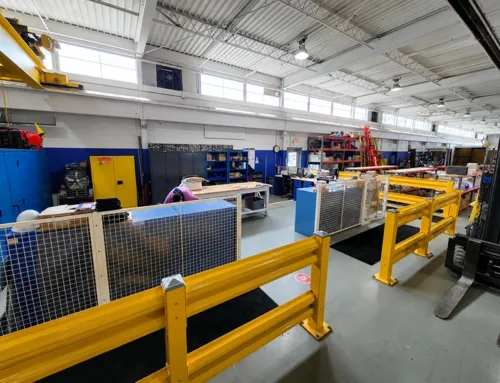
Dealing with an aging facility where the concrete slab is anything but perfectly flat? In automotive automation and robotic integration, an uneven floor usually means delayed deployments, on-site cutting, and misaligned safety interlocks that constantly trip your robots. You don’t need to repour the concrete or resort to dangerous hot work to achieve compliant machine guarding.
Kann der Einbau erfolgen, wenn der Werkstattboden uneben ist?
In real-world stamping plants or CNC machining centers, concrete floors settle, slope, and pit over time. When system integrators attempt to install traditional welded barriers or frameless wire mesh on these surfaces, the rigid structures fight the floor. If the slab drops by just half an inch over a 10-foot span, traditional panels won’t align. This causes door hinges to sag, preventing Omron or Pizzato safety switches from engaging properly. The result? Your PLC triggers a Safety Torque Off (STO), halting the entire automated production line due to a “phantom” open door.
How Modular Design Absorbs Floor Variations
The Mdfence system is engineered specifically for imperfect industrial environments. Instead of relying on pre-drilled holes that force a fixed panel height, our Maschinenschutzzaunfelder utilize a dynamic metal fixing ring system. During installation, the 60x60mm Q235 carbon steel posts are anchored first. The framed panels are then attached using fixing rings that can slide vertically along the post. If the floor dips, the installer simply adjusts the ring’s position to keep the top line of the fence perfectly level before tightening the M8x10 flange bolts with a hex wrench.

Furthermore, the robust post base plates feature a lateral “ear” design. When anchored with four M10 x 70mm expansion bolts, this wide footprint allows for industrial-grade steel shims to be placed underneath if the concrete is sloped. This guarantees the post remains perfectly plumb, ensuring it maintains its TUV-certified ability to absorb up to 1600 Joules of impact—equivalent to a 220 lbs object hitting it at 12.4 mph—without transferring uneven stress to the mesh panels.
Ensuring Door Alignment and Interlock Reliability
The most critical failure point on an uneven floor is the access door. For Roboter-Schutzzaun-Systeme, a misaligned door means the safety interlock carrier fails to align with the switch body. We solve this structural challenge by integrating an overhead door frame beam. This heavy-duty crossbeam rigidly connects the two posts flanking the doorway, forcing them to remain perfectly parallel regardless of what the floor beneath them is doing.
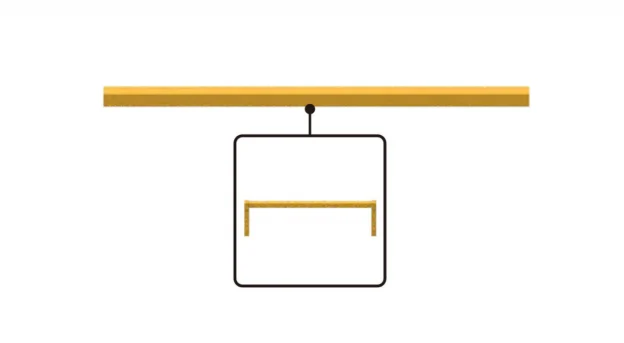
Whether you are deploying a standard hinged door or a massive 14-foot sliding door for forklift access to a robotic cell, this top-tied architecture prevents sagging. Combined with heavy-duty caster wheels that roll over minor floor imperfections, your access points remain smooth, and your safety circuits stay reliable.
Cold Assembly: Zero Hot Work Required
Historically, fixing fence alignment issues on bad floors required an angle grinder and a welding torch. In a modern automotive plant, this means halting production, securing hot work permits, and risking weld spatter near sensitive electro-optical elements or CNC machinery. By choosing a true modular Industrielle Sicherheitszäune solution, your entire installation is a cold assembly process. Adjustments for floor variations are made silently and cleanly, cutting mechanical assembly time by up to 40% and ensuring you pass EHS audits on schedule.
Frequently Asked Questions (Automotive & Automation Integration)
| How much floor slope can the modular safety fence accommodate without custom parts? | The adjustable fixing rings allow the framed panels to slide up or down the post by several inches. For the posts themselves, standard industrial shims under the base plates can easily correct slopes up to 2-3 degrees without compromising structural integrity. |
| Will shimming the base plate affect the 1600J impact resistance rating? | No, provided solid steel shims are used and the M10 x 70mm expansion bolts are properly torqued into solid concrete. The impact energy is dissipated through the Q235 steel post’s controlled plastic deformation, not just the base plate. |
| If the floor is deeply pitted, can we still use expansion bolts for the posts? | If the pitting is severe and compromises anchor pull-out strength, we recommend relocating the post slightly (our modular panels come in various widths to adjust pitch) or using chemical anchors (epoxy) instead of standard wedge anchors for maximum pull-out resistance. |
| How do uneven floors impact the installation of sliding doors for robotic cells? | Uneven floors can cause sliding doors to jam. Our sliding doors utilize an overhead bearing rail system supported by the door frame beam, suspending the door above the floor. This top-hung design makes the door’s operation completely independent of the floor’s surface condition. |
| Does adjusting the panel height on the post affect ISO 13857 compliance for sweep clearance? | It can. ISO 13857 dictates the maximum allowable gap between the floor and the bottom of the mesh to prevent lower limb access (typically around 150mm/6 inches). When sliding panels up to account for floor dips, installers must ensure this sweep clearance does not exceed compliance limits at the lowest floor point. |