DE
DE  EN
EN  RU
RU  PT
PT  JA
JA  ES
ES  IT
IT 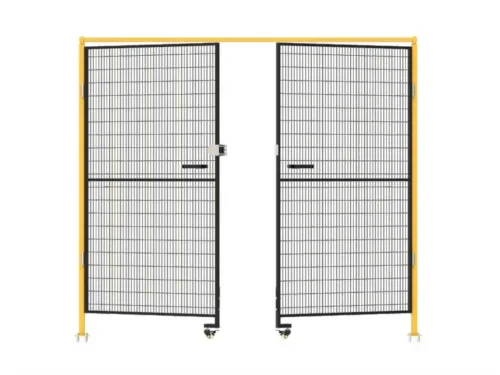

When designing a new turnkey solution or integrating a 6-axis KUKA/FANUC robot into an automotive welding station, guessing the physical perimeter requirements can lead to failed EHS audits or catastrophic downtime. You don’t just need a barrier; you need an ISO 13857-compliant structure that perfectly balances reach-over protection with operator ergonomics. Getting the height right the first time prevents costly post-installation modifications and ensures your PLC/HMI safety logic isn’t compromised by physical breaches.
[What is the standard height for machine safety fencing?]
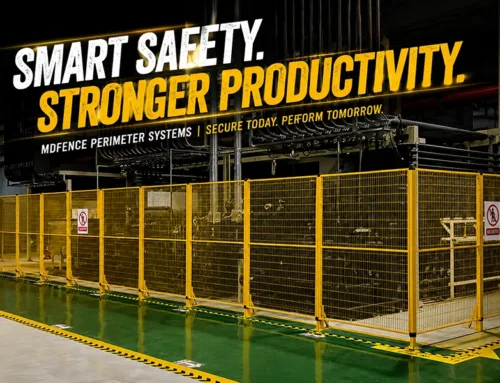
In the realm of industrial automation and robotics integration, the universally accepted standard height for Industrielle Sicherheitszäune is typically 2000mm (approx. 78.7 inches) oder 2200mm (86.6 inches). This height is not arbitrarily chosen; it is strictly calculated based on ISO 14120 and ISO 13857 standards to prevent an operator of average height from reaching over the top of the barrier and into the hazard zone of a CNC machining center or an automated assembly line.

However, standard dimensions do not fit every dedicated manufacturing line. The correct height depends entirely on the specific kinematics of your machinery, the trajectory of potential ejected parts, and your facility’s material handling routes.
Automotive & Automation Scenarios: Determining the Right Height
Scenario 1: High-Risk Robot Work Cells (The 96-Inch Requirement)
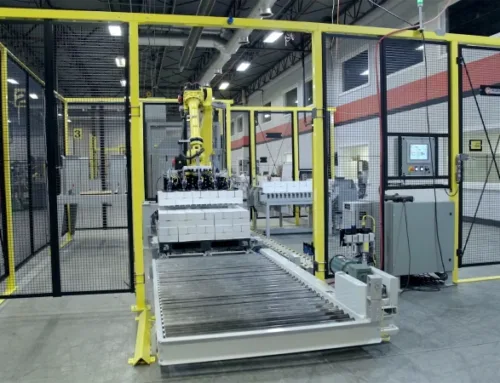
The Pain Point (Before): You are integrating a heavy-duty robot for an engine block transfer station. A standard 78.7-inch fence might stop a worker from walking in, but if the robot gripper fails at the apex of its swing, a heavy aluminum component could be ejected over the top of the standard perimeter, directly into an adjacent AGV path.
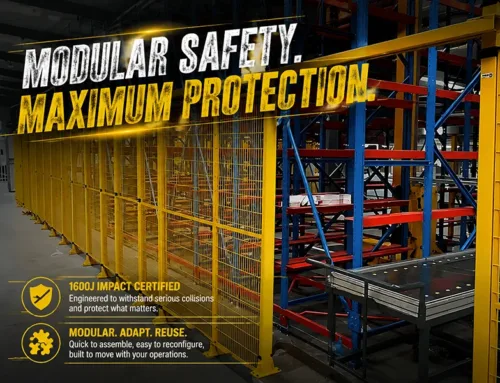
Our Logic (Why it works): The Mdfence system offers custom configurations up to 2440mm (96 inches / 8 ft). Utilizing our robust 60x60x2.0mm Q235 carbon steel posts and framed panels, we extend the vertical protection zone without sacrificing the structural rigidity required to absorb a 1600 Joule impact.
The Actual Benefit (After): Complete containment of the robotic work zone. You pass rigorous automotive EHS audits on the first try, and eliminate the risk of high-trajectory debris causing secondary equipment damage or stopping the automated high-speed manufacturing lines.

Scenario 2: Low-Risk AGV Paths & Quality Inspection Cells (The 47-Inch Approach)
The Pain Point (Before): Facility managers often waste budget and obstruct line-of-sight by installing towering 8-foot fences around simple material handling areas or quality inspection cells where the only hazard is a slow-moving Automated Guided Vehicle (AGV).
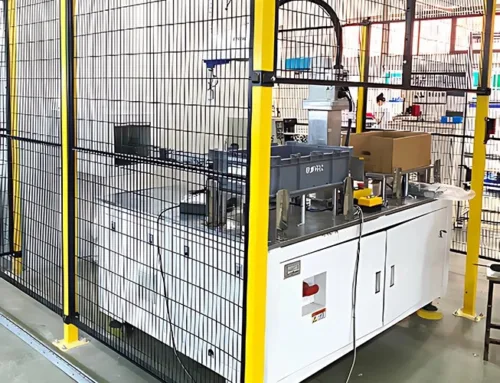
Our Logic (Why it works): For purely perimeter segregation where no high-speed mechanical assembly hazards exist, we deploy our 1200mm (47.2 inches) height configuration. It utilizes the same modular design and flat-welded mesh but is optimized for low-risk zone demarcation.
The Actual Benefit (After): You achieve compliant physical segregation of traffic while maintaining a clear visual overview of the factory floor. This streamlines manufacturing capabilities, saves on material costs, and allows overhead cranes unobstructed access to drop off pallets.

It’s Not Just About Height: The Mesh Size and Reach Distance
Unter Roboter-Schutzzäune, height is only half of the equation; the other half is how close the fence can be placed to the hazard. If you use cheap, generic wire mesh with 50x50mm (2×2 inches) openings, a worker’s arm can easily pass through. According to ISO 13857 reach distances, you would be forced to install that fence up to 850mm (33.5 inches) away from the moving servo motors.
Mdfence utilizes a “finger-safe” 20x100mm (0.78 x 3.93 inches) mesh spacing. This restricts penetration to just the fingertips, legally allowing you to position the Schutz von Maschinen as close as 120mm (4.7 inches) to the hazard. In a tight automotive plant layout, saving 700mm of floor space per running meter translates to massive savings in high-value real estate and smoother AGV navigation.
Integrating Safety Interlocks at the Right Ergonomic Height
A physical barrier is useless if it doesn’t communicate with your control equipment. When an operator opens a hinged door to clear a jam in the CNC machinery, the system must trigger a Safety Torque Off (STO) instantly. Standardizing your fence height ensures that safety interlock switches (like Omron D4NL or Pizzato) can be mounted at the optimal ergonomic height (typically around 1000mm to 1100mm from the floor).
Unlike traditional welded fences that require on-site hot work—which burns off the powder coating and causes rust—our modular system comes with pre-engineered lock carriers. The electrical accessories bolt directly onto the Q235 steel posts with zero drilling, ensuring your automated line is back up and running with minimal MTTR (Mean Time To Repair).
Frequently Asked Questions (FAQs)
| 1. Does OSHA specify an exact height for robot safety fencing? |
| OSHA does not mandate a single universal height, but refers to ANSI/RIA R15.06 and ISO 13857 standards. These standards dictate that the height must be sufficient to prevent reaching over the hazard based on the hazard’s height and distance from the fence. Typically, 2000mm (78.7″) is the accepted baseline for most robotic cells. |
| 2. Can we modify the height of the fence if our assembly line layout changes? |
| Yes. Because our system is 100% modular and uses bolt-on connections rather than permanent welds, you can swap out 2000mm panels for 1200mm panels, or add polycarbonate extensions, allowing for rapid reconfiguration during tooling changes. |
| 3. What happens if a forklift hits a standard 2000mm high fence post? |
| Our 60x60mm Q235 carbon steel posts are engineered to absorb up to 1600 Joules of impact energy. Instead of shattering like cast metals or aluminum profiles, the steel will plastically deform, preventing the forklift from penetrating the robot work cell and causing catastrophic damage to the automation equipment. |
| 4. How does fence height affect the integration of safety light curtains? |
| The physical fence must align with the electro-optical elements. If your light curtain protects an opening for a conveyor, the physical fence height above the opening must still prevent an operator from reaching over the light beams. We provide specialized 80x80mm posts to seamlessly house light curtain transceivers within the standard 2000mm height profile. |
| 5. Do we need a roof or top cover for our CNC machining center cell? |
| It depends on the Risk Assessment. If the CNC process involves high-speed milling where coolant or metal shavings could be ejected upward and over a 2200mm fence, a top-cover or tunnel guard is required. However, for most material handling robots where parts are heavy and slow-moving, an open-top 2000mm perimeter is sufficient and allows overhead crane access. |