DE
DE  EN
EN  RU
RU  PT
PT  JA
JA  ES
ES  IT
IT 
Walk onto the floor of almost any automotive recycling center today. Look at the sorting zones. You have engine blocks, axles, and heavy irregular scrap piled up. Forklifts are flying blind around the Heavy Duty Auto Parts Racking.

What do operations managers usually do to separate the dangerous teardown equipment from the inventory aisles? They call a local guy to weld some cheap wire mesh, or they bolt down flimsy fencing.
It is a disaster. A heavy transmission slips off a pallet, taps that wire, and the entire frame sags. Forklifts bump the corner posts, and because there is zero structural rigidity, the barrier bends into the aisles. Worse, when an EHS inspector walks in, they look at those massive holes in your cheap wire mesh. Because an operator could easily stick an arm through it, regulations force you to push that fence 850mm away from the moving machines.
That is almost a full meter of dead space per machine. Space that should be occupied by revenue-generating Automotive Recycling Storage Solutions is wasted on empty air.

Then, when the incoming batch of dismantled cars changes and you need to adjust your Industrial Pallet Racks, what happens? Two guys are out there with angle grinders. Sparks are flying near oil-soaked car parts, cutting down fences that end up in the scrap bin. It is slow, dangerous, and a massive waste of money.
The Engineering Logic: Physical Constraints Over Cheap Iron
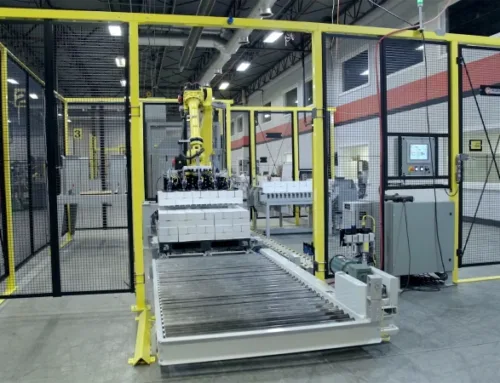
You need a physical barrier engineered like a heavy-duty machine, not a farm fence. If you want to compress your layout and protect your assets, you have to look at proper machine guarding based on ISO 13857.
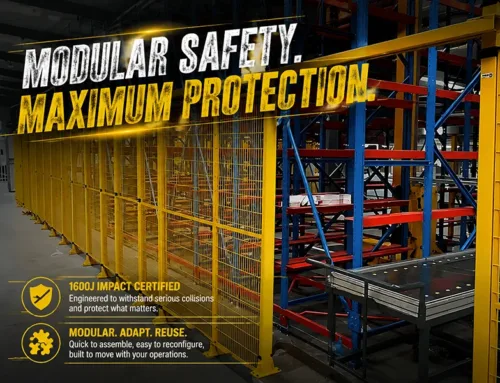
This means ditching the locally welded iron and moving to a system built on Q235 cold-rolled carbon steel. The Mdfence system uses a 20x30x1.5mm tubular frame. It is built to absorb 1600 Joules of kinetic energy. To put that in perspective, it can stop a 100kg object hitting it at 20km/h. When a forklift bumps it, the frame relies on the plastic deformation of the steel to transfer the energy into the concrete base. It does not snap.

How Micro-Mesh Reclaims Your Floor Space
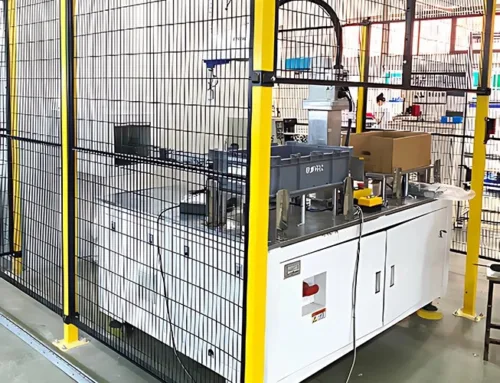
The real math happens at the mesh. By shrinking the mesh size down to a 20x100mm finger-safe gap, you completely change the compliance geometry.
Because fingers cannot penetrate the barrier, ISO regulations allow you to pull that fence in. Instead of an 850mm dead zone, you can drop the barrier exactly 120mm from the hazard.
You instantly reclaim square footage. That is room for another row of Industrial Pallet Racks or a wider forklift channel.
And when the layout needs to change? It is cold work. No welding, no sparks, no fire permits. One guy with an Allen wrench unbolts four M8 screws, pops the panel out in ten minutes, moves the Heavy Duty Auto Parts Racking, and clips the panel back into place. Your asset reuse rate stays above 95%.

The Boundaries: Where This Makes Sense (And Where It Doesn’t)
Let’s look at the actual costs and limitations.
- Anfängliche Kosten: The upfront price per meter for this system is higher than hiring a local shop to weld basic iron pipes.
- Installation Requirements: You cannot just screw this into drywall or cheap flooring. It requires CAD planning and relies on M10 expansion bolts sunk into solid, high-strength concrete to anchor the 140x140x5mm welded bases.
- Overkill Warning: If you just need to guide administrative staff down an office hallway or mark an empty outdoor yard without any machinery, do not buy this. It is a strict mechanical compliance tool, and using it for basic crowd control is a waste of your budget.
FAQ: Sorting Fact from Fiction
Will this block the view of the dismantling machines?
No. The panels use a black epoxy polyester powder coating that absorbs metallic glare. It acts like a semi-transparent screen, giving operators clear visual oversight of the teardown lines.
Do we need to drill into the posts to mount interlocking gate switches?
No. Drilling ruins the anti-corrosion layer and the structural integrity. We provide pre-fabricated installation plates that blindly match standard switches (like Omron or Pizzato) directly.

Can the posts handle heavy doors without sagging?
The frames use heavy-duty hinges or industrial ball-bearing rollers. Even in a busy auto parts distribution center, the gate will not sag and trip a false stop signal on your machines.
Stop Guessing. Measure Your Layout.
If you are tired of wasting valuable square footage on oversized safety zones and replacing bent wire mesh every month, it is time to engineer your floor correctly.
Grab your tape measure. Fill out our layout form with your Heavy Duty Auto Parts Racking dimensions, aisle widths, and max forklift load requirements. We will send you a free, preliminary warehouse layout drawing showing exactly how close you can safely place your boundaries.