DE
DE  EN
EN  RU
RU  PT
PT  JA
JA  ES
ES  IT
IT Industrieller Sicherheitszaun
Industrial Safety Fence for Dense Recycling Centers
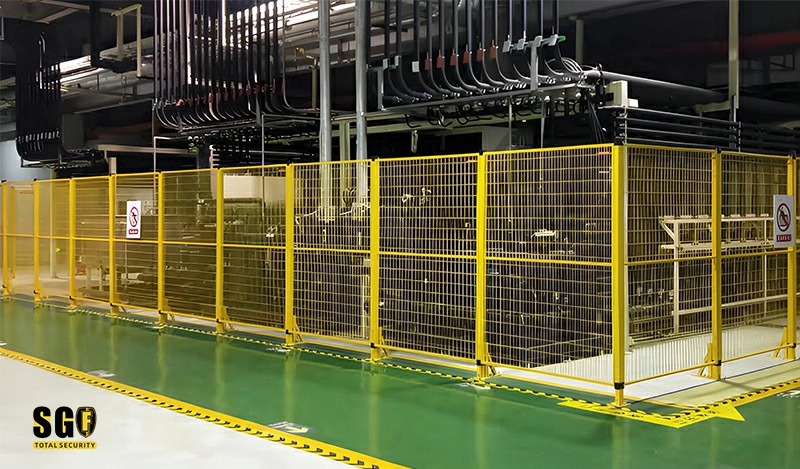
In an indoor recycling hall, every meter matters. Industrial Safety Fence helps operators keep protection compliant while pulling the legal separation back to as little as 120 mm, so more floor area stays available for sorting, staging, and material flow.
Why the 120 mm clearance changes the layout
Indoor scrap sorting centers and metal recovery plants usually pay a premium for usable space. Traditional guarding often solves compliance by pushing the fence line too far away from the machine, which steals valuable circulation room, storage room, and access room. Industrial Safety Fence is built for the opposite outcome: keep the boundary tight, keep the line compliant, and keep the layout dense.
| Anforderung | Industrial Safety Fence response |
|---|---|
| Protect equipment without wasting floor area | 20×100 mm precision mesh supports a compact guarding line that fits dense layouts. |
| Reduce the safety setback | The fence can shrink the legal separation distance to as little as 120 mm where site conditions allow. |
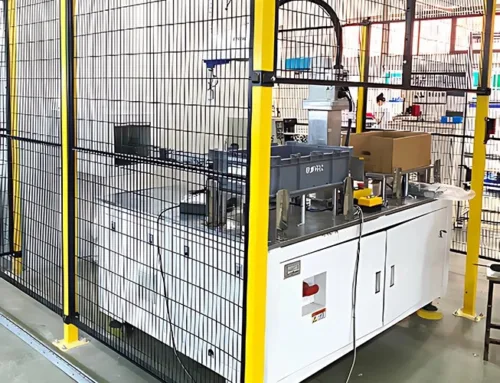
| Work around crowded machines | The narrow guarding profile suits indoor sorting halls, conveyors, balers, and tightly grouped equipment islands. |
| Standardize across many sites | A repeatable Industrial Safety Fence spec is practical for global rollouts, including operators managing 135 locations. |
What makes the fence fit dense industrial layouts
Compact mesh geometry
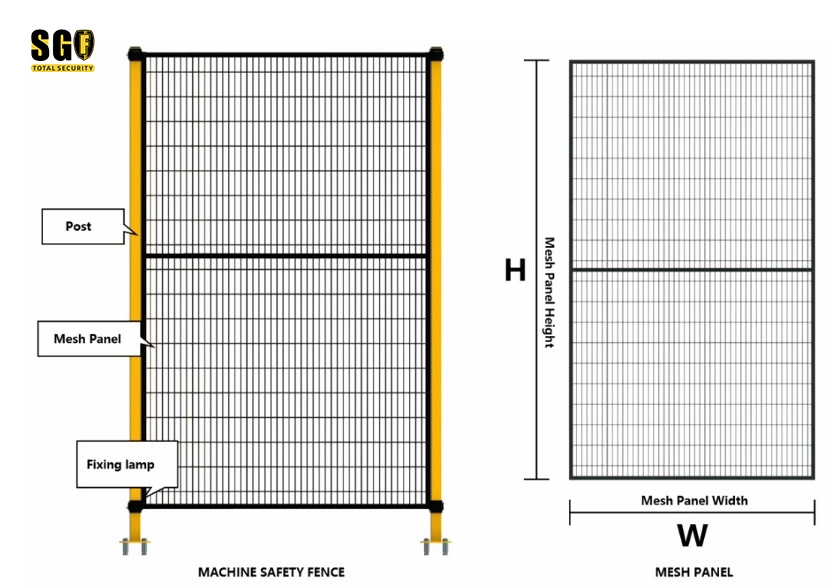
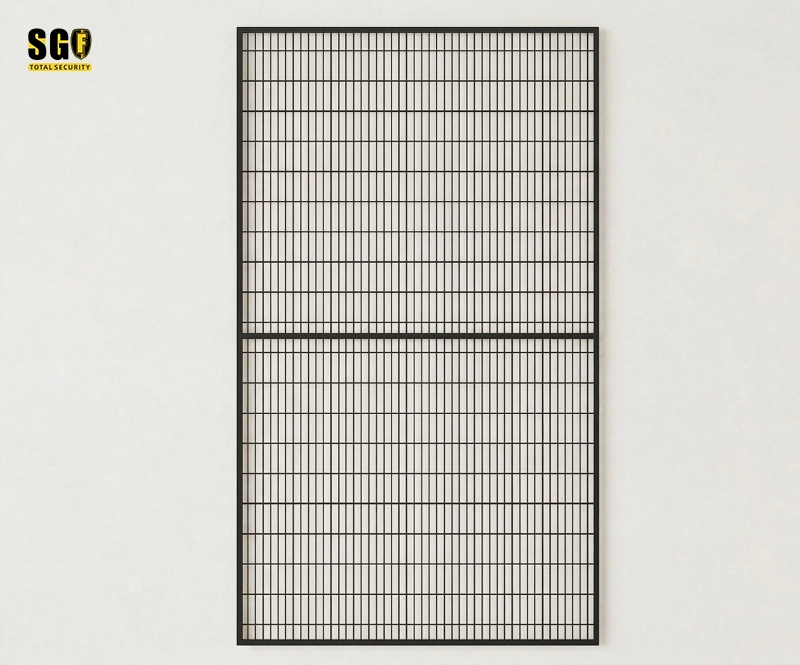
The 20×100 mm precision mesh is not a cosmetic detail. It is the structural reason Industrial Safety Fence can protect a machine line without turning the surrounding area into dead space. In a recycling center, that difference shows up as more usable aisle width, more staging room, and less pressure on the storage plan.
Tight legal separation, not just a smaller fence
The real value is not only the panel size. It is the way Industrial Safety Fence supports a much shorter compliant separation line, with a minimum layout target of 120 mm. That gives operators room back at the exact point where old solutions usually force the biggest penalty: around the machine perimeter.
Built for dense access and repeatable rollouts
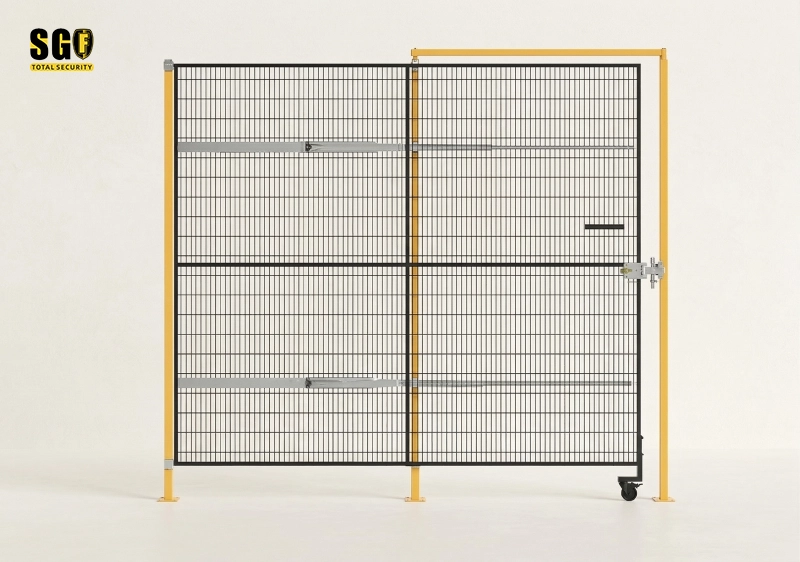
Industrial Safety Fence is useful when access is needed, but the machine footprint cannot expand. The fence line can stay close, the passage remains controlled, and the layout stays readable for operators. That is why it works well for multi-site standardization: the same space-saving logic can be repeated plant after plant.
Where Industrial Safety Fence fits best
- Indoor metal recycling and scrap sorting centers
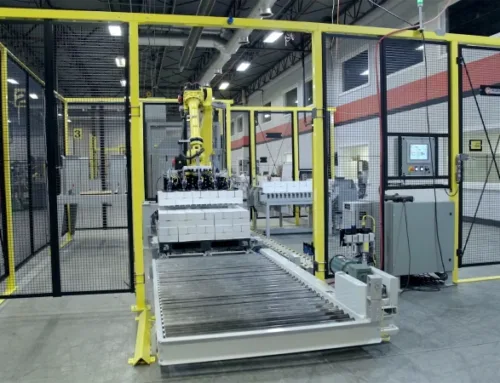
- Conveyor, baler, and shredder zones with tight machine spacing
- Facilities where storage, traffic, and guarding compete for the same floor area
- Global operators that want one Industrial Safety Fence standard across multiple plants
For these applications, the layout logic is straightforward: the older the fence concept, the more space it tends to consume. Industrial Safety Fence keeps the safety boundary close enough to preserve working room, while still giving the site a clean, compliant perimeter around the equipment.
Was vor der Anforderung eines Layouts anzugeben ist
To size an Industrial Safety Fence correctly, define the equipment footprint, the access points, the required clearance target, and the space you want to recover for traffic or storage. The most important point is not just the presence of a fence. It is whether the fence line lets the site keep the aisle, the staging zone, and the machine envelope all under control at the same time.
Get a tighter Industrial Safety Fence layout
If your recycling hall or scrap handling area is running out of room, an Industrial Safety Fence layout built around 20×100 mm precision mesh and a 120 mm separation target can recover practical space without weakening the safety perimeter.