DE
DE  EN
EN  RU
RU  PT
PT  JA
JA  ES
ES  IT
IT Robot Safety Fence for dense scrap sorting centers
When floor space is expensive and equipment is packed tight, a Robot Safety Fence has to do two jobs at once: keep the line compliant and keep the aisle usable. Mdfence uses a 20x100mm precision mesh layout to drive the legal safety separation down to 120mm in the right project setup, so a recycling hall can protect people without surrendering valuable storage and traffic space.
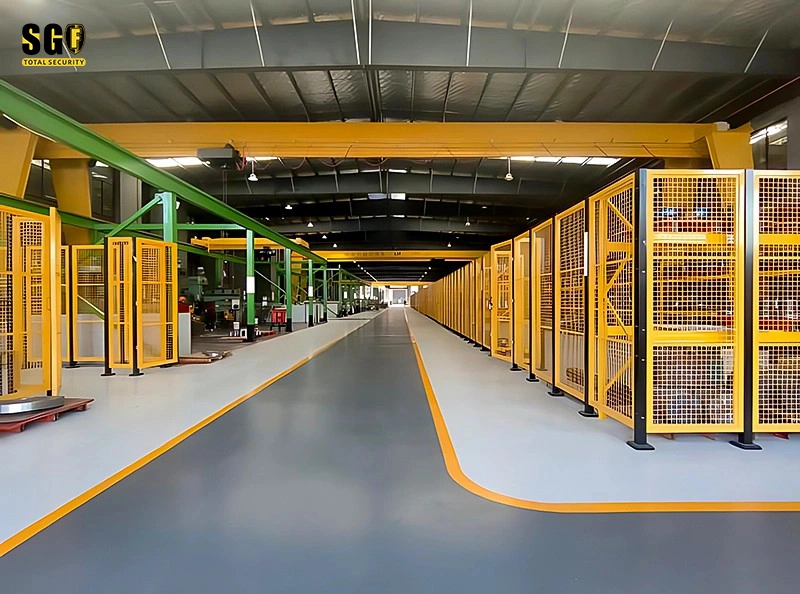
Why the layout changes before the fence does
In an indoor scrap sorting center, the real pressure is not just impact control. It is the constant tradeoff between safety distance and usable floor area. A traditional welded barrier usually solves the first part and hurts the second: it needs more setback, is hard to move, and turns every line change into a rework job. That is why the Robot Safety Fence must be modular from the start.
| Artikel | Mdfence-Detail | What it means in a dense hall |
|---|---|---|
| Maschenweite | 20x100mm precision mesh | Tight enough for machine guarding, compact enough to support a smaller legal setback |
| Rahmen | 20x30x1.5mm galvanized steel tube | Helps the panel stay rigid when the aisle is narrow and the line changes often |
| Post | Typical 60x60mm pillar | Stable boundary line for long runs and corner closure |
| Common height | 2000mm | Clear vertical separation for people, scrap flow, and equipment motion |
| Modullogik | 4000mm combined module logic | Fast to map across a large recycling plant without custom welding every time |
| Oberfläche | Yellow post + black mesh, powder coated | Easy to read in a busy hall, easier to inspect during daily safety checks |
Three details that make the fence fit the job
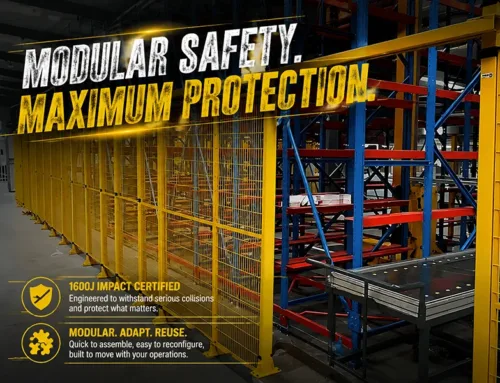
The product only works when the structure matches the problem. For a metal recycling plant with dense scrap stacking, the layout is usually full of corners, turning points, maintenance access, and traffic crossings. Mdfence fits that reality because it is not a fixed welded wall. It is a framed, modular Robot Safety Fence system built to be installed, adjusted, and extended in the same project cycle.
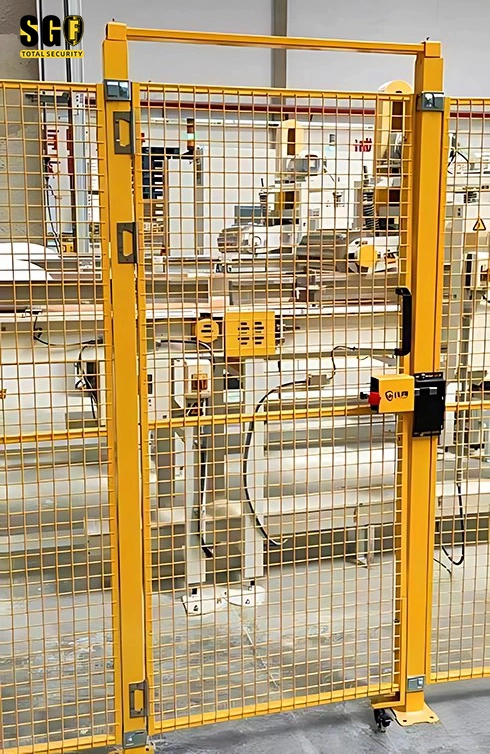
1) The gate is part of the guarding system, not an afterthought
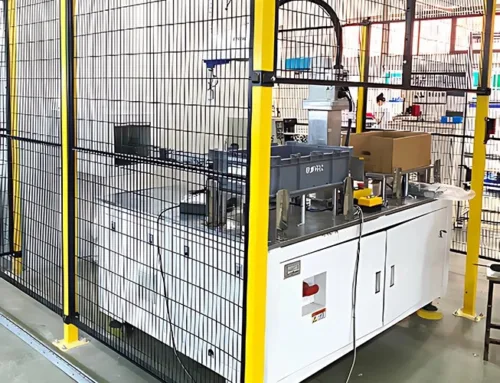
The close-up gate image shows the lock hardware and framed panel working together. That matters in a busy scrap center because access has to be controlled without turning every inspection into a delay. A proper machine guard gate supports safer entry, cleaner closing, and fewer nuisance issues than a loose field-built door.
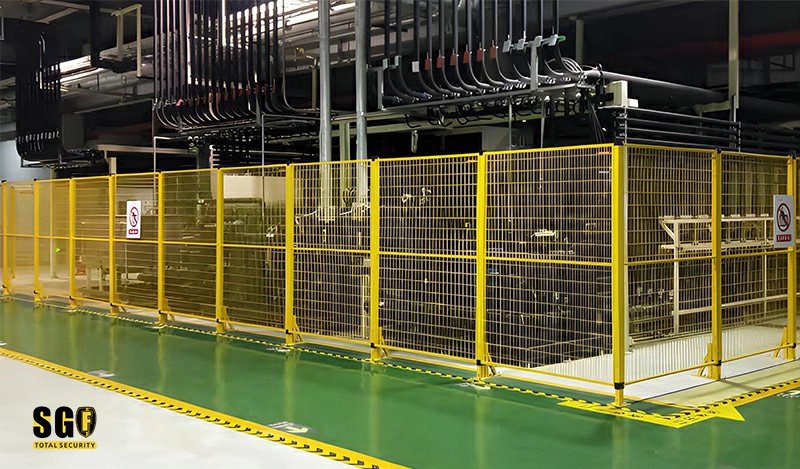
2) The fence follows the flow line instead of fighting it
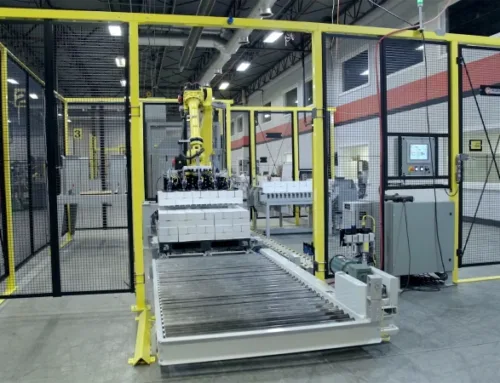
The conveyor-side image shows how the fence can run beside transfer equipment and still keep a clean edge. In dense recycling and sorting halls, that is the difference between a safety project that preserves throughput and one that steals clearance from the process. The geometry stays readable, and the workflow stays visible.
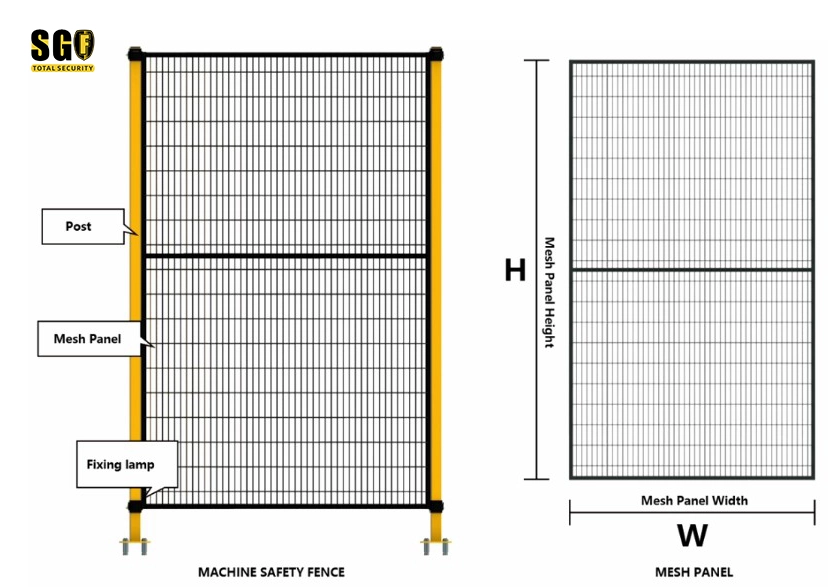
3) Installation is engineered, not improvised
The assembly diagram matters because the best safety layout still fails if the base is weak. Base plate positioning, drilling, expansion bolts, and retaining rings give the project a repeatable method. For a multi-site operator, that means less variation from one plant to the next and a better chance of keeping the same guard line standard across the network.
From pain point to result
Old way: welded barriers and oversized setbacks consume premium floor area, then become hard to change when scrap bays, maintenance routes, or sorting lanes shift.
Why Mdfence fits: the modular steel frame, 20x100mm mesh, 60x60mm posts, and gate hardware give the layout a clean engineering basis. The fence is sized for industrial guarding, not temporary crowd control.
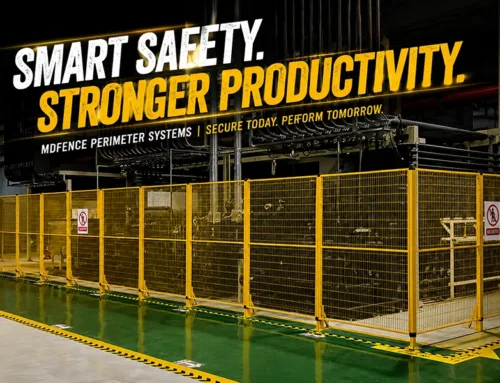
Evidence on the page: the product photos show the gate, the perimeter run, and the installation method. The spec table shows the hard dimensions. Together they explain why the system can support a tighter legal separation in the right design, down to 120mm, while still keeping the working area organized.
Final result: more usable aisle width, less wasted buffer space, easier access control, and a safer hall that can still handle dense scrap storage and frequent layout changes.
Planning a dense layout?
If your plant needs a Robot Safety Fence that protects equipment without eating the floor, start with the actual aisle width, gate positions, and traffic paths. Then map the fence around the process instead of forcing the process to fit a generic barrier.
Need a layout that keeps compliance tight and space loss low? Mdfence is built for dense industrial halls where every meter matters.