DE
DE  EN
EN  RU
RU  PT
PT  JA
JA  ES
ES  IT
IT ROBOTERZELLEN-ABSICHERUNG · PLATZSPARENDE ANLAGENNACHRÜSTUNG
Raumplanung für Roboterzellen mit Aluminiumprofil-Zaun
Wenn eine Roboterzelle bereits wertvolle Bodenfläche beansprucht, kann ein Aluminiumprofil-Zaun mit 20×100 mm Maschenweite und schlanken 40×40 / 45×45 mm Pfosten die Absicherung nahe an der Gefahrenstelle halten – mit einer Ziel-Sicherheitsdistanz von ca. 120 mm, wo es die Risikobewertung und EN ISO 13857 gestatten – sodass Logistik- und Bedienerflächen nicht unnötig verloren gehen.
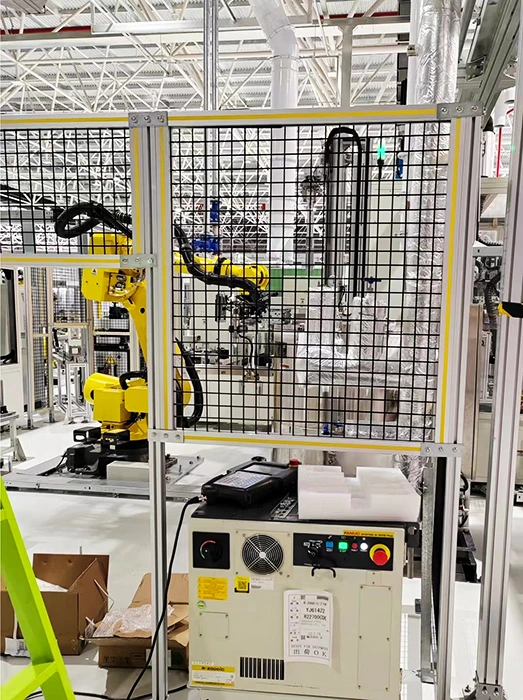
Warum Roboterzellen mehr Platz verlieren als erwartet
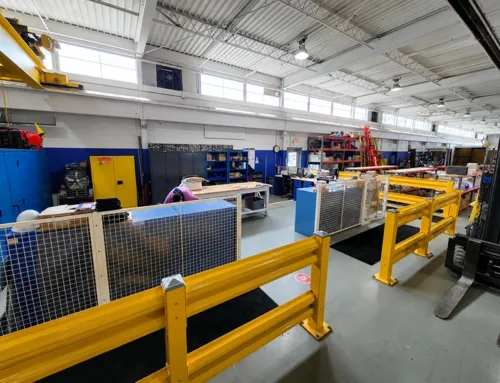
In einer automatisierten Lager-Schnittstelle, AGV-Pfad oder Roboterzellen-Nachrüstung ist die Maschinen-Stellfläche nur der Ausgangspunkt. Ein geschweißter Stahlzaun, Maschendrahtzaun oder feste massive Barriere kann einen größeren Abstand zur Gefahrenstelle erzwingen. Dieser zusätzliche Umfang kann Gabelstapler- und AGV-Routen verengen, den Zugang neben der Zelle einschränken und eine angrenzende Montage- oder Verpackungslinie aus der Position drängen.
| Konstruktionsüberlegung | Alfence-Antwort |
|---|---|
| Abstand zur Gefahrenstelle | 20×100 mm geschweißtes Drahtgeflecht unterstützt eine näher an der Gefahrenstelle liegende Absicherung, mit ca. 120 mm als angegebener EN ISO 13857 Konstruktionsdistanz, wo anwendbar. |
| Umfangs-Flächenbedarf | 40×40 mm oder 45×45 mm T-Nut-Aluminiumpfosten halten das Pfosten-Paneel-System schlank um die Roboterzelle. |
| Linienwechsel-Risiko | Abnehmbare, rekonfigurierbare Paneele und schraubenlose Montage unterstützen die Nachrüst-Absicherung ohne Schweißarbeiten vor Ort. |
| Werksboden-Installation | Fußverbinder und Ankerbolzen ermöglichen eine bodenmontierte Konfiguration für die Installation in Innenräumen und Maschinenabsicherung. |
Alfence-Struktur und Standortnachweise
Feines Gittergewebe erhält den Arbeitsbereich
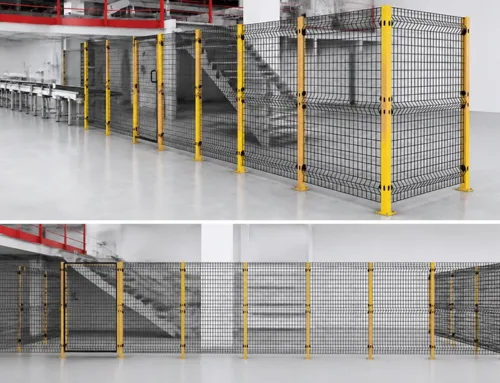
Der Aluminiumprofilzaun verwendet standardmäßig einen modularen Rahmen mit geschweißten Drahtgitterpaneelen anstelle einer sperrigen geschlossenen Ummantelung. Das 20×100-mm-Raster eignet sich für Maschinenschutz, bei dem Sichtbarkeit und ein kontrollierter Sicherheitsabstand erforderlich sind. In einer Roboterzelle führt dies zu weniger verschwendetem Umfang zwischen Gefahrenbereich und Schutzlinie, sodass mehr Platz für einen AGV-Pfad, eine Fördererschnittstelle oder einen Bedienerzugangsbereich bleibt.
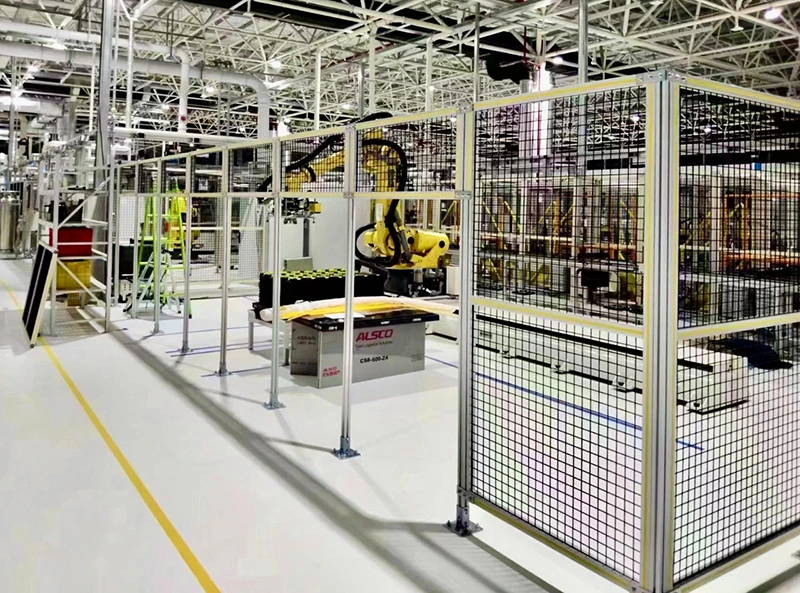
Schlanke Pfosten reduzieren toten Raum an jeder Panelverbindung
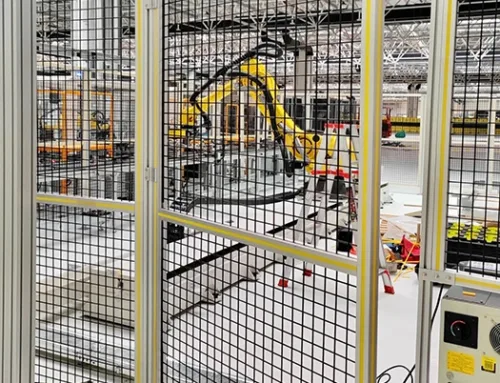
Jeder Pfosten belegt einen Teil der Linienseitenfläche. Alfence-Profile aus Aluminiumlegierung mit 40×40 mm und 45×45 mm bilden ein kompaktes T-Nut-Aluminiumpfostensystem, während Fußverbinder und verankerte Basen den Rahmen auf dem Boden positionieren. Die Standortnachweise zeigen einen modularen Schweißgitterzaun, der mit einem Förderer und einer Zugangsplattform integriert ist, anstelle einer überdimensionierten freistehenden Barriere.
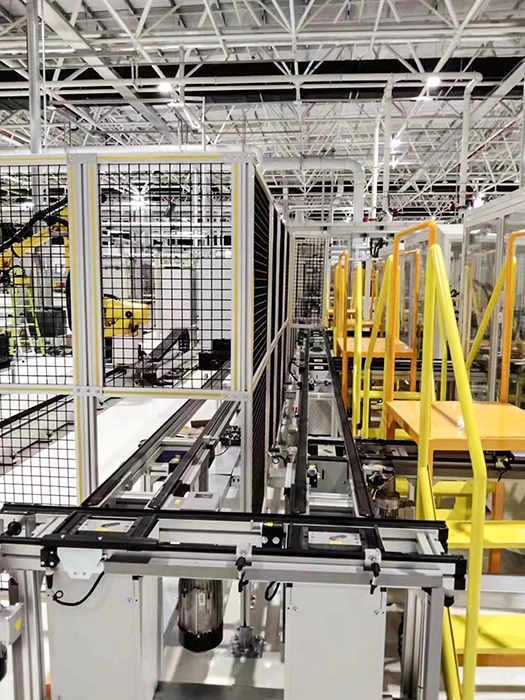
Rekonfigurierbarer Schutz hält Platz nach Umrüstungen verfügbar
Die Raumplanung endet nicht mit der Installation. Roboterwerkzeuge, Fördererpositionen und Materialhandhabungsrouten ändern sich. Ein abnehmbares Pfosten-und-Panel-System kann für eine neue Roboterzelle oder eine Montagelinientrennung neu konfiguriert werden, was die Umbaukosten und Ausfallzeiten vermeidet, die mit dem Schneiden und Wiederschweißen eines festen Stahlzauns verbunden sind. Die endgültige Panelabstände, Türen, Verriegelungen und Sicherheitsabstände erfordern weiterhin projektspezifische Technik und Risikobewertung.
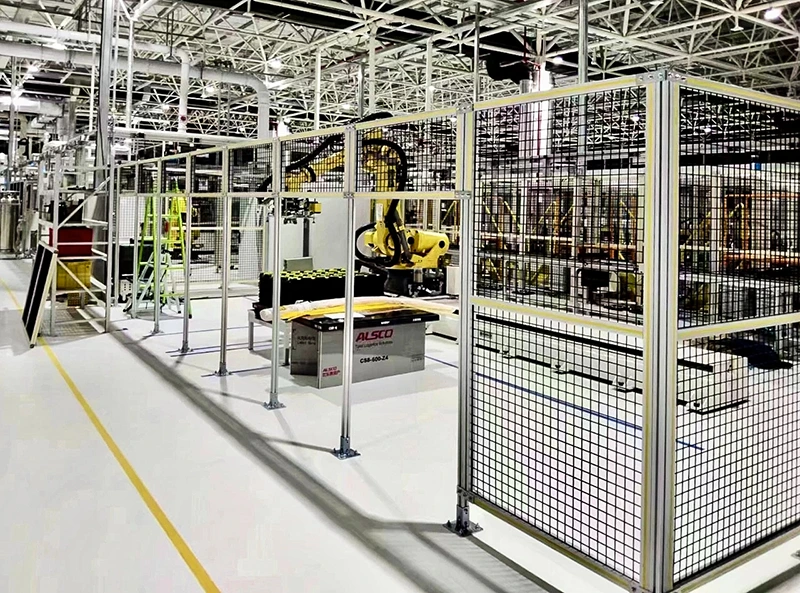
Wo das platzsparende Layout wichtig ist
- Robotenzellen-Absicherung: Halten Sie einen kompakten Umfang um Materialhandhabungsroboter, Schweißzellen und Palettiererschutz aufrecht, während Sie kontrollierten Zugang gewährleisten.
- AGV-Wegeabsicherung: Bewahren Sie Wendefläche und Lieferraum neben der Maschinenschutzlinie, anstatt unnötigen Abstand hinzuzufügen.
- Förderer- und Verpackungslinien-Schutz: Trennen Sie bewegliche Ausrüstung, ohne die volle Breite des Produktionsgangs zu beanspruchen.
- CNC-Maschinenschutz und Nachrüstschutz: Passen Sie einen modularen Sicherheitszaun in eine bestehende Anlage ein, in der sowohl Bodenfläche als auch Ausfallzeiten begrenzt sind.
- Montagelinientrennung: Verwenden Sie einen schlanken, rekonfigurierbaren Umfang für Linienwechsel und zukünftige Geräteverlagerungen.
Für jede Anwendung müssen die erforderliche Schutzhöhe, Zugangstür, Sicherheitsverriegelungsschalter oder Sicherheitslichtvorhang, Maschenöffnung und der Abstand zur Gefahrenquelle gemäß der Maschinenrisikobewertung bestätigt werden. Alfence unterstützt den physischen Umfang; es ersetzt nicht das sicherheitstechnische Projektdesign.
Spezifikationspunkte für ein platzbeschränktes Projekt
Beginnen Sie die Layoutprüfung mit der Roboter- oder Maschinenhülle, den erforderlichen Zugangs- und Wartungswegen sowie dem AGV- oder Gabelstaplerpfad. Bestätigen Sie dann, ob ein 20×100 mm Maschengewebe, 40×40 mm oder 45×45 mm Pfosten, 1000 / 1800 / 2000 mm Panelhöhen und die erforderliche Scharnier- oder Schiebetür der Anwendung entsprechen. Alfence ist ein für Innenräume geeigneter modularer Sicherheitszaun; Außeneinsatz erfordert eine projektspezifische Korrosionsschutzprüfung.
Reservieren Sie mehr Produktionsfläche mit dem richtigen Schutzumfang
Senden Sie den Roboterzellen-Fußabdruck, die Gefahrengrenze, Zugangspunkte und die Logistikroute. SGF kann eine Aluminiumprofil-Zaunanordnung um den Maschinenschutzbereich prüfen und identifizieren, wo feines Maschengewebe und schlanke Pfosten nutzbare Bodenfläche zurückgewinnen können, ohne den Sicherheitsabstand als Nebensache zu behandeln.