DE
DE  EN
EN  RU
RU  PT
PT  JA
JA  ES
ES  IT
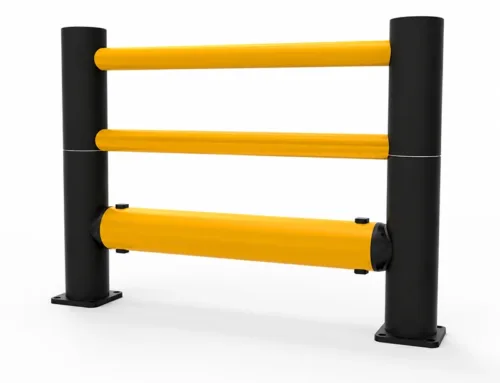
IT FCBarrier · Flexible Crash Barrier · ARMORFLEX Polymer
Why a 28,950 J Self-Rebounding FCBarrier Is the Passive Backup Behind Forklift Telematics on Peak-Day Fulfilment Floors
On a fulfilment floor that lives by the minute, the telematics in the cab warn the operator, the pedestrian-avoidance lidar stops the truck — but a strike still gets through roughly every shift. FCBarrier is the floor-level passive backup that takes that strike, rebounds, and keeps the rack, the column, the dock door, the truck and the SLA on the same shift clock.
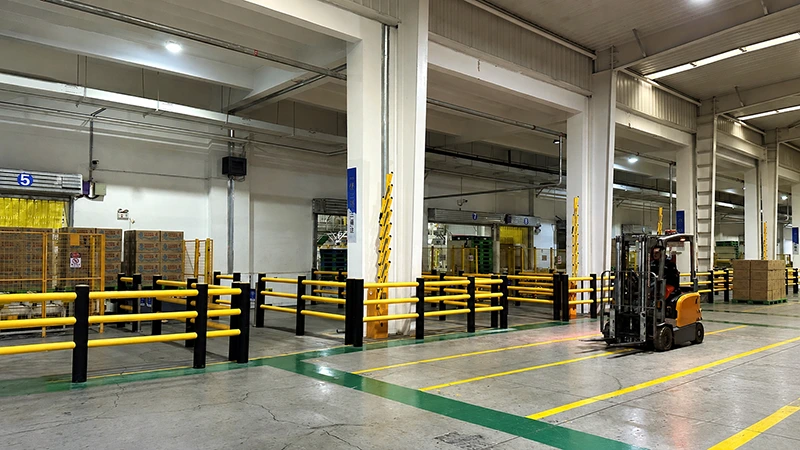
Where Telematics Ends and the Floor Begins: Impact Energy by Series
Telematics and pedestrian-avoidance lidar cut operator-side risk. The barrier on the floor is what catches the residual strike that still happens — a missed tag, a wet floor, a 4 a.m. shift change. FCBarrier publishes a joule rating table across four series so a fulfilment site can match a barrier to its peak-day vehicle envelope, not to a generic “forklift” category.
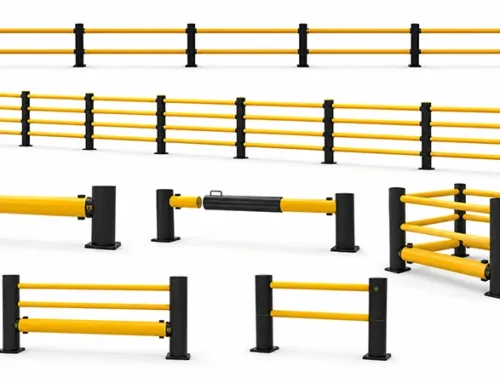
| FCBarrier Series / Model | Rated Impact Energy | Test Vehicle | Typical Use on a Fulfilment Floor |
|---|---|---|---|
| SR100 (Single Rail) | 3.850 J | 1.5 t @ 8 km/h | End-aisle rack end, picking-station perimeter |
| SR148 (Single Rail) | 14.400 J | 4 t @ 9.6 km/h | Standard pallet-jack lanes, dock apron edges |
| DR100 (Double Rail) | 6.500 J | 3 t @ 7.5 km/h | Cross-aisle forklift turns, mezzanine column bases |
| DR148 (Double Rail) | 19.000 J | 6 t @ 9 km/h | Heavy-aisle rack ends, narrow-bay picks |
| DR190 (Double Rail) | 28.950 J | 8 t @ 9.6 km/h | Peak-day reach-truck rack frames, dock door posts |
| TR148+ / CTR148+ (Traffic / Column) | 19.000 J | 6 t @ 9 km/h | Pedestrian walkways, building column protection |
| TR190+ / CTR190+ (Traffic / Column) | 28.950 J | 8 t @ 9.6 km/h | Highest-impact column protection, dock corner posts |
Three Engineering Properties That Hold Peak-Day Fulfilment Near Zero Downtime
1. Self-Rebounding Polymer — Strike, Rebound, Keep Picking
ARMORFLEX polymer absorbs roughly 80% of the strike energy and returns to its installed geometry. The same hit that knocks a steel rail past its yield point and leaves the rack end exposed for the next shift is the strike an FCBarrier segment takes on a Tuesday and is still in service on Wednesday. Peak-day fulfilment gets back to picking in seconds, not in the four-hour window between the next damage report and the steel-repair contractor’s site visit. The barrier on the floor is what catches the residual event after telematics has done its job in the cab — a missed tag read, a wet-floor turn, a shift-change corner cut — and the floor does not stop to file a damage ticket.
2. Bidirectional Protection — The Barrier Catches Both the Truck and the Asset
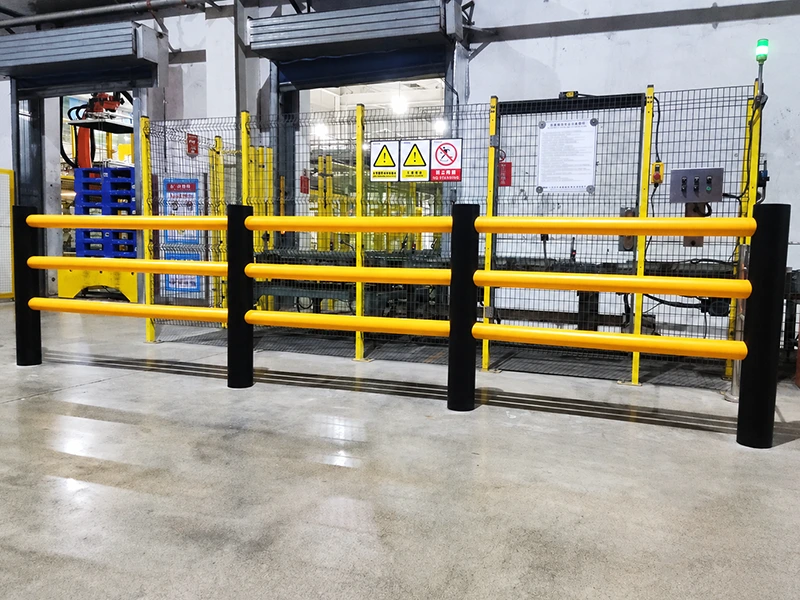
A 28,950 J DR190 at the end of a pick face does not choose between the reach-truck mast and the rack upright — it stops both from getting damaged in the same event. The vehicle leaves the impact with the rail, not with a bent overhead guard and a four-figure insurance claim. The rack stays upright, the pickers stay on shift, and the SLA stays inside the peak-day window. CTR190+ does the same job for building columns at the dock door: the concrete stays whole, the column protection stays whole, and the dock leveler keeps operating. That is the lifecycle-cost math the telematics vendor will not print on a slide — the strike that still happens is the strike that ages the fleet and the rack in the same event, and the barrier on the floor is what separates those two asset write-downs.
3. Modular Mortise & Tenon Quick-Release — One Segment, Not Twenty Feet
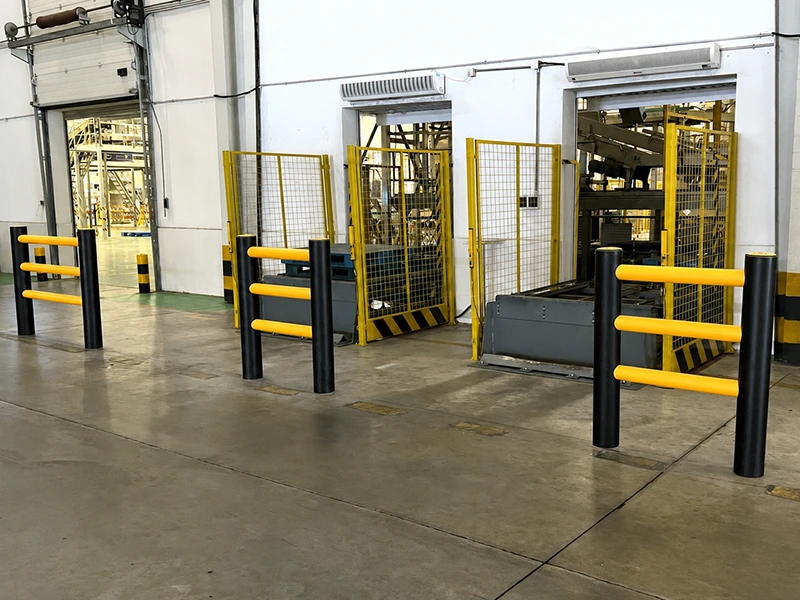
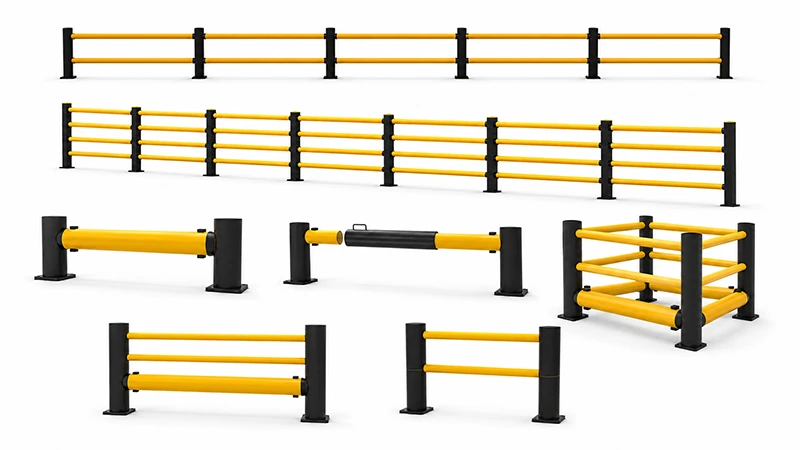
A fulfilment site that takes a strike at the corner post does not need to remove a 20-foot welded run. The 3-rail + 2-post basic unit separates at the mortise-and-tenon joints with an internal locking pin, and a single damaged rail or post is swapped in minutes by a two-person crew using a standard torque wrench and rubber mallet. The other segments stay in service, the rest of the floor stays open, and the replacement part is one line item on the next purchase order — not a 60-day welded-fabrication lead time. Over a five-year peak-day cycle that single-segment replacement profile is what puts FCBarrier lifecycle cost below the steel equivalent that gets straightened, repainted and re-anchored every time the same corner gets hit.
Where to Deploy FCBarrier on a High-Throughput Fulfilment Floor
- Reach-truck rack ends, peak-day heavy bays: DR190 (28,950 J) catches a missed-telematics strike and keeps the rack face square to the floor.
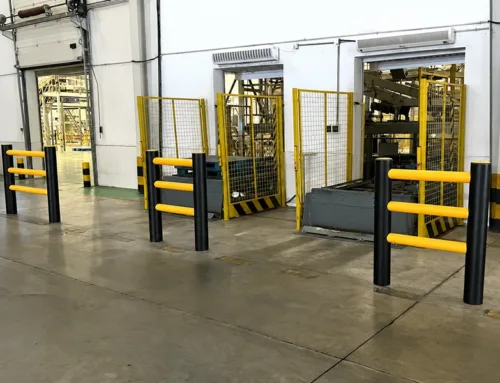
- Building columns at the dock door: CTR190+ on every column inside the dock-door traffic envelope; protects the column, the dock leveler, and the truck in one event.
- AGV / AMR corridor edges: DR148 (19,000 J) keeps mixed-fleet aisles clean between human pickers and autonomous trucks, even when a tag read is missed.
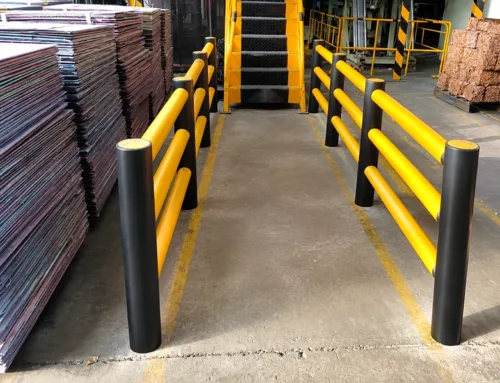
- Pedestrian walkway boundaries along the pick face: TR190+ separates picker foot traffic from forklift turning arcs; visible yellow rail acts as a passive floor-level signal that telematics in the cab also feeds.
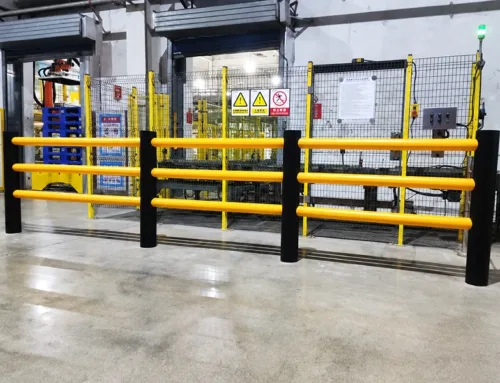
- End-of-line palletizer cells and conveyor openings: SR148 (14,400 J) + yellow mesh gate prevents misroute into restricted zones during 4 a.m. shift change.
- Loading-bay apron edges and dock-door posts: DR190 (28,950 J) at the dock corner, paired with CTR190+ on the structural column, gives the dock both vehicle- and asset-side protection.
FCBarrier does not publish a PAS 13 or TÜV third-party certificate at the time of writing; the joule ratings above are based on the manufacturer test program at the stated 8 t @ 9.6 km/h envelope. Sites that require PAS 13 documentation for corporate sign-off should treat this gap as a verification item on the next vendor review — the floor-level passive backup is in place, the paperwork to satisfy an HQ procurement board still has to be assembled.
Get the FCBarrier Fulfilment-Floor Sizing Pack
Request the FCBarrier sizing pack for your peak-day vehicle mix — forklift class, reach-truck tonnage, AGV / AMR density, dock-door count and rack-end inventory — and we will return a joule-rated layout with the series and model numbers, the column-protection map, and the installation sequence that fits your shift-change windows. The sizing pack is reviewed against the four-series table in section 2 above, and the layout pairs directly with your existing forklift telematics and pedestrian-avoidance stack — the passive backup that catches the strike that still gets through.
Size a 28,950 J FCBarrier Layout for Your Peak-Day Floor
Send your vehicle mix, peak-day traffic density, and rack-end / column-protection scope to the engineering desk. We will return a layout with the FCBarrier series (SR / DR / TR / CTR), the joule rating per zone, and the mortise-and-tenon quick-release segment map that pairs with your existing forklift telematics and pedestrian-avoidance stack.