
 DE
DE  EN
EN  RU
RU  PT
PT  JA
JA  ES
ES  IT
IT 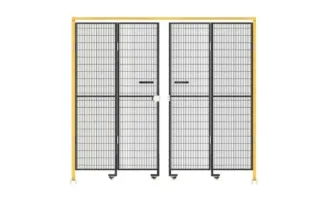
Trennwände aus Drahtgeflecht
In a competitive **system integration** market, your engineering hours are your most precious resource. Every hour your senior mechanical engineer spends drawing standard **machine guarding** or calculating bolt counts is an hour stolen from optimizing complex **robotics integration** logic. Stop "building to print" from scratch. Discover how partnering with
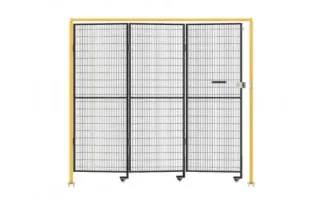
Mesh-Trennwände
In the world of **precision machining** and **electronics assembly**, contamination is the enemy. You invest millions in **advanced CNC centers** and cleanroom-grade environments, yet traditional safety barriers often require on-site cutting and welding—filling your air with metal dust and smoke that threaten sensitive optics and sensors. Security shouldn't come
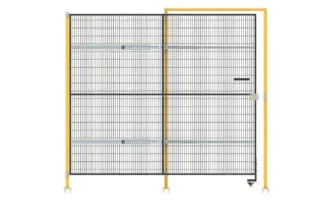
Draht-Trennwand
Passing a safety audit isn't just about ticking boxes; it's about sleeping well at night knowing your workforce is protected. In the high-stakes environment of **automotive manufacturing** and heavy industry, a generic wire mesh fence is often a liability in disguise. When an accident happens, the first thing auditors
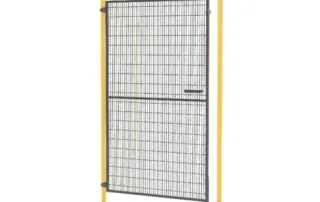
metal mesh partition
In the world of **custom machinery** and high-mix production, a static factory floor is a dead factory floor. You optimize your **robotics layouts** for flow and efficiency, but traditional welded guarding often becomes a rigid anchor that drags down your flexibility. Don't let your safety infrastructure dictate your process.
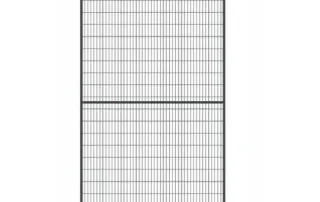
wire mesh cage panels
As a system integrator, you live by the deadline. You design sophisticated automated production lines and seamless robotics integration layouts, only to see the project stall during the final "physical" phase. Why? Because traditional machine guarding is often an afterthought that doesn't fit the reality of your site. Stop
Draht-Trennwände
In a busy System Integration firm, your Lead Mechanical Engineers are your most valuable resource. Their time should be spent optimizing robotic paths, designing End-of-Arm Tooling (EOAT), and solving complex automation logic. Yet, all too often, these high-value experts get bogged down in the tedious task of detailing Industrial
Maschentrennwand
In the Medical Device and Pharmaceutical Manufacturing sectors, cleanliness isn't just a preference; it's a regulatory mandate. Whether you are producing surgical instruments or packaging sterile vials, your facility is under the microscope of ISO 13485 and GMP audits. Standard industrial fencing, with its rough welds and open crevices,
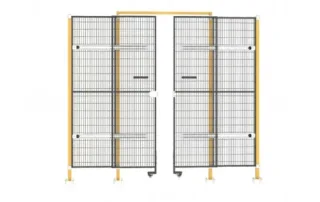
Trennwand aus Drahtgeflecht
In R&D Laboratories and High-Voltage Test Centers, safety is not about routine; it's about containing the unexpected. When you are performing destructive testing on a prototype EV battery or conducting hi-pot testing on heavy machinery, the risk of arc flash, shrapnel, or thermal runaway is real. Standard industrial fencing
Absperrgitter
In the competitive world of Plastic Injection Molding, the profit is in the cycle time. But the real efficiency killer isn't the cooling time; it's the SMED (Single Minute Exchange of Die) process. When a 5-ton mold needs to be swapped out, your team needs immediate, unobstructed access to
tragbares Absperrgitter
In high-speed Packaging and Palletizing lines, the battle for efficiency is won or lost at the bottleneck. Robotic Palletizers and stretch wrappers operate at breakneck speeds, but they frequently require operator intervention—whether to clear a jammed carton, restock film, or remove a full pallet. If your Machine Guarding doors

