DE
DE  EN
EN  RU
RU  PT
PT  JA
JA  ES
ES  IT
IT 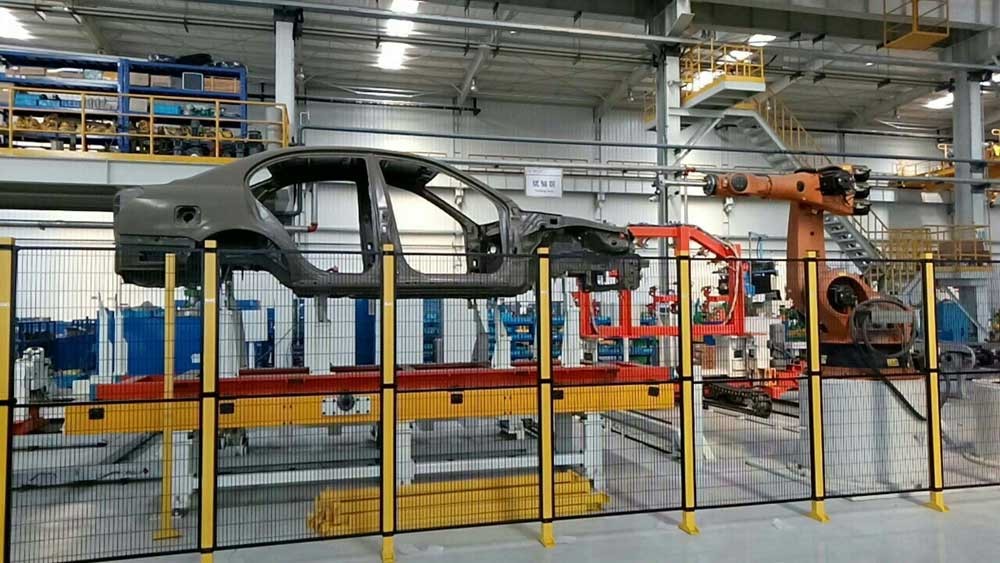
In the hyper-competitive world of Tier 1 automotive supply, every second of production uptime counts. For “David,” the Plant Manager at a leading Precision Auto Components facility in Ohio, the pressure to meet a major new contract was immense. The solution was clear: a significant investment in two new robotic welding cells to increase capacity and improve quality.
But the solution to one problem created another, more pressing one. The new robots were faster and more powerful than anything else on his floor. This introduced a new level of safety risk that their traditional safety methods were ill-equipped to handle, pitting the demands of production, safety, and finance against each other.
This is the story of how David’s team navigated that challenge, ultimately finding a solution that not only secured the new cells but also set a new standard for operational agility and project efficiency across their entire facility.
The Challenge: A Conflict Between Uptime and Safety
David’s team was facing a classic manufacturing dilemma, intensified by the unforgiving timelines of the automotive industry.
- A New Risk Profile: The new robotic arms were capable of moving heavy components at high speeds. A comprehensive risk assessment calculated a potential impact energy of over 1,200 Joules in a worst-case ejection scenario. David knew that their standard practice of lightweight fencing was completely inadequate for this level of risk.
- The Tyranny of Downtime: David’s previous experience with safety projects was daunting. For a similar, smaller-scale installation two years prior, his team had resorted to their old method: custom designing and fabricating a welded steel cage on-site. The process, including hot work permits, welding, grinding, and painting, had shut down the surrounding production area for nearly three full weeks. With the new contract’s deadlines, a similar delay was simply not an option.
- Conflicting Mandates: The executive team wanted the new line running yesterday to meet contractual obligations. The safety team (and David’s own conscience) demanded a robust solution that would unequivocally protect his people. The finance department, while approving the robots, was scrutinizing every associated project cost. A lengthy, expensive, custom fabrication project was the last thing they wanted to see.
David was trapped. It seemed that achieving world-class safety would come at the direct expense of the speed and uptime his company desperately needed.
The Search for a New Solution
Refusing to accept this compromise, David tasked his engineering team with finding an alternative. They established three non-negotiable criteria for any potential solution:
- Certified Safety Performance: It had to have a third-party-verified impact rating that exceeded their calculated 1,200 Joule risk. Vague claims of being “heavy-duty” were immediately dismissed. They needed provable data.
- Rapid, Low-Disruption Installation: The ideal solution had to be installable with minimal disruption to ongoing production. The goal was to complete the entire installation over a single weekend, using their own maintenance staff.
- Future-Proof Flexibility: The automotive industry is in constant flux. David needed a system that could be easily modified, moved, or reconfigured as production needs changed—not a permanent, welded structure that would become scrap metal during the next re-tooling.
This clear set of criteria quickly ruled out custom welding and led them to explore the world of engineered, modular Maschinenschutzzaun systems. They found a solution that not only met but exceeded their requirements: a system with a certified 1600 Joule impact rating.
Implementation: A Weekend Transformation
The difference between the old method and the new was staggering. The modular system was designed using the facility’s CAD drawings, so it arrived on-site as a complete, pre-configured kit. Every post, panel, and door was accounted for.
- Friday, 4:00 PM: As the last shift ended, David’s two in-house maintenance technicians began the assembly. There was no need for external contractors, hot work permits, or specialized welding equipment.
- Saturday, 5:00 PM: The structure for both robotic cells was fully assembled. The team began installing the safety interlock gates.
- Sunday, 6:00 PM: Both cells were fully guarded, electrically interlocked, and rigorously tested. The area was cleaned and ready for the Monday morning commissioning of the robots.
The entire safety installation, which had previously been budgeted as a three-week project, was completed in just over 48 hours by their own team.
The Results: A New Benchmark for Safety and Speed
By rethinking their approach to safety, Precision Auto Components achieved quantifiable results that impacted their entire operation.
| Metrisch | Previous Method (Welded Cage) | New Method (Modular Guarding) |
|---|---|---|
| Project Downtime | ~120 Hours (3 Weeks) | 0 Hours |
| Estimated Production Value Saved | $0 | Over $500,000 |
| Safety Incidents (Post-Installation) | N/A | Zero Near-Misses |
| Time to Modify Layout | Full Day (with hot work) | Under 1 Hour |
Unprecedented Operational Agility: The biggest surprise for David was the system’s flexibility. “Six weeks ago,” David reported, “we realized we needed to shift a parts feeder by about 18 inches for better ergonomics. With the old cages, that would have been an all-day project involving a cutting torch and a welder. With this system, we unbolted two panels, made the move with the maintenance team, and were back online in under an hour. It’s a game-changer for our continuous improvement initiatives.”
Enhanced Team Morale and Confidence: The clean, professional look of the engineered system sent a clear message to the entire workforce: their safety was a top priority and a professional investment. This visible commitment had a tangible, positive impact on team morale and trust in management.
Conclusion: Safety as a Performance Enabler
The experience of Precision Auto Components proves that a well-chosen Maschinenschutzzaun system is not a barrier to productivity, but a catalyst for it. By prioritizing certified performance and operational flexibility, David’s team didn’t just solve a safety problem—they unlocked a new level of agility and efficiency. This case study stands as a clear testament that you no longer have to choose between moving fast and being safe. With the right engineered solution, you can achieve both.