DE
DE  EN
EN  RU
RU  PT
PT  JA
JA  ES
ES  IT
IT 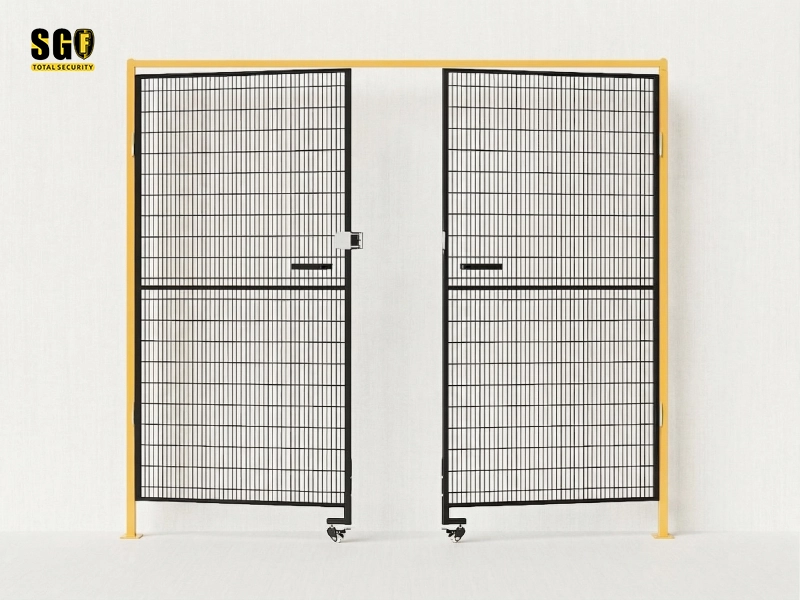
Zusammenfassung: For exporters shipping automation lines overseas, freight is often where profit disappears. Traditional pre-assembled guarding consumes air and container volume, while Mdfence machine guard panels use a flat-pack modular format that compresses cubic space, lowers sea and road freight cost, protects landed margin, and still arrives as a rigid safety barrier that can be installed fast and reused after relocation.
When freight volume becomes a hidden tax on machine guarding
Many exporters focus on the price of the equipment itself and underestimate what happens once guarding enters the logistics calculation. A welded safety enclosure may look complete on the workshop floor, but once it is booked for sea freight or air freight, the geometry starts working against the project. Large three-dimensional assemblies trap empty space, reduce loading density, and push up chargeable volume.
For an export-oriented integrator, that extra cubic volume does not stay in the logistics department. It reaches the quotation, compresses the margin, and can turn a competitive project into a weak one. This is especially painful when multiple cells, access gates, and perimeter sections must be delivered together with the main machine package.
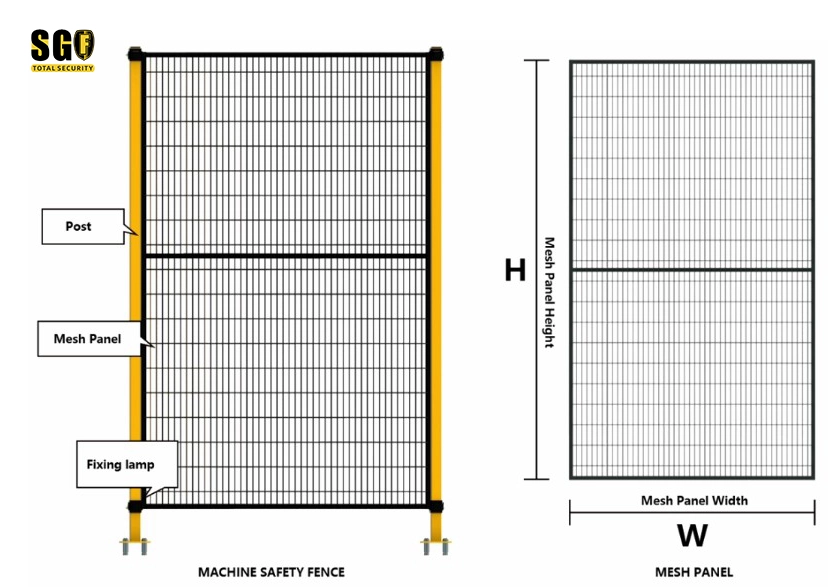
Mdfence approaches the issue from a different angle. Instead of treating guarding as a bulky welded afterthought, the system is designed as machine guard panels, posts, brackets, and gate modules that stack densely onto fumigated wooden pallets. That flat-pack logic directly addresses the real problem: freight cost driven by volume rather than only by weight.
Why flat-pack structure matters more than brochure weight
In export shipping, not all tons cost the same. The layout of the package matters. When panels and posts can be separated and nested, the shipper gains tighter pallet footprints, cleaner container planning, and better use of every vertical layer. That changes the economics of overseas delivery.
Mdfence uses framed mesh modules and separate structural members that are easy to count, stack, and secure. The result is a more predictable loading plan for mixed cargo projects where guarding ships together with robots, conveyors, electrical cabinets, or process skids.
How Mdfence reduces logistics loss without weakening the final safety barrier
Reducing volume is only valuable if the installed system still performs like an industrial guarding product. That is where many low-cost knockdown solutions fail. They pack small, but once installed, they flex, loosen, or lose alignment.
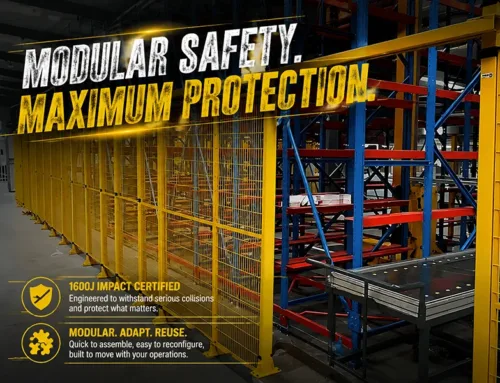
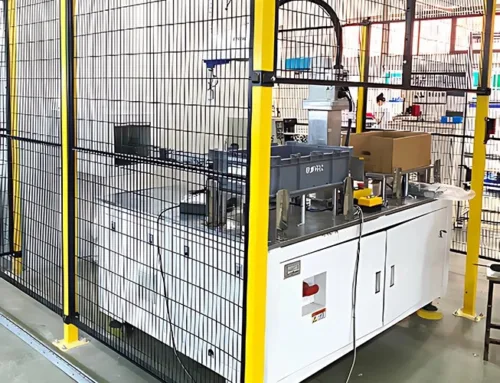
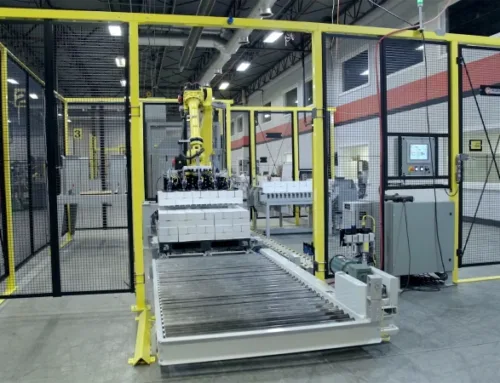
Mdfence keeps the logistics benefit without giving up industrial robustness. The modular components are engineered to become a rigid finished barrier after installation. Exporters do not need to choose between shipping efficiency and on-site safety performance.
- Compact modular members: posts, mesh panels, and gate structures are organized as separable units for dense palletization.
- Controlled packaging logic: components are packed onto fumigated wooden pallets to support international shipping compliance and easier handling.
- Clear part standardization: repeatable module sizes simplify packing lists, receiving, and replenishment for multi-country projects.
- Reusable asset value: after relocation or line change, the system can be dismantled and used again instead of being scrapped like one-time welded guarding.
For exporters, this means the freight-saving decision is not isolated from the life-cycle decision. Lower shipping cost at dispatch and higher reuse value at relocation work together to improve total project economics.

Export projects need more than a fence—they need shipping discipline
In real overseas projects, machine guarding is rarely shipped alone. It competes for container space with main machines, tooling, spares, and electrical hardware. If guarding is bulky, it steals volume from revenue-generating equipment and inflates total delivered cost.
Mdfence helps exporters build shipping discipline into the guarding package. Flat components are easier to arrange around the machine shipment plan. They are also easier to inspect on arrival because each bundle is countable and each module corresponds to the installation layout.
This matters on projects where site schedules are tight and customs clearance already adds uncertainty. Cleaner packaging reduces the risk of damaged odd-shaped welded pieces and makes downstream installation sequencing much easier.
Where the cost advantage shows up in the real project budget
| Cost pressure point | Traditional bulky guarding | Mdfence flat-pack modular approach |
|---|---|---|
| Container and pallet utilization | Low density, trapped empty space | High-density stacking of panels, posts, and fittings |
| Overseas freight quotation | High cubic charge reduces margin | Compressed shipping volume helps control freight spend |
| Receiving and counting on site | Awkward large assemblies, harder verification | Standardized module counts and cleaner unloading flow |
| Relocation or retrofit later | Often becomes scrap or cut-and-weld rework | High reuse potential preserves asset value |
The biggest benefit is not just “cheaper freight.” It is better commercial control. Exporters can quote more confidently because guarding no longer behaves like a volume-heavy unknown in the shipment mix.
Modular gate choices also support compact shipping plans
Access points are often the most awkward part of any export guarding package. Wide welded gate assemblies consume space and are vulnerable during transport. Mdfence solves this with modular gate options that remain compatible with export-friendly packing logic.
For projects with restricted loading space or a need for compact spare-part style bundling, multi-panel gate configurations help maintain practical access design while still fitting the flat-pack discipline of the full system.
That gives exporters more flexibility when matching guarding architecture to container limits, destination handling conditions, and future line reconfiguration plans.

A better way to protect margin on overseas machinery projects
For a global machinery supplier or system integrator, the guarding package should not be the reason delivered cost gets out of control. Mdfence machine guard panels are effective because they solve an operational problem before the shipment leaves the factory: too much cubic volume for too little value.
By using flat-pack palletization, standardized modular components, and reusable structures, the system helps exporters reduce freight burden without compromising the installed guarding result. The outcome is straightforward: lower logistics cost, better landed economics, easier handling at destination, and stronger asset recovery if the line moves later.
That is why flat-pack machine guarding is not only a packaging detail. In export business, it is a margin-protection strategy.
Need an export-friendly guarding layout?
If your project needs machine guard panels that lower cubic freight cost, fit overseas container planning, and still deliver reliable industrial safety performance on site, Mdfence can be configured around your shipment and installation constraints from the start.