DE
DE  EN
EN  RU
RU  PT
PT  JA
JA  ES
ES  IT
IT 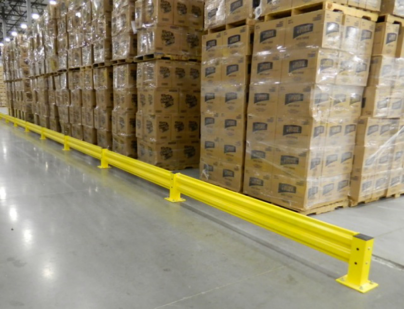
A Note for the CFO, the CEO, and the Business Owner
In business, we categorize expenses to understand them. There is Capital Expenditure (CapEx)—the planned, strategic investments in assets that will provide long-term value. And there is Operational Expenditure (OpEx)—the day-to-day costs of running the business.
We budget meticulously for both. But there is a third category of cost that rarely makes it into the forecast, yet has the potential to dwarf all others: the Unplanned Critical Expenditure.
This is the cost of a catastrophic failure. It’s the sudden, unbudgeted expense required to replace a million-dollar piece of machinery, the cascading financial loss from weeks of unscheduled downtime, or the open-ended liability of a serious workplace accident. It’s the number that keeps a good financial leader up at night because of its sheer unpredictability.
Today, let’s talk about one of the most common—and most preventable—triggers for this type of financial shock: a low-speed, high-consequence collision inside your own facility.
Translating a Physical Risk into a Financial Model
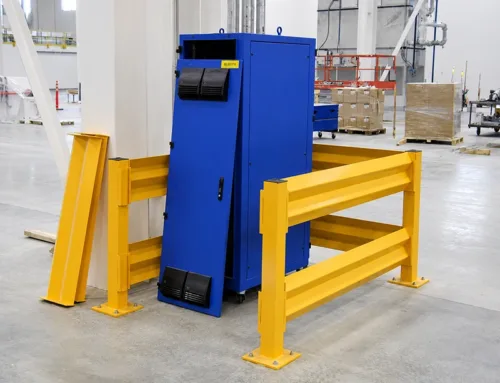
From a purely financial perspective, an unprotected, mission-critical asset sitting next to a forklift traffic lane is not a safety issue; it is an unhedged liability. It represents a high-impact, low-probability risk with an uncapped financial downside.
Let’s model the potential cost cascade of a single, accidental forklift impact on a central electrical cabinet:
- Immediate Direct Costs (CapEx): The cost to repair or, more likely, replace the specialized electrical switchgear and control panels. This can easily run into the tens or hundreds of thousands of dollars, with long lead times for replacement parts.
- Immediate Indirect Costs (OpEx): The cost of emergency electricians, overtime for maintenance crews, and express shipping for parts.
- Cascading Production Loss: This is where the real financial damage occurs. If that cabinet powers a primary production line, every hour of downtime translates directly into lost revenue, missed delivery targets, and potential contractual penalties. How many days of production can your business afford to lose?
- Long-Term Financial Impact: A serious incident can trigger a spike in your insurance premiums for years to come. If an injury is involved, the potential for litigation and liability claims introduces a level of financial uncertainty that is impossible to model accurately.
When you sum up this cascade, the cost of a single, preventable accident can easily surpass the lifetime operational budget of an entire department.
The Strategic Function of a Guardrail: Converting Risk into a Fixed Asset
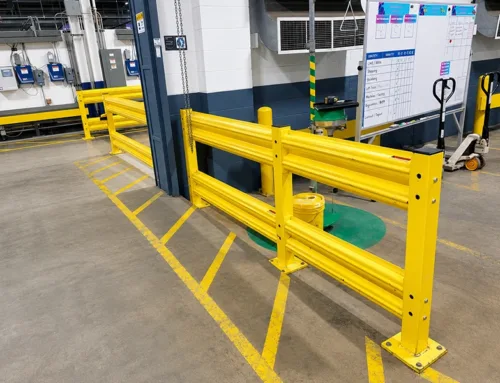
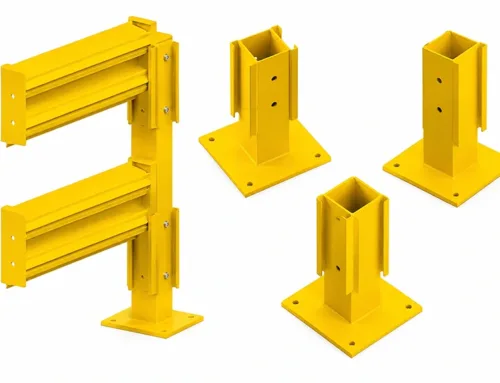
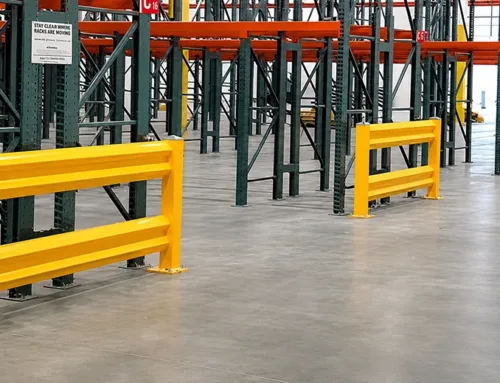
Now, consider the cost of deploying an engineered, impact-rated Schwerlast-Leitplanke system around that same electrical cabinet. This is a one-time, predictable, planned Capital Expenditure.
From a financial strategy standpoint, this investment performs a critical function: it converts an open-ended, unpredictable liability into a fixed, depreciable asset.
You are effectively purchasing insurance against a specific, high-consequence event, but with a crucial difference: unlike an insurance policy that pays out after the disaster, this asset works proactively to prevent the disaster from ever happening. It is a one-time premium for permanent risk mitigation.
The return on this investment (ROI) is not measured in new revenue generated, but in catastrophic losses successfully averted. It’s an ROI of operational continuity, of budget predictability, and of corporate resilience.
An Investment in Certainty
As leaders, we are tasked not just with growing the business, but with protecting it. We invest in cybersecurity to protect our data, in legal counsel to protect our contracts, and in R&D to protect our future.
A Schwerlast-Leitplanke system belongs in the same category of strategic, defensive investment. It is not an operational expense or a simple factory accessory. It is a tool for risk management, a physical asset that hedges against your most tangible operational threats.
When you review the budget for a professionally engineered guardrail system, the question is not, “Can we afford to do this?” The more pertinent question is, “Can we truly afford not to?”
The cost of the guardrail is on the quote in front of you. The cost of not having it is a risk that no responsible financial statement can fully account for.