DE
DE  EN
EN  RU
RU  PT
PT  JA
JA  ES
ES  IT
IT 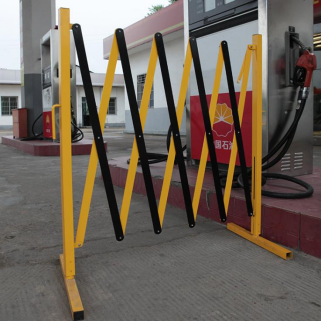
The sound is unmistakable: the high-pitched hum of an electric motor, the clank of hydraulic forks. For a forklift operator, it’s the soundtrack of their workday. For a pedestrian in a busy warehouse, it’s a sound that’s supposed to trigger caution. But what happens when that sound is masked by the drone of a ventilation system, or when the pedestrian is focused on a scanner, trying to locate a SKU on a high shelf?
In that moment, a three-second window opens. It’s the average time from when a pedestrian steps unexpectedly into a forklift’s path to the moment the machine can come to a complete stop. Three seconds. It feels like an eternity, yet it’s almost never enough.
This isn’t a discussion about blame. It’s a frank look at physics, human psychology, and the inherent limitations of our traditional safety protocols. It’s an argument for why relying on reaction time is a losing strategy, and why we must shift our approach from warning about hazards to physically eliminating them.
The Unforgiving Physics of a Ton of Steel
A standard warehouse forklift, carrying a moderate load, can weigh upwards of 9,000 pounds (over 4,000 kg). It does not handle like a passenger car. The “3-Second Window” is a best-case scenario, composed of three distinct phases:
- Perception Time (Approx. 1.5 seconds): This is the time it takes for the operator—who is simultaneously focused on navigating, positioning forks, and monitoring their load—to see the pedestrian, recognize them as a hazard, and register the need to stop.
- Reaction Time (Approx. 0.5 seconds): The time it takes for the operator’s brain to send a signal to their foot to move from the accelerator to the brake pedal.
- Braking Distance (Approx. 1 second, or 10-15 feet): Unlike a car with advanced braking systems, a forklift is designed for lifting power, not stopping agility. The time and distance it takes to bring thousands of pounds of momentum to a halt is significant.
When you add these up, you realize that from 30 feet away, a forklift operator has virtually no chance of stopping in time to avoid a collision with a pedestrian who steps out suddenly. Relying on the operator to defy physics is not a safety plan.
The Psychology of the Warehouse Floor: Blind Spots and “Alarm Fatigue”
The challenge is compounded by the very nature of the environment. Warehouse aisles are canyons of steel and cardboard, creating countless blind corners. The ambient noise level can be high, and the constant beeping of various machines leads to a well-documented phenomenon known as “alarm fatigue.” After a while, the human brain begins to filter out these repetitive sounds. The backup alarm that is meant to be a piercing warning becomes mere background noise.
Pedestrians are not careless; they are task-focused. Their attention is on a clipboard, a handheld scanner, or a conversation with a colleague. They walk a path they’ve walked a hundred times, and their situational awareness drops. They place an unconscious trust in the system—and in the forklift operator’s ability to see them and stop.
As we’ve just established, that trust is often misplaced, not due to operator error, but due to the laws of physics.
A New Methodology: The Dynamic Safety Zone (DSZ)
If passive warnings like horns and lights are unreliable, and reaction time is insufficient, then the only logical solution is to prevent the interaction from ever occurring. The answer lies in shifting from a reactive mindset to a proactive one, through a methodology we call the “Dynamic Safety Zone” (DSZ).
A DSZ is a temporary, clearly-defined, and physically-demarcated exclusion area that is established before a hazardous maneuver begins and is removed the moment it ends.
Think of our operator retrieving that pallet. Instead of relying on others to see him, he takes 15 seconds to create his own sterile environment. He physically blocks the ends of the aisle he is working in. For the duration of his task, that space belongs only to him and his machine. There is no possibility of a pedestrian wandering into his path because the path is no longer open.
The problem, historically, has been that the tools to create a DSZ were too cumbersome. Setting up a line of cones or fiddling with flimsy caution tape incurs too much “Safety Friction.” It takes too long, so it doesn’t get done.
To make the DSZ practical, the tool must be as dynamic as the hazard itself. It must be:
- Instantly Deployable: Able to be set up by a single person in seconds.
- Highly Visible: Serving as an unmistakable visual command to stop.
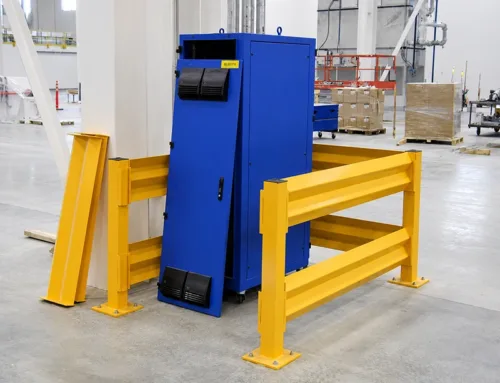
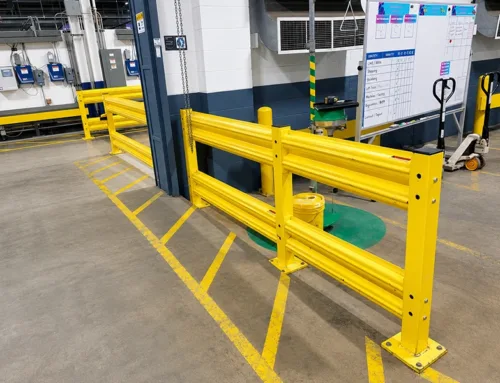
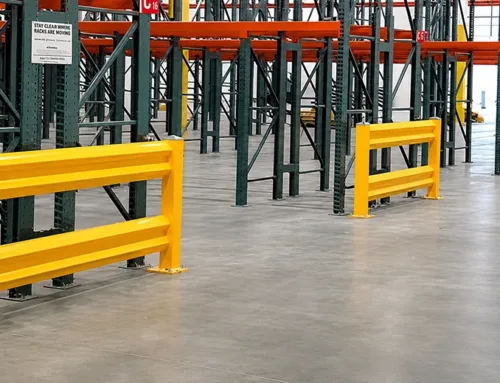
- A Physical Deterrent: It must be a tangible barrier, not just a suggestion. A physical Absperrgitter provides this necessary presence.
This is where the modern portable expandable Absperrgitter becomes the essential enabler of the DSZ methodology. With its integrated wheels, accordion-style expansion, and 40-inch-high physical presence, it allows an operator to single-handedly deploy a 141-foot-long barrier in less time than it takes to check their phone. It is the tool that finally makes the DSZ concept a practical reality for high-frequency, short-duration tasks.
Schlussfolgerung
The “3-Second Window” is a gamble against time and physics—a gamble that our industry loses far too often. It’s time to stop betting on reaction time and start guaranteeing safety. By adopting a “Dynamic Safety Zone” methodology, and equipping our teams with the tools to implement it effortlessly, we change the fundamental nature of warehouse safety. We shift the responsibility from the impossible task of last-second reactions to the simple, proactive task of creating a safe space before the work even begins.