ES
ES  EN
EN  DE
DE  RU
RU  PT
PT  JA
JA  IT
IT 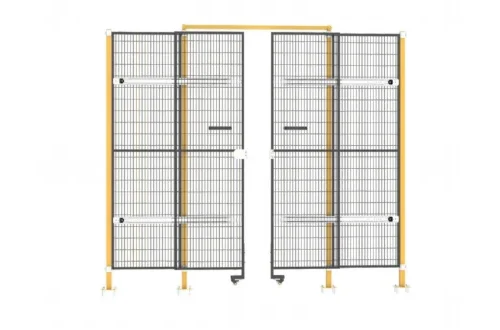

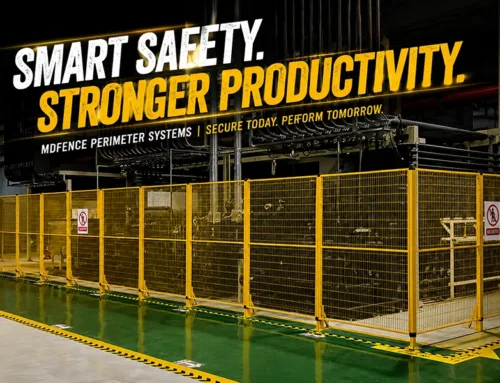
Your industrial safety fencing is more than a boundary; it’s an active shield. In high-energy environments like automated welding or CNC machining, the right fencing system is your first line of defense against catastrophic equipment damage and personnel injury from flying debris and sparks. Discover how engineered containment solutions go beyond simple access control.
Beyond Access Control: Engineering Fencing for Active Hazard Containment
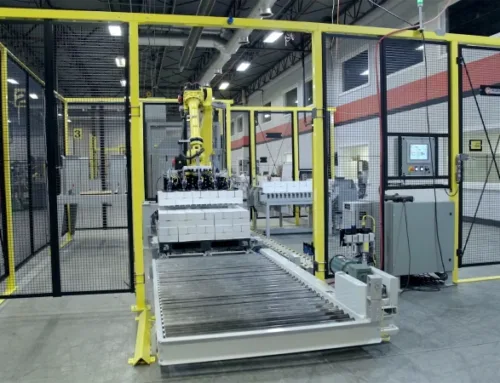
In modern manufacturing and automation, the purpose of an Valla de Seguridad Industrial system is often misunderstood. While restricting access to dangerous areas is a primary function, its role in high-energy environments like robotic welding cells or high-speed machining centers is far more critical. The real question for any plant manager or system integrator is not just “Does it keep people out?” but “Can it keep hazards in?” The answer lies in moving beyond basic perimeter guarding and specifying a system engineered for active containment of projectiles, sparks, and other process-related dangers.
The Critical Choice of Panel Material for Shielding
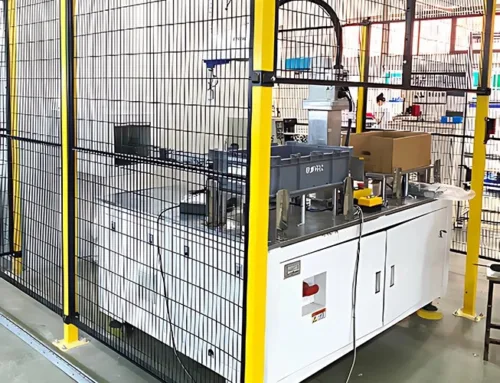
The first line of defense in containing hazards is the panel infill itself. A standard wire mesh is effective for general separation, but specific industrial processes demand specialized materials. The ability to select the right panel for the right risk is a hallmark of a truly modular and effective machine guarding system.
| Panel Type | Primary Application | Key Benefit & Change Delivered |
|---|---|---|
| Standard Wire Mesh Panel | General robot work cells, material handling areas, perimeter guarding. | Provides a robust physical barrier while maintaining maximum visibility and airflow. This changes the workspace from an open, high-risk zone to a clearly demarcated and secure area without creating a sense of confinement. |
| Polycarbonate (PC) / Acrylic Panel | CNC machining centers, cutting applications, quality inspection cells. | Actively blocks the spray of cutting fluids and small chips while offering crystal-clear visibility. This transforms a messy, hazardous area into a clean and observable process, protecting personnel and adjacent equipment from contamination and impact. These panels often meet UL94V0 and EN1598 fire safety standards. |
| Solid Steel or Aluminum Panel | Automated welding stations, laser cutting, applications with intense light or sparks. | Provides a complete, opaque barrier that contains 100% of sparks, weld spatter, and harmful optical radiation (arc flash). This fundamentally changes the safety protocol, allowing other work to occur safely nearby without the need for extensive, temporary curtain systems. |
Structural Integrity: Why a Framed Panel is Essential for Debris Containment
When a tool breaks or a workpiece is ejected from a machine, the resulting debris can travel at hundreds of feet per second. In these scenarios, the structural design of the panel is as important as its material. A framed panel, constructed with a 20 x 30mm steel tube frame, provides a rigid structure that absorbs and distributes impact energy far more effectively than a simple frameless mesh.
This design changes the fence from a simple screen into an energy-absorbing shield. The impact force is transferred from the mesh to the robust frame, and then into the 60 x 60mm posts, which are securely anchored to the floor. This system prevents the panel from deforming, breaking, or being pushed into the safe zone, thereby protecting both high-value assets and personnel from the consequences of a catastrophic machine failure.

Engineered Details That Make the Difference in Protection
True containment capability is found in the engineering details that are often overlooked. These features elevate a fencing system from a commodity product to an integrated safety solution.
The Unseen Strength of Flat, Fully Welded Joints
The method used to join the wire mesh to the panel frame is a critical factor in its strength. Mdfence utilizes a flat welding process where all contact points are fully welded. This is a significant upgrade over standard spot welding.
- Impact Distribution: A full weld creates a continuous, monolithic structure. When struck by debris, the impact load is shared across the entire length of the weld, rather than being concentrated on a few small spot welds which can fail under sharp impact.
- Enhanced Safety: The flattened weld point process eliminates sharp edges and burrs. This detail prevents lacerations for maintenance staff who may interact with the panels, improving overall workplace safety.
High-Impact Resistance: A Certified Line of Defense
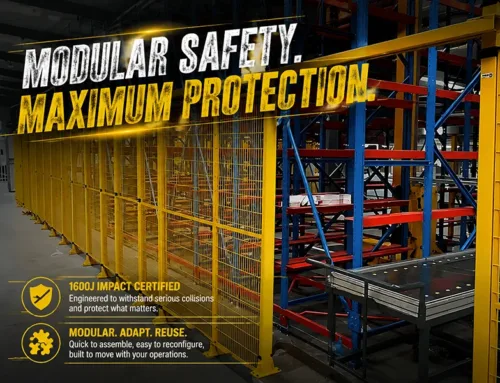
Claims of strength must be backed by evidence. A system built from high-strength Q235 carbon steel and certified by a third-party body like TUV provides verifiable proof of its protective capabilities. This Resistencia al impacto is crucial for system integrators and plant managers who carry the responsibility for site safety. It changes the conversation from “we think it’s strong enough” to “we have certified proof that it meets international safety standards like ISO 14120.” This documentation is essential for passing safety audits and mitigating liability.

Conclusion: A Proactive Shield, Not a Passive Barrier
Ultimately, a modern industrial safety fence must do more than define a perimeter. It must be an engineered system designed to actively contain the specific hazards of its environment. By carefully selecting panel materials like solid steel for welding applications, insisting on the superior structural integrity of framed panels, and verifying TUV-certified impact resistance, you transform the fence from a passive barrier into a proactive shield. This shift in perspective ensures your fencing not only restricts access but provides genuine, reliable protection against debris and sparks, safeguarding your people, your equipment, and your operations.
Preguntas Frecuentes
1. What is the best safety fencing panel material for a robotic welding cell?
For robotic welding, a solid steel panel is the ideal choice. It provides a complete barrier to prevent hot sparks and weld spatter from exiting the cell, protecting personnel and preventing fires. It also blocks harmful UV radiation from the welding arc.
2. How does mesh size affect the containment of small debris?
The mesh spacing is critical. While a standard 50 x 50mm grid is suitable for general guarding, applications like grinding or high-speed machining may produce smaller projectiles. In these cases, a denser mesh, such as 20 x 100mm, or a solid polycarbonate panel should be used to ensure smaller particles are effectively contained.
3. Are transparent polycarbonate panels as strong as steel mesh panels?
High-quality polycarbonate is extremely tough and offers excellent impact resistance, often comparable to or exceeding that of standard wire mesh for certain types of impact (like blunt force). It is an ideal choice when both visibility and protection from liquid splash or small debris are required.
4. Can the fencing system withstand an impact from a small vehicle like a forklift?
While standard safety fencing is not rated as a vehicle barrier, a system built with heavy-duty components like 60 x 60mm posts with a 2.0mm wall thickness, anchored with four expansion bolts, offers significant impact resistance against low-speed collisions from lighter equipment, protecting critical machinery inside the cell.
5. Do specialized panels like steel or polycarbonate require a different installation process?
No. A key benefit of a truly modular system like Mdfence is that all panel types—mesh, polycarbonate, and steel—are designed to fit within the same standard posts and fixing rings. This allows you to mix and match panels based on risk assessment without complicating the installation process or requiring different hardware.