ES
ES  EN
EN  DE
DE  RU
RU  PT
PT  JA
JA  IT
IT 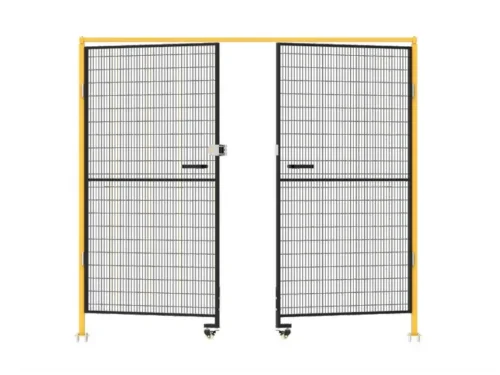

|
When deploying a turnkey solution for a high-speed mechanical assembly line, the CAD drawings rarely match the 100% exact reality of the factory floor. A misaligned cable tray or a shifted CNC machining center usually means one thing: bringing an angle grinder onto the floor. Waiting for custom-welded panels or sparking up a hot-work zone kills your timeline, ruins the powder coating, and triggers EHS headaches. You don’t need a fence you can cut; you need a system that adapts instantly without destruction. |
The Reality of Onsite Modifications in Robotics Integration
As a system integrator, your primary goal is to get the automated production line running and hand over the keys. However, the perimeter guarding often becomes the bottleneck. Traditional Valla de Seguridad Industrial relies on cheap, frameless wire mesh or localized custom welding. When you encounter a 2-inch (approx. 50mm) discrepancy near an automotive welding station, the standard procedure is brutal: stop the line, issue a hot work permit, cut the steel, grind the edges, and spray paint over the bare metal.
This “cut-and-weld” approach is a nightmare. Sparks threaten delicate electro-optical elements and vision systems nearby. Furthermore, the localized spray paint lacks the ISO 9227 salt-spray resistance of a factory electrostatic powder coating. Within three months of exposure to CNC cutting fluids and industrial solvents, those modified joints will rust, causing your client to fail their next EHS audit.
The Mdfence Logic: Cold Assembly and Modular Reconfiguration
Can you customize our Sistemas de Protección de Máquinas onsite? Yes, but you will never need an angle grinder to do it. The Mdfence system is engineered around a 100% modular, cold-assembly philosophy designed specifically to eliminate onsite fabrication.

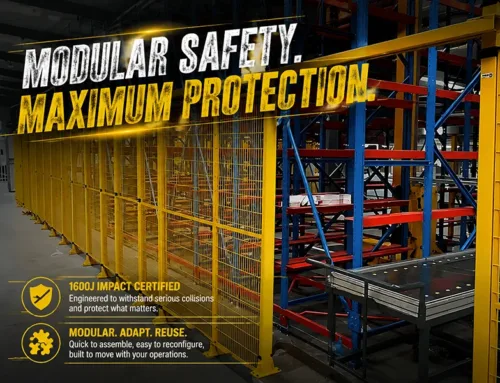
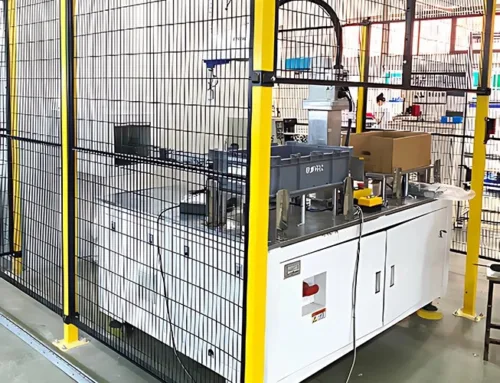
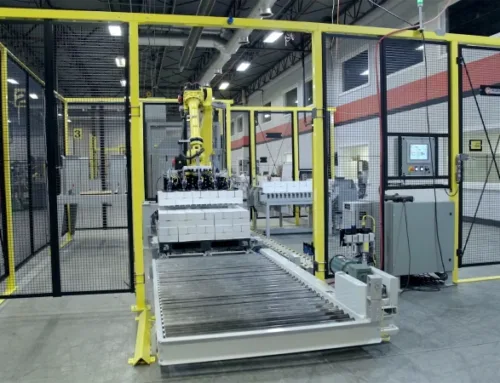
Instead of flimsy wire that sags when leaned against, our system utilizes a 20x30mm framed architecture. The high-tensile Q235 carbon steel panels are attached to the 60x60mm posts using heavy-duty steel fixing rings and M8 flange bolts. If a conveyor belt needs to pass through the perimeter, you don’t cut a hole in the mesh. You simply unbolt the standard panel and insert a pre-engineered ISO 13857 compliant tunnel guard. If the floor is uneven, the adjustable fixing rings slide vertically along the post to absorb the tolerance, keeping the top line perfectly flush without compromising the 1600 Joules impact resistance (capable of stopping a 220 lbs object moving at 12 mph).
Integrating PLC Safety Interlocks Without Drilling
For robotics integration, the physical fence is only half the job; it must act as a node in your PLC safety circuit. A major onsite headache is mounting Omron D4NL or Pizzato safety switches. Drilling into the posts onsite creates metal shavings that damage nearby servo motors and misaligns the lock tongue, leading to false machine stops and a plummeting OEE (Overall Equipment Effectiveness).
Our Sistemas de Vallado de Seguridad para Robots solve this by providing pre-engineered lock carriers (e.g., KKCK-LCK-B-D4NL-SET). These mounting brackets are factory-drilled and powder-coated, allowing your electrical team to bolt the interlocks directly onto the robust Q235 steel frame. Perfect alignment, zero metal shavings, and immediate integration into your safety torque off (STO) loops.
Adapting Access Points: Swapping Doors on the Fly
Layout changes often dictate new material handling paths. You might realize during installation that a forklift needs access to a CNC station, but the aisle is too narrow for a standard hinged door to swing open.

Because the entire system is modular, you can swap a hinged door for a single sliding door directly onsite. The top-mounted bearing rails bolt into the existing standard posts. You instantly gain the necessary clearance for tooling changes without expanding the footprint of the dedicated manufacturing line.
The Aftermath: Drastically Reducing MTTR and Protecting Asset Value
By eliminating onsite cutting and welding, the installation speed increases by up to 40%. More importantly, the 0.78 x 3.9 inches (20x100mm) “finger-safe” mesh allows you to position the guarding just 4.7 inches (120mm) away from the hazard per ISO 13857 standards, saving crucial square footage in tight automation layouts.
| Installation Metric | Traditional Welded Mesh | Mdfence Modular System |
|---|---|---|
| Onsite Modification Method | Hot work (Cutting, grinding, welding) | Cold assembly (Wrench and bolts) |
| Impact on Production Line | Requires shutdown & fire safety protocols | Zero interruption to surrounding machinery |
| Asset Reusability | 0% (Scrapped upon layout change) | 95%+ (Unbolt and reconfigure) |
| Safety Switch Integration | Manual drilling, high risk of misalignment | Pre-engineered plug-and-play lock carriers |
When the plant manager decides to upgrade the robotic work cell next year, they won’t have to tear down and scrap the perimeter. They simply unbolt the panels, adjust the layout, and reuse the assets. That is the true value of a turnkey safety solution.
Frequently Asked Questions (FAQs) for System Integrators
1. Can we modify the 20x100mm framed mesh panels to fit a conveyor belt onsite?
We strongly advise against cutting the framed panels as it compromises the 1600J structural integrity. Instead, our modular system allows you to swap in standard pre-engineered tunnel guards that fit perfectly around conveyors while maintaining ISO 13857 compliance.
2. Do we need a hot work permit to adjust the machine guarding fence panels?
No. The entire Mdfence system is designed for “cold assembly.” Adjustments are made by loosening the M8 bolts on the fixing rings and sliding or swapping components. No sparks, no dust, and no production downtime.
3. How do we ensure ISO compliance if we adjust the distance between the fence and the CNC machine?
Our standard panels feature a 20x100mm narrow mesh. According to ISO 13857 standards for finger and hand clearance, this specific mesh size allows you to safely position the guarding as close as 4.7 inches (120mm) from the hazard zone.
4. Can I retrofit a heavy-duty sliding door into an existing robotic work cell layout?
Yes. Because the 60x60mm posts are standardized across the entire product line, you can remove a standard mesh panel and bolt on the bearing rails and hardware required for a sliding door without uprooting the anchored posts.